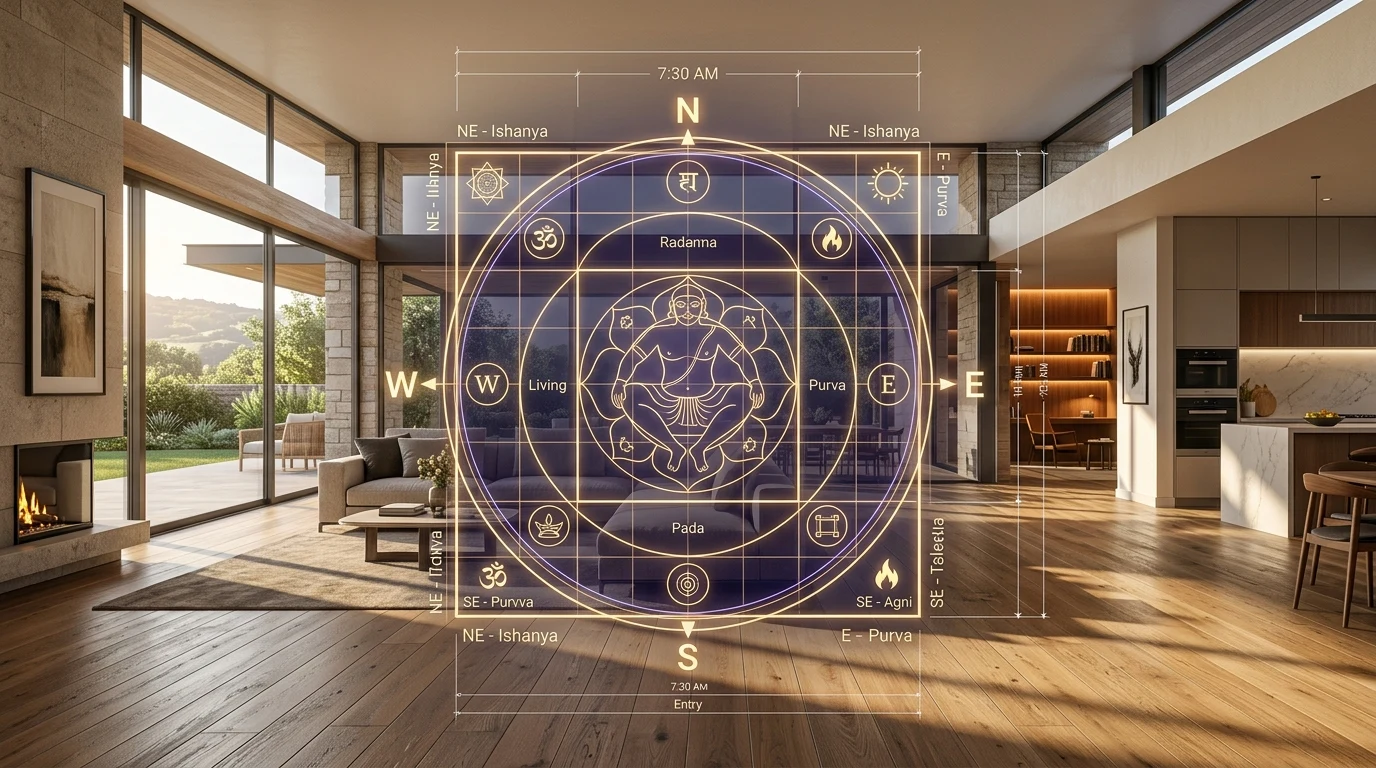
When buying, building, or renovating a home, one question often comes before almost everything else: Which direction should my house face according to Vastu?
The concept of vastu house facing is an important part of Vastu Shastra because the direction of your home and its main entrance is traditionally believed to influence the flow of energy into the property. East-facing and north-facing homes are commonly considered favourable, but does that mean a west-facing or south-facing house is automatically bad?
Not necessarily.
Understanding vastu house facing involves much more than simply choosing north, south, east, or west. The exact position of the main entrance, kitchen, bedrooms, pooja room, bathrooms, open spaces, and other areas also contributes to the overall Vastu of a property.
This complete guide explains how to identify your vastu house facing, which directions are traditionally preferred, what each direction represents, common mistakes homeowners make, and how to evaluate your home more carefully with Astro27.
Important: Vastu Shastra is a traditional architectural and cultural belief system. Its claims about prosperity, health, luck, and energy should not be treated as scientifically established facts or as substitutes for professional architectural, financial, or medical advice.
What Is Vastu House Facing?
Vastu house facing refers to the direction you face when you stand at the main entrance of your house and look outside.
For example:
- If you face east while walking out through the main entrance, you have an east-facing house.
- If you face north while walking out, you have a north-facing house.
- If you face west, it is a west-facing house.
- If you face south, it is a south-facing house.
This sounds simple, but many homeowners incorrectly identify their vastu house facing based on the direction of the road, balcony, largest window, or building frontage.
For Vastu evaluation, the main entrance is generally the key reference point.
How to Check Your Vastu House Facing Direction
Before worrying about whether your vastu house facing is good or bad, first make sure you have identified the direction correctly.
Follow these steps:
Step 1: Go to Your Main Entrance
Stand near the main entrance that you normally use to enter and leave the property.
Step 2: Face Outside
Stand inside your house and look outward through the main door.
Step 3: Use a Compass
Use a reliable physical compass or a compass application on your smartphone. Keep the phone flat and allow the reading to stabilise. (For detailed compass and degree instructions, read our guide on how to check disha of house).
Step 4: Note the Direction
The direction you face while looking outside indicates your vastu house facing. For example, if your compass shows approximately east while you are looking outside, your home is east-facing.
Take Multiple Readings
Metal doors, electrical equipment, wiring, elevators, and nearby electronic devices can interfere with smartphone compass readings. Take multiple measurements around the entrance before making conclusions about your vastu house facing.
Which Vastu House Facing Is Best?
One of the most searched questions about vastu house facing is: Which house-facing direction is best according to Vastu?
Traditional Vastu commonly gives preference to:
North-East → North → East
West-facing houses can also be considered suitable when properly planned.
South-facing houses require more careful analysis, particularly regarding the exact position of the entrance.
However, there is an important point homeowners often miss: Direction alone does not decide whether a house has good Vastu.
A north-facing house with badly positioned rooms is not automatically better than a carefully designed south-facing property. When analysing vastu house facing, consider the complete layout rather than judging a property from one compass direction.
1. East-Facing House According to Vastu
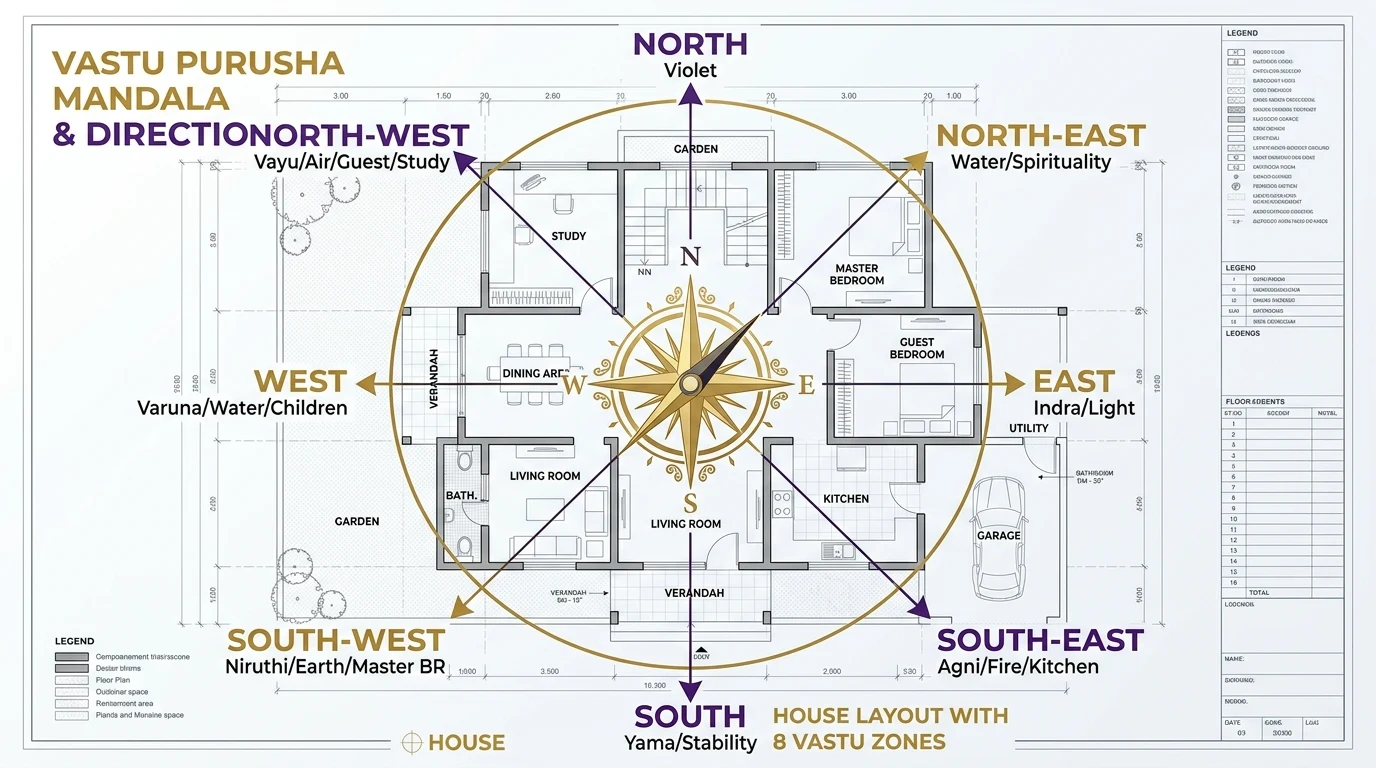
An east-facing property is one of the most popular choices among people interested in vastu house facing.
The east is associated with sunrise and is traditionally connected with new beginnings, vitality, growth, and positive energy. Because sunlight enters from the east during the morning, east-facing homes can also have practical advantages when windows and openings are designed properly.
East-Facing House Main Entrance
For an east-facing house, Vastu traditions generally favour placing the main entrance toward the north-eastern portion of the eastern side rather than toward the south-east. The precise position of the door matters. Therefore, simply advertising a property as "east-facing" does not automatically make its vastu house facing perfect.
Kitchen in an East-Facing House
The south-east is traditionally considered the preferred zone for a kitchen because it is associated with the fire element. North-west is often considered an alternative when south-east placement is impossible.
Master Bedroom
The south-west area is commonly recommended for the master bedroom.
Pooja Room
North-east is traditionally considered one of the preferred areas for prayer, meditation, or a pooja room.
Living Room
North, east, or north-east areas are frequently recommended for the living room.
Overall, east-facing properties remain highly sought after among buyers who consider vastu house facing important.
2. North-Facing House According to Vastu
A north-facing property is another highly preferred vastu house facing option.
In Vastu tradition, north is associated with Kubera, the deity connected with wealth and prosperity. For this reason, north-facing homes are popularly associated with financial opportunities, business, and career development. These associations are traditional Vastu beliefs rather than guaranteed outcomes.
Main Entrance for North-Facing Houses
A north-facing entrance is generally considered favourable, especially when positioned appropriately toward the north or north-east zones. The exact location along the northern wall should still be considered.
Kitchen
South-east is generally preferred for the kitchen. North-west may be considered when south-east is unavailable.
Master Bedroom
South-west remains one of the commonly recommended directions for the master bedroom.
Pooja Room
North-east is traditionally preferred.
Living Area
North and north-east can be suitable areas for a living room according to commonly followed Vastu principles.
A well-planned north-facing property can therefore be a strong vastu house facing option for homeowners who follow Vastu Shastra.
3. West-Facing House According to Vastu
A common myth surrounding vastu house facing is that west-facing homes are automatically unlucky. That is not an accurate representation of Vastu.
A west-facing house can be considered suitable when the entrance and internal layout are correctly planned. West-facing properties receive more afternoon sunlight, so practical architectural factors such as shading, ventilation, window placement, and heat management also deserve consideration.
Main Entrance for West-Facing Houses
The north-western or favourable portions of the western wall are commonly preferred in many modern Vastu interpretations. Avoid assuming that every position along a western wall produces the same Vastu result.
Kitchen
South-east remains the traditional first preference. North-west can also be considered.
Master Bedroom
The south-west portion of the house is commonly recommended.
Living Room
North, east, or north-east areas may be considered depending on the property's layout.
Therefore, if you find a good west-facing property, don't reject it solely because of its vastu house facing. Evaluate the entire floor plan first.
4. South-Facing House According to Vastu
South-facing homes generate perhaps the most confusion in discussions about vastu house facing. You've probably heard someone say: "Never buy a south-facing house."
This is an oversimplification.
South-facing properties are not automatically bad according to all Vastu interpretations. The exact position of the main entrance becomes particularly important.
Main Entrance for a South-Facing House
A south-facing entrance needs more careful directional analysis. Traditional Vastu systems divide walls into smaller zones or padas, meaning two south-facing properties can have entrances in very different Vastu positions. (Read our dedicated guide on main door house entrance Vastu for detailed pada rules).
This is why judging vastu house facing using only four labels—north, south, east, and west—can be misleading.
Kitchen
South-east is traditionally preferred. This can work naturally with many south-facing layouts.
Master Bedroom
South-west is commonly recommended.
Pooja Room
North-east remains a frequently preferred direction.
Should You Buy a South-Facing House?
Do not reject a property based purely on the words "south-facing." Instead, examine:
- Exact entrance location
- Kitchen position
- Master-bedroom position
- North-east area
- Bathrooms
- Staircase
- Open spaces
- Natural light
- Ventilation
- Overall floor plan
A comprehensive vastu house facing assessment provides much more information than the direction alone.
Vastu House Facing and the Main Door
The main entrance is one of the most important elements in vastu house facing analysis.
According to Vastu philosophy, the main door represents the primary transition between the external environment and the home's internal space. Consequently, Vastu practitioners consider not only the general direction but also the exact placement and condition of the entrance.
Main Door Vastu Tips
Keep the entrance:
- Clean
- Bright
- Uncluttered
- Easy to access
- In good physical condition
Avoid keeping broken furniture, garbage, unused boxes, damaged decorative items, or excessive clutter immediately around the entrance. The door should open smoothly without sticking or producing excessive noise.
These recommendations also have straightforward practical benefits: a clean, functional entrance makes a home safer, easier to use, and more welcoming.
Vastu House Facing and Room Placement
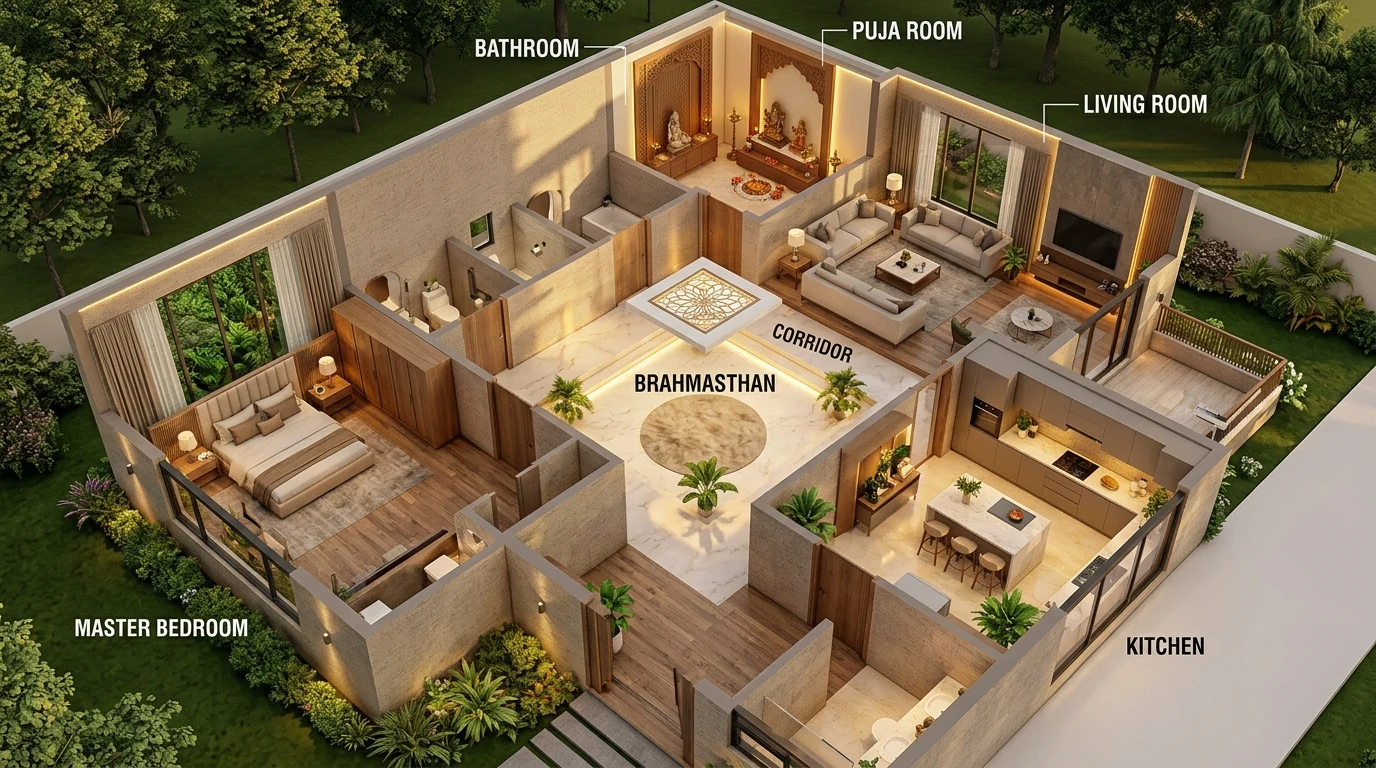
Understanding your vastu house facing is only the first stage. The location of different rooms can be equally important within traditional Vastu planning.
Here is a simplified overview:
| Area | Commonly Preferred Direction |
|---|---|
| Main entrance | North, east or north-east |
| Pooja room | North-east |
| Kitchen | South-east |
| Alternative kitchen | North-west |
| Master bedroom | South-west |
| Living room | North, east or north-east |
| Children's bedroom | West or north-west |
| Guest room | North-west |
| Study area | North or east |
| Staircase | South, west or south-west |
These are general guidelines rather than universal rules. Every vastu house facing configuration should ideally be evaluated in relation to the actual floor plan.
North-East Direction in Vastu
North-east, also called Ishan Kon, receives significant importance in Vastu Shastra. It is commonly associated with clarity, spirituality, openness, and positive energy.
Many Vastu traditions therefore recommend keeping this part of the property relatively clean, open, and light. Prayer or meditation spaces are frequently positioned here.
When analysing vastu house facing, pay attention to what occupies the north-east rather than focusing exclusively on the main door.
South-East Direction in Vastu
South-east is traditionally associated with Agni, or fire. This is why kitchens are frequently recommended in this area.
Cooking appliances such as stoves naturally involve heat and fire, making the symbolic relationship straightforward. If you're comparing properties based on vastu house facing, check whether the kitchen's position complements the overall layout.
South-West Direction in Vastu
South-west is traditionally considered a heavier and more stable area of the home. For this reason, Vastu practitioners commonly recommend the master bedroom in this zone.
Large openings or a main entrance in the extreme south-west are often discouraged in traditional Vastu systems. This again demonstrates why vastu house facing should not be evaluated solely from the broad cardinal direction.
North-West Direction in Vastu
North-west is associated with movement and transition in traditional Vastu. Guest rooms and certain secondary bedrooms are therefore often positioned here. A north-west kitchen may also be suggested when a south-east kitchen is impossible.
When evaluating vastu house facing, these secondary directional zones help create a more complete picture of the property.
Does Vastu House Facing Affect Wealth?
North and north-east directions are traditionally associated with prosperity and financial opportunities in Vastu Shastra. However, vastu house facing should never be treated as a guarantee of wealth.
Financial outcomes depend on numerous real-world factors, including income, expenditure, career decisions, investments, debt, business performance, and broader economic conditions. Vastu can be approached as a traditional framework for organising and interpreting space rather than a replacement for financial planning.
Does Vastu House Facing Affect Health?
Some Vastu traditions connect different directions and elements with physical and emotional well-being. However, there is no reliable scientific evidence that a particular vastu house facing direction can directly prevent or cure medical conditions.
From an architectural perspective, factors such as daylight, ventilation, indoor air quality, temperature, noise, sanitation, and ergonomics can meaningfully influence comfort and well-being. Therefore, consider both traditional Vastu preferences and sound architectural principles when designing a home.
Vastu House Facing for Apartments
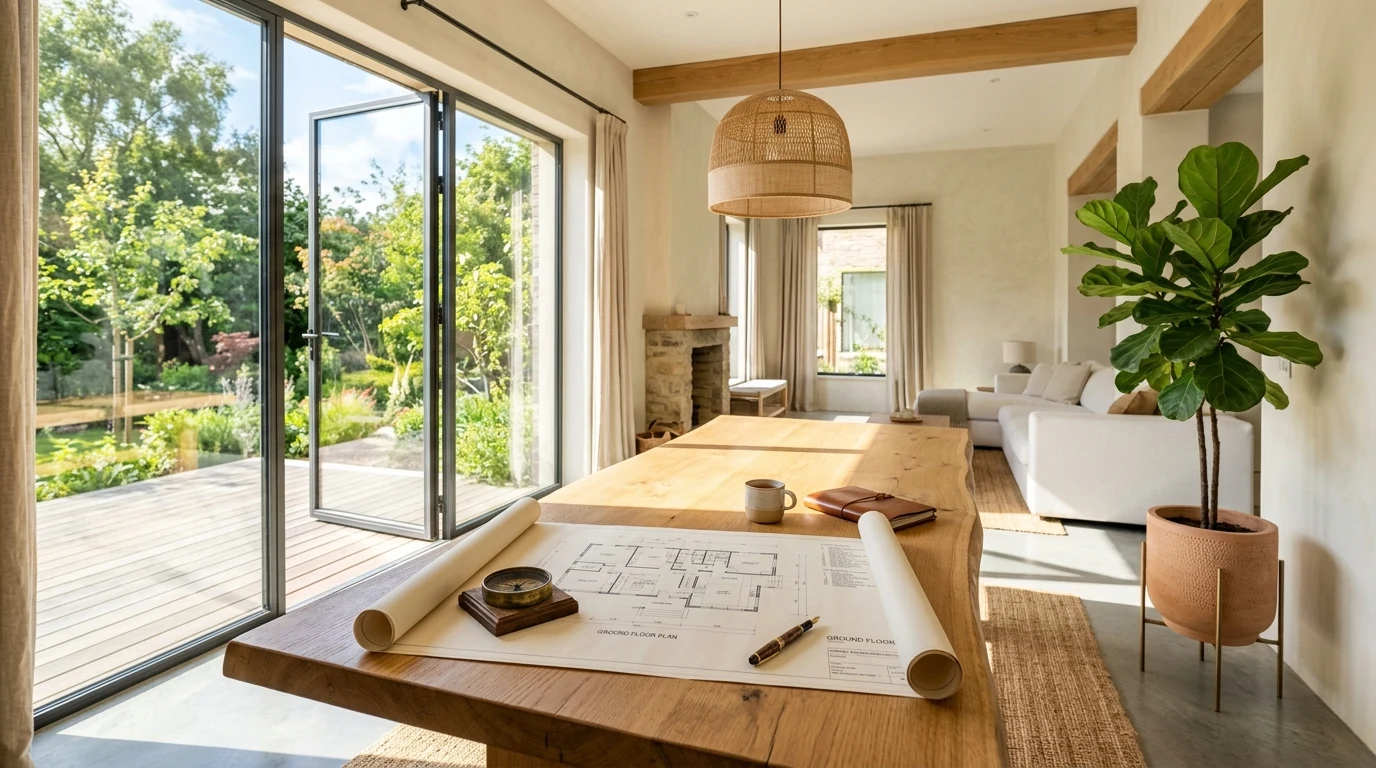
Apartment buyers often struggle with vastu house facing because they cannot control the orientation of the entire building. Fortunately, the direction of the apartment's own entrance can be assessed separately.
Stand inside your apartment at the main door and face outward. Use your compass to identify the direction. Then evaluate:
- Main entrance
- Kitchen
- Master bedroom
- Toilets
- Balcony
- Pooja space
- North-east zone
- South-west zone
Don't judge an apartment solely from the orientation of the tower. Your individual unit's layout matters when considering vastu house facing.
Vastu House Facing for a New Property
If you're buying a property, checking Vastu before purchase is easier than attempting major structural changes later. During a site visit:
- Identify the vastu house facing with a compass.
- Check the exact main-door position.
- Locate north-east.
- Check the kitchen.
- Locate the master bedroom.
- Identify toilets and bathrooms.
- Check balconies and large openings.
- Examine sunlight and ventilation.
- Review the floor plan.
- Consider professional guidance if Vastu is an important purchase criterion for you.
Do not make a high-value property decision from vastu house facing alone. Construction quality, legal documentation, structural safety, neighbourhood, connectivity, price, water supply, ventilation, and resale potential should remain major considerations.
Common Vastu House Facing Myths
Myth 1: Only East-Facing Houses Are Good
False. East-facing homes are popular in Vastu, but north, west, and appropriately planned south-facing homes can also be considered.
Myth 2: South-Facing Homes Are Always Bad
This is one of the biggest misconceptions about vastu house facing. The exact entrance location and overall layout matter.
Myth 3: North-Facing Means Guaranteed Wealth
North has traditional associations with prosperity, but buying a north-facing property obviously does not guarantee financial success.
Myth 4: Changing the Main Door Fixes Everything
A home contains many functional zones. Changing only the entrance does not automatically address every Vastu concern.
Myth 5: Every Family Needs the Same House Direction
Generic vastu house facing advice can provide a starting point, but people seeking traditional personalised guidance may also consider the residents, floor plan, property characteristics, and other factors.
What If Your House Faces the "Wrong" Direction?
First, don't panic. There is no need to assume that a home is harmful simply because its vastu house facing isn't north or east. Avoid unnecessary demolition based on generic online advice.
Start by identifying the actual issue. Sometimes improving:
- Lighting
- Cleanliness
- Furniture arrangement
- Room usage
- Entrance organisation
- Ventilation
- Colours
- Functional zoning
may be more practical than making structural changes. If Vastu plays an important role in your personal or cultural beliefs, a personalised assessment can help distinguish between a genuine layout concern and a generic internet rule.
Why Personalised Vastu Analysis Matters
Two houses can both be described as east-facing while having completely different floor plans.
House A may have:
- Kitchen in south-east
- Master bedroom in south-west
- Open north-east
- Well-positioned entrance
House B may have:
- Toilet in north-east
- Kitchen in an unsuitable location
- Different entrance position
- Different internal circulation
Both technically have the same vastu house facing, yet their overall Vastu assessment may differ substantially. That is why personalised analysis can be more useful than simply searching: "Is my house direction lucky?"
Check Your Vastu House Facing with Astro27
Knowing that your home faces north, south, east, or west is only the beginning. A proper vastu house facing analysis may need to consider the entrance, kitchen, bedrooms, bathrooms, pooja area, north-east and south-west zones, as well as the overall floor plan.
Instead of relying on generic Vastu tips, you can explore personalised astrology and Vastu guidance through Astro27.
Astro27 can help users explore questions such as:
- Is my house-facing direction suitable?
- Is my main entrance positioned correctly?
- Which direction is favourable for my home?
- Where should my kitchen be?
- Where should the master bedroom be?
- Are there Vastu issues in my existing home?
- What changes can I consider without major reconstruction?
A personalised approach helps move beyond generic vastu house facing rules and toward recommendations based on the actual property and the individual's requirements.
Explore Astro27 to understand your home's Vastu more clearly and make informed decisions about your living space.
Vastu House Facing Checklist
Before buying or evaluating a property, use this quick checklist:
- Main Entrance: Is the vastu house facing direction identified correctly?
- North-East: Is the north-east relatively open, clean, and appropriately used?
- Kitchen: Is the kitchen located in or near the south-east or another suitable area?
- Master Bedroom: Is the master bedroom positioned appropriately, commonly toward the south-west?
- Pooja Area: Can the prayer or meditation space be placed in the north-east?
- Bathrooms: Are bathrooms positioned without disrupting important functional zones?
- Entrance Condition: Is the entrance clean, bright, accessible, and free from clutter?
- Natural Environment: Does the property receive adequate sunlight and ventilation?
- Floor Plan: Does the overall layout work well rather than only satisfying one vastu house facing rule?
If several points are unclear, consider getting the complete layout reviewed rather than judging the home from one direction.
Final Thoughts
Choosing the right vastu house facing is often one of the first considerations for people who follow Vastu Shastra, but it should not become the only consideration.
North-east, north, and east are traditionally among the most preferred directions. West-facing homes can also work well, while south-facing homes should be evaluated more carefully rather than automatically rejected.
Most importantly, remember this: A favourable direction does not automatically create a perfectly Vastu-compliant home.
The main entrance, kitchen, master bedroom, bathrooms, pooja room, north-east zone, south-west zone, natural light, ventilation, and complete layout all contribute to the overall assessment.
So instead of asking only: "Which vastu house facing is best?", a better question is: "How well does my entire home align with Vastu principles?"
Discover Your Home's Vastu with Astro27
Not sure whether your home's direction is right for you? With Astro27, you can go beyond generic vastu house facing advice and explore personalised guidance for your home and life.
Consult with Astro27