Vastu Idols for Home: The Complete Guide to Choosing, Placing & Understanding Their Significance
Primary Keyword: vastu idols for home
Your home is more than just walls, furniture, and décor. For many Indian families, it is also a space connected with spirituality, peace, prosperity, relationships, and personal well-being. This is one reason why vastu idols for home continue to be popular among homeowners who want to create a spiritually positive and aesthetically balanced living environment.
But choosing an idol simply because it looks beautiful may not always be the best approach.
According to traditional Vastu principles, the deity, form, direction, placement, size, and surrounding environment can all be considered when placing sacred objects in a home. Different idols are traditionally associated with different qualities such as wisdom, prosperity, courage, protection, harmony, and spiritual growth.
This makes the selection of vastu idols for home an important decision for people who want their spiritual spaces to reflect both their beliefs and their home's layout.
At the same time, Vastu should not be treated as a substitute for practical decision-making. A beautiful home still needs good ventilation, natural light, cleanliness, functional furniture, and thoughtful design. Vastu can be approached as a traditional framework for organizing a space according to cultural and spiritual beliefs.
In this guide, we will explore the most popular vastu idols for home, their traditional significance, where they are commonly placed, mistakes to avoid, and how astrology can add a more personalized perspective.
What Are Vastu Idols for Home?
The term vastu idols for home generally refers to religious or symbolic statues and figurines that people place in their homes according to traditional Vastu principles.
These may include idols of Lord Ganesha, Goddess Lakshmi, Lord Shiva, Lord Krishna, Radha-Krishna, Lord Hanuman, Goddess Saraswati, Kubera, Buddha, elephants, tortoises, horses, and other traditional symbols.
The purpose varies from person to person.
Some homeowners select vastu idols for home because of their religious devotion. Others choose them because they believe particular symbols represent prosperity, protection, knowledge, peace, or harmony. Some also incorporate them into their interior décor.
The important distinction is between a sacred idol used for worship and a decorative object inspired by spiritual symbolism.
If an idol is being treated as part of a puja space, traditional practices surrounding cleanliness, placement, respect, and worship should be considered. If it is purely decorative, the approach can be more flexible.
Why Are Vastu Idols for Home So Popular?
The popularity of vastu idols for home comes from the intersection of spirituality, culture, interior design, and the desire to create a positive environment.
In Indian households, the home temple has traditionally been an important part of daily life. Modern apartments may not always have a dedicated puja room, so families often create smaller prayer corners, shelves, wall-mounted mandirs, or compact spiritual spaces.
This has created a new interest in choosing vastu idols for home that fit both traditional beliefs and contemporary interiors.
There is also a psychological dimension.
A spiritual symbol placed in a regularly used space can become a visual reminder of qualities that a person values. A Ganesha idol may remind someone of wisdom and new beginnings. Saraswati may represent learning. Hanuman may symbolize courage and devotion. Lakshmi may represent prosperity and abundance.
Whether someone interprets these meanings spiritually, culturally, or symbolically is a personal choice.
10 Popular Vastu Idols for Home
There is no single idol that is universally considered the best for every household. The appropriate choice depends on your faith, family traditions, available space, and the purpose of the area.
Here are some of the most commonly considered vastu idols for home.
1. Lord Ganesha Idol
Lord Ganesha is among the most popular choices when people search for vastu idols for home.
Ganesha is traditionally associated with wisdom, auspicious beginnings, learning, and the removal of obstacles. Because of these associations, families often choose a Ganesha idol when moving into a new home, beginning a new business, or creating a new prayer space.
A calm and aesthetically balanced Ganesha idol can also work well in a modern home.
When choosing one, pay attention to the form, posture, size, craftsmanship, and location rather than simply selecting the largest or most elaborate idol.
For a home temple, a proportionate idol is generally more practical than an oversized statue.
2. Goddess Lakshmi Idol
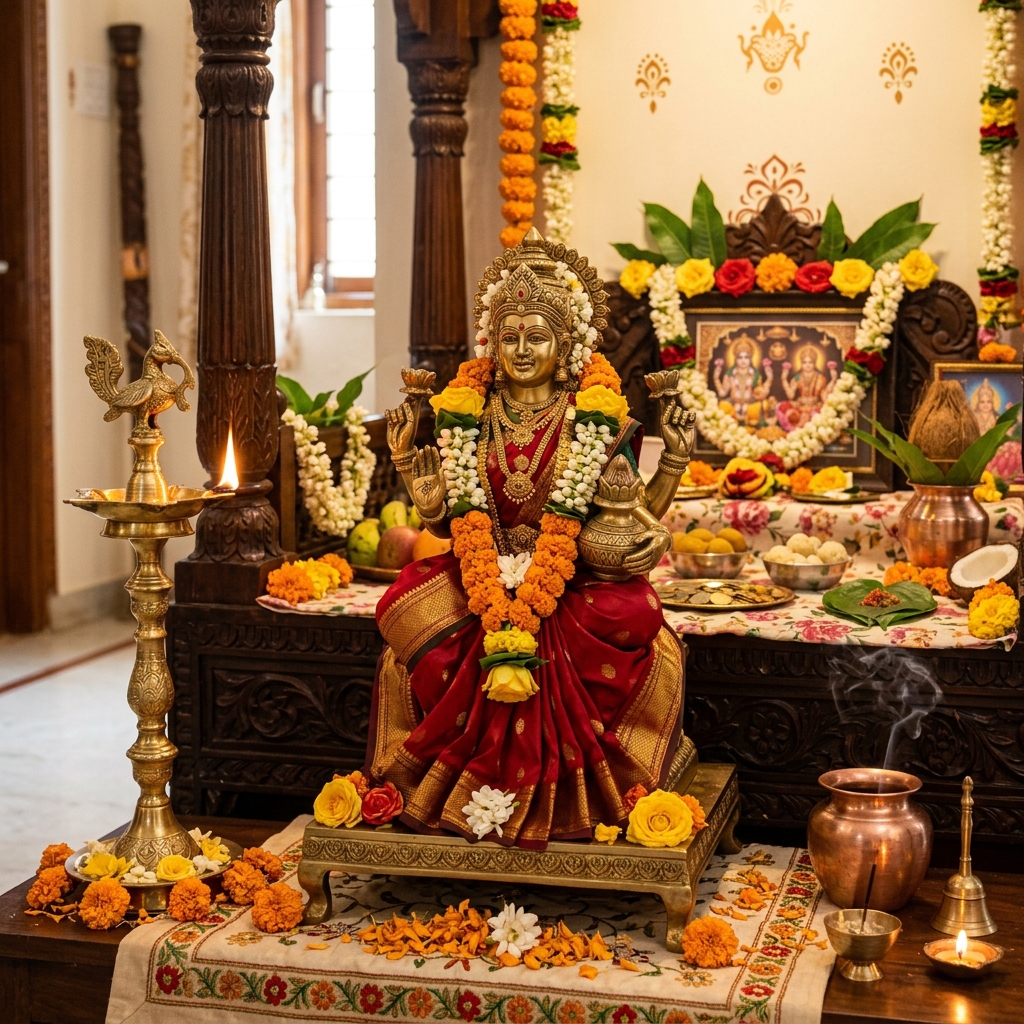
Goddess Lakshmi is traditionally associated with prosperity, abundance, fortune, and well-being.
For families looking specifically for vastu idols for home associated with wealth and prosperity, Lakshmi is one of the most common choices.
A Lakshmi idol is often placed in a clean and well-maintained puja space. Some families also place symbolic representations of Lakshmi near the entrance during festivals such as Diwali.
The important principle is respect and cleanliness.
Rather than filling every corner with prosperity-related objects, create one thoughtfully arranged space where the symbolism is meaningful and visually balanced.
3. Lord Shiva Idol
Lord Shiva has profound spiritual significance in Hindu traditions and is represented in many forms.
A Shiva idol may be selected for meditation, devotion, spiritual discipline, or personal faith. Because Shiva symbolism can take many forms, homeowners should understand what form they are choosing rather than purchasing an idol purely because it looks attractive.
If you are considering Shiva-related vastu idols for home, take into account your family tradition and the specific form of the deity.
For specialized forms or practices, it can be useful to consult a knowledgeable spiritual practitioner rather than relying entirely on generic internet advice.
4. Radha Krishna Idol
Radha Krishna is traditionally associated with love, devotion, harmony, and spiritual connection.
This makes Radha Krishna idols popular among families looking for vastu idols for home connected with relationships and emotional harmony.
A beautifully crafted Radha Krishna idol can also become a focal point in a living room, meditation area, or puja space, depending on the family's tradition.
The placement should be respectful and should not make the idol appear like an ordinary decorative accessory if it is being used for worship.
5. Lord Hanuman Idol
Lord Hanuman is traditionally associated with courage, devotion, strength, discipline, and protection.
For people searching for vastu idols for home with a protective or strength-oriented symbolism, Hanuman is a common choice.
However, Hanuman has several forms and representations. Instead of assuming that every form is interchangeable, understand the form of the idol and its traditional significance.
If you are uncertain about the appropriate form or placement, personalized guidance can be more useful than following a generic rule.
6. Goddess Saraswati Idol
Goddess Saraswati represents knowledge, wisdom, music, learning, and creativity.
Students, teachers, artists, musicians, writers, and professionals who value learning may naturally feel connected to Saraswati symbolism.
Among vastu idols for home, Saraswati can be particularly relevant for a study room, library, creative workspace, or dedicated prayer area.
However, the practical function of the room should remain the priority. An idol should complement the space rather than create clutter.
7. Lord Kubera Idol
Kubera is traditionally associated with wealth and prosperity.
People interested in vastu idols for home for financial symbolism sometimes consider Kubera alongside Lakshmi and Ganesha.
However, placing several wealth-related idols without considering the overall arrangement can make a space visually crowded.
A better approach is to select a small number of meaningful symbols and maintain the area carefully.
8. Buddha Statue
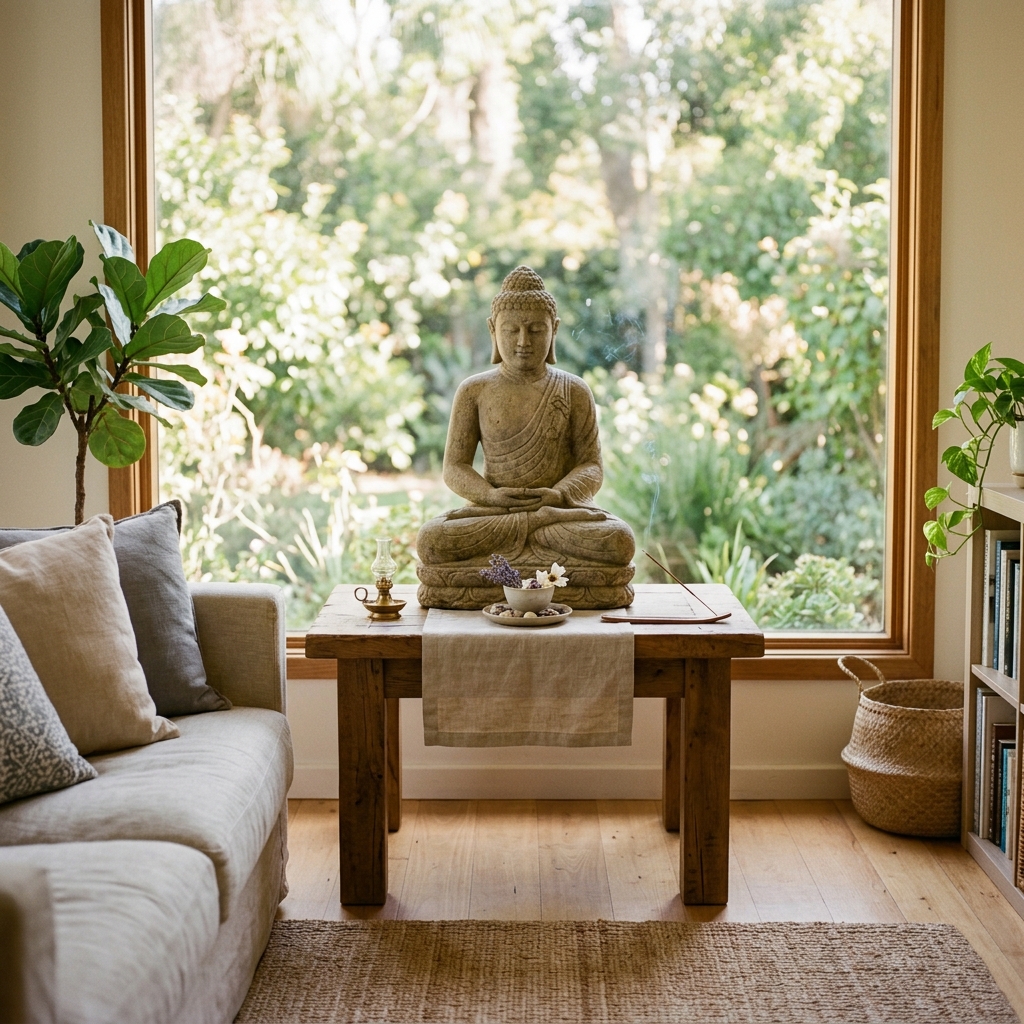
Buddha statues are widely used in homes as symbols of peace, mindfulness, meditation, and calm.
Although Buddha is not a Hindu deity, Buddha-inspired décor is frequently included in modern Indian interiors.
When incorporating such a statue among vastu idols for home, homeowners should distinguish between religious practice and decorative symbolism.
The meaning, posture, expression, and environment can influence how the piece feels within the room.
9. Elephant Symbol or Idol
Elephants are traditionally associated with strength, stability, wisdom, and good fortune in various Indian cultural contexts.
Elephant figurines are therefore frequently considered when discussing vastu idols for home and decorative Vastu elements.
If you use elephant figures as décor, focus on proportion, cleanliness, placement, and how the object interacts with the rest of your interior.
10. Tortoise Symbol or Idol
The tortoise is another traditional Vastu symbol that appears frequently in discussions about home energy and stability.
People may choose tortoise figurines as symbolic Vastu décor rather than religious idols.
If you are considering tortoise pieces among vastu idols for home, do not assume that one placement works universally. Directional recommendations can vary depending on the specific tradition, material, purpose, and location.
Which Direction Is Best for Vastu Idols for Home?
Direction is one of the most frequently searched topics related to vastu idols for home.
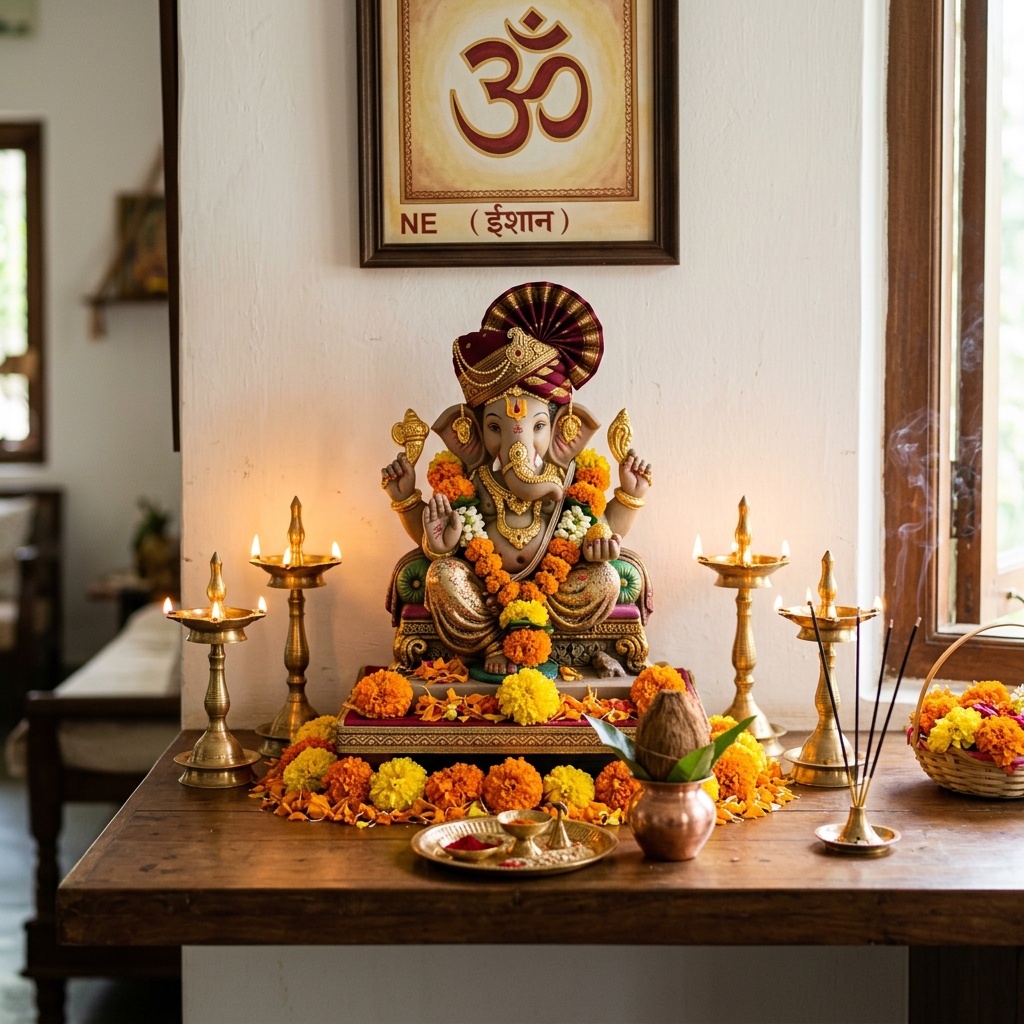
Traditional Vastu commonly gives special importance to the northeast, also called the Ishanya direction, particularly for spiritual activities. East and north are also frequently discussed in relation to prayer and spiritual practices.
However, there is an important distinction between:
The direction of the room
and
the direction the idol faces.
These are not necessarily the same thing.
For example, a traditional recommendation may describe a puja room as being located in the northeast while separately recommending an orientation for the deity and worshipper.
Therefore, simply putting an idol in the northeast corner without considering the complete layout may oversimplify the concept.
Recent Vastu guidance also emphasizes the importance of keeping the puja area clean, peaceful, and uncluttered.
Vastu Idols for Home and the Northeast Direction
The northeast is often described in traditional Vastu as an important zone for spiritual activity.
This is why many homeowners consider the northeast when planning a puja room or selecting vastu idols for home.
If your home has a dedicated northeast prayer area, you can create a simple arrangement with:
- One primary deity
- A small number of supporting idols
- A clean platform
- Appropriate lighting
- Fresh flowers when suitable
- A diya according to your practice
- Minimal decorative clutter
The objective should be a peaceful spiritual environment rather than maximum decoration.
If the northeast is unavailable because of the architecture of your apartment, do not panic. Existing homes cannot always be redesigned according to an ideal floor plan.
A practical Vastu consultation can consider the actual structure instead of asking you to make unrealistic changes.
Can You Keep Vastu Idols for Home in the Living Room?
Yes, many modern homes do not have a separate puja room.
In such cases, homeowners may create a dedicated spiritual corner in the living room.
When placing vastu idols for home in a living room, consider:
- Keep the area clean.
- Avoid placing sacred idols directly on the floor.
- Use a stable and proportionate platform.
- Avoid overcrowding.
- Keep the idol away from random household storage.
- Ensure the space receives adequate light.
- Maintain the area consistently.
A small, thoughtfully designed prayer corner can be more effective aesthetically and practically than a large collection of idols squeezed into a small space.
Can You Keep Vastu Idols for Home in the Bedroom?
This is an area where generic advice can become confusing.
A bedroom is primarily intended for rest and privacy, while a puja area has a different function.
For that reason, many traditional Vastu practitioners recommend keeping the main worship space separate from the bedroom where possible.
If you live in a studio apartment or a very small home, however, creating complete separation may not be practical.
Rather than following an absolute internet rule, consider your family tradition, the type of idol, your available space, and whether the object is being worshipped or simply used as décor.
This is one situation where personalized advice about vastu idols for home can be more useful than a one-size-fits-all checklist.
How Many Vastu Idols for Home Should You Keep?
More idols do not automatically mean more positive energy.
One of the biggest mistakes people make is overcrowding the puja space with too many statues.
A compact home temple may contain a primary deity along with a few complementary deities. The exact number should depend on the family's tradition and available space.
When choosing vastu idols for home, ask:
- Do I genuinely connect with this deity?
- Is this idol part of my family's worship practice?
- Do I have enough space?
- Can I maintain the area properly?
- Does the arrangement look peaceful?
- Am I purchasing it for devotion or simply because it is trending?
If you cannot answer why an idol belongs in your home, you probably do not need it.
What Size Should Vastu Idols for Home Be?
The size of vastu idols for home should be proportional to the space.
A small apartment does not necessarily benefit from a large idol.
Similarly, an expansive dedicated puja room may require a more substantial arrangement.
Before purchasing an idol, measure:
- Shelf depth
- Platform width
- Ceiling height
- Available clearance
- Distance between multiple idols
- Space required for lamps and offerings
A practical idol should be stable and easy to clean.
The visual relationship between the idol and its surroundings is just as important as the idol itself.
Which Material Is Best for Vastu Idols for Home?
Traditional and contemporary vastu idols for home are available in many materials.
Common options include:
Brass
Brass idols are extremely popular in Indian homes. They have a traditional appearance, are durable, and work well with both classic and contemporary interiors.
Marble
Marble can create an elegant and serene appearance. It is particularly popular for traditional temple settings.
Stone
Stone idols can have a strong traditional character and may be appropriate for dedicated spiritual spaces.
Silver
Silver is traditionally considered auspicious in many Indian households and is often used for smaller idols or festive worship.
Wood
Wooden spiritual décor can work beautifully in modern interiors, although it should be maintained carefully.
Resin and Other Decorative Materials
Modern decorative pieces are often manufactured using resin and similar materials. These can be practical for décor, but homeowners should distinguish between decorative pieces and traditionally consecrated worship idols.
The best choice depends on your purpose, tradition, budget, maintenance requirements, and interior style.
Common Mistakes When Choosing Vastu Idols for Home
Understanding what not to do is just as important as knowing what to buy.
1. Buying an Idol Only Because It Looks Attractive
A beautiful idol is not automatically appropriate for your spiritual practice.
Understand what you are buying.
2. Creating an Overcrowded Temple
Too many vastu idols for home can make a small temple feel chaotic.
Keep the arrangement intentional.
3. Ignoring Cleanliness
A spiritual space should be maintained regularly.
Dust, clutter, unused objects, and broken decorative items can undermine the peaceful atmosphere you are trying to create.
4. Keeping Damaged Idols
Many Hindu traditions consider damaged idols inappropriate for continued household worship. If an idol is damaged, follow your family or local religious tradition for respectfully handling it. Recent discussions also emphasize that damaged idols should not simply be treated as ordinary décor.
5. Following Every Internet Rule
The internet contains conflicting Vastu recommendations.
One website may recommend a particular direction while another recommends something different.
This happens because Vastu traditions can differ by school, region, deity form, and application.
Do not blindly combine rules from multiple sources.
6. Ignoring the Actual Floor Plan
A home is not a collection of isolated corners.
The entrance, kitchen, bedrooms, toilets, windows, staircases, furniture, and open areas all interact with the overall layout.
That is why a property-specific assessment can be more useful than generic vastu idols for home advice.
Vastu Idols for Home: Why Personalization Matters
Imagine two families living in identical apartments.
The floor plans are the same.
The entrance is the same.
The bedrooms are the same.
Yet their experiences, priorities, lifestyles, and spiritual practices may be completely different.
This is where the combination of astrology and Vastu becomes interesting.
Traditional Vastu primarily focuses on the space. Astrology focuses on the individual.
Astro-Vastu approaches attempt to consider both.
Some modern Astro-Vastu practitioners map planetary influences and birth-chart information against directional zones. This personalized approach is increasingly discussed as an alternative to applying identical remedies to every home.
That does not mean every person needs a personalized remedy.
But if you are repeatedly changing vastu idols for home, trying different directions, and still feeling uncertain about what is appropriate, a personalized consultation may help you understand the reasoning behind the recommendation.
How Astro27 Can Help You Choose Vastu Idols for Home
This is where Astro27 can become part of your decision-making process.
Instead of randomly purchasing vastu idols for home based on social media posts, you can approach Vastu from a more personalized perspective.
Astrology can provide information about an individual's birth chart, while Vastu focuses on the spatial characteristics of a property.
When these perspectives are considered together, the objective is not simply to answer:
“Which idol should I buy?”
The better question is:
“Which spiritual or Vastu element is appropriate for my home, my purpose, and my circumstances?”
Astro27 can help position Vastu as part of a broader astrology-led approach rather than treating every Vastu recommendation as a universal rule.
For example, someone primarily concerned with career may approach the question differently from someone focused on relationships, education, business, or general spiritual well-being.
This personalized thinking can make your selection of vastu idols for home more intentional.
Instead of buying five different idols because an article told you that each one represents something, you can first understand what you actually want to address.
Vastu Idols for Home Based on Your Purpose
The following framework can help you narrow down your choices.
For New Beginnings
Ganesha is traditionally associated with auspicious beginnings and overcoming obstacles.
For Prosperity
Lakshmi and Kubera are commonly associated with wealth and abundance.
For Knowledge
Saraswati is traditionally connected with learning, wisdom, music, and creativity.
For Courage and Protection
Hanuman is traditionally associated with strength, courage, discipline, and devotion.
For Love and Harmony
Radha Krishna is commonly associated with devotion, love, and emotional connection.
For Spiritual Practice
Shiva and other deities may be selected according to family tradition and personal devotion.
The purpose should come before the purchase.
How to Place Vastu Idols for Home in a Modern Apartment
Modern apartments present different challenges from traditional houses.
You may have:
- Limited floor space
- An open kitchen
- No dedicated puja room
- A combined living and dining area
- Built-in wardrobes
- Limited natural light
- Rental restrictions
- Furniture that cannot be moved
In this situation, vastu idols for home should be selected according to what is realistically possible.
A small wall-mounted mandir or dedicated shelf may work better than trying to create an elaborate temple.
Choose one clean location and maintain it consistently.
Avoid putting spiritual objects on unstable furniture, near clutter, or in places where they can easily be knocked over.
Vastu Idols for Home and Interior Design
Vastu does not have to mean sacrificing aesthetics.
Modern homeowners can create beautiful spiritual spaces using:
- Natural wood
- Brass
- Neutral colours
- Warm lighting
- Stone
- Traditional textiles
- Minimal floral arrangements
- Simple shelving
A well-designed arrangement of vastu idols for home can become a visual focal point without overwhelming the room.
The key is restraint.
Instead of covering an entire wall with spiritual objects, select one or two meaningful pieces and create enough negative space around them.
This approach works particularly well in minimalist apartments.
Should You Buy Vastu Idols for Home Online?
Online shopping makes it easier than ever to compare vastu idols for home.
But there are several things you should check before buying.
Check the Dimensions
Product photos can be misleading. Always check the actual height and width.
Check the Material
Read the product specifications carefully.
Check the Finish
Cheap finishes may deteriorate faster, especially if the idol is regularly handled or exposed to moisture.
Check the Stability
An idol should have a stable base.
Check the Seller
Look for clear product information, customer reviews, return policies, and transparent pricing.
Understand the Purpose
Is it a religious idol, a decorative statue, or a Vastu symbol?
This distinction matters.
Do Vastu Idols for Home Really Change Your Life?
This question deserves an honest answer.
There is no scientific basis for claiming that placing a particular idol in a specific direction will automatically create wealth, cure illness, guarantee marriage, or transform someone's future.
Vastu belongs to a traditional cultural and architectural belief system.
People may still find value in it because it provides a framework for creating intentional spaces and maintaining spiritual routines.
The psychological experience of living in a clean, organized, meaningful environment can also be valuable.
Therefore, vastu idols for home should be approached as part of a broader lifestyle and spiritual practice—not as a guaranteed shortcut to success.
Your decisions, relationships, financial planning, health care, education, and professional efforts remain important.
When Should You Consult an Expert?
Generic Vastu tips are useful for learning the basics.
However, professional guidance may be worth considering when:
- You are purchasing a new home.
- You are constructing a house.
- You are renovating extensively.
- You are unsure about the direction of your property.
- Multiple Vastu recommendations conflict.
- You want to combine astrology and Vastu.
- You are considering personalized remedies.
- You want advice based on your birth chart.
- You are unsure which spiritual symbols are appropriate for your circumstances.
This is where an astrology platform such as Astro27 can offer a more personalized starting point.
Instead of endlessly searching for vastu idols for home, you can first understand the underlying question you are trying to solve.
Frequently Asked Questions About Vastu Idols for Home
Which is the best Vastu idol for home?
There is no universally best idol. Ganesha, Lakshmi, Saraswati, Hanuman, Shiva, and Radha Krishna are among the commonly chosen options, but the appropriate choice depends on your faith, purpose, family tradition, and space.
Which direction is best for Vastu idols for home?
The northeast is traditionally considered an important direction for spiritual activity, while east and north are also frequently discussed. However, the ideal arrangement depends on the complete floor plan and the specific deity.
Can I keep Ganesha and Lakshmi together?
Many Indian households traditionally worship Ganesha and Lakshmi together, especially during Diwali. The arrangement should be respectful, clean, and consistent with your family tradition.
Can I keep Vastu idols for home in the living room?
Yes. If you do not have a dedicated puja room, a clean and peaceful corner can be used. Keep the arrangement organized and separate it visually from ordinary storage or clutter.
How many Vastu idols should I keep?
There is no universal number that applies to every household. Avoid unnecessary duplication and overcrowding. Choose meaningful idols that you can properly maintain.
Can I keep damaged idols?
Traditions generally advise against continuing to worship damaged idols. Follow your family or religious tradition for respectful handling and replacement.
Are Vastu idols scientifically proven?
The spiritual claims associated with Vastu are not established as scientific facts. Vastu is better understood as a traditional system of spatial organization, symbolism, and spiritual practice.
Can astrology help with Vastu?
Some practitioners use an Astro-Vastu approach that combines birth-chart information with the directional characteristics of a property. This can provide a more personalized framework than generic recommendations.
Can Astro27 help with Vastu guidance?
Astro27 can be positioned as a resource for people who want to explore astrology and personalized guidance rather than relying only on generic Vastu lists. For decisions involving a specific home, personalized information about the property and individual circumstances can be more useful than a generic recommendation.
Final Thoughts: Choose With Intention, Not Fear
The search for vastu idols for home often begins with a simple question:
“Which idol should I keep in my house?”
But the better question is:
“What do I want this space to represent?”
If you want wisdom, choose symbolism connected with wisdom.
If you want to celebrate prosperity, explore traditional representations of abundance.
If you want courage, choose symbols associated with strength and devotion.
If you want peace, create an environment that encourages calm and reflection.
And if you want a recommendation that considers your personal circumstances rather than simply repeating a generic internet list, explore a more personalized astrology and Vastu approach.
That is where Astro27 can fit into the journey.
Rather than buying vastu idols for home because a random post says they are lucky, take the time to understand your space, your intentions, your traditions, and your personal astrological profile.
A meaningful home does not need dozens of remedies.
It needs intention.
It needs balance.
And above all, it should be a space where you and your family feel comfortable, peaceful, and connected.
Explore Astro27 to take a more personalized approach to astrology, Vastu, and your home's spiritual environment.
Quick Vastu Idols for Home Checklist
Before placing any idol, ask yourself:
☑ Is this idol meaningful to me or my family?
☑ Do I understand what the idol represents?
☑ Is the idol appropriate for the purpose?
☑ Is the placement clean and respectful?
☑ Is the idol stable and proportionate to the space?
☑ Am I following one consistent Vastu tradition rather than mixing contradictory rules?
☑ Is the space free from unnecessary clutter?
☑ Have I considered the complete floor plan?
☑ Do I need generic advice or personalized guidance?
☑ Would an astrology-based assessment provide additional context?
If you can answer these questions, your approach to vastu idols for home becomes much more thoughtful than simply following a list of “lucky idols.”
The goal should not be fear.
The goal should be awareness, intention, and harmony.
And when you want to go beyond generic recommendations, Astro27 can help you explore a more personalized path.