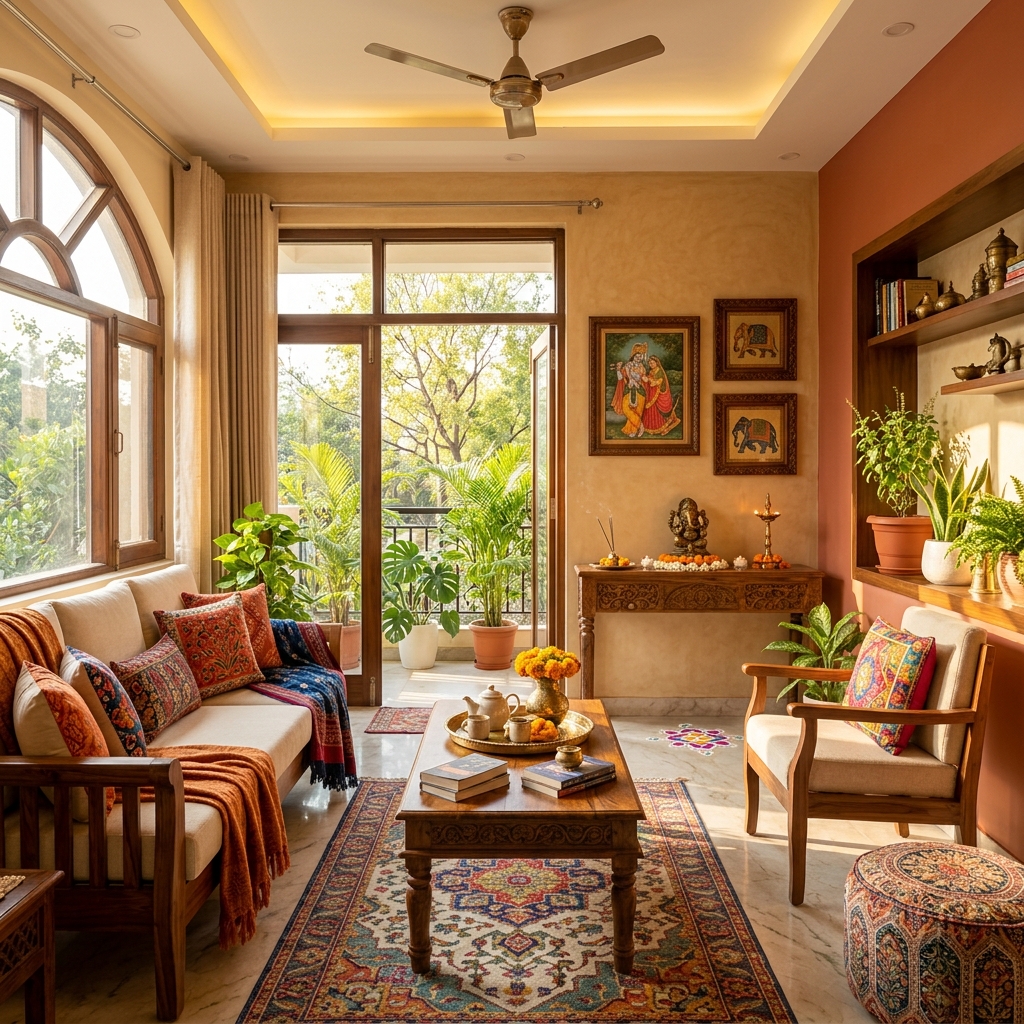
Vastu Home Decor: 25+ Ideas to Create a Positive and Harmonious Home
Your home is more than a collection of rooms, furniture and decorative pieces. It is the space where you begin and end your day, spend time with family, relax after work and create memories. That is why many Indian homeowners are increasingly interested in Vastu home decor—the idea of arranging colours, furniture, artwork, plants and decorative elements in ways inspired by Vastu Shastra.
Unlike a complete home renovation, Vastu home decor can often be incorporated through simple changes. You may not need to rebuild walls or redesign your entire floor plan. Changing the placement of furniture, reducing clutter, introducing natural elements or selecting suitable colours can give your home a more intentional and harmonious appearance.
But there is an important point to understand: Vastu is a traditional Indian system of spatial and architectural principles. Different practitioners and traditions may interpret specific recommendations differently. Therefore, décor suggestions should be treated as traditional guidance rather than scientifically proven guarantees of wealth, health or success.
The goal of thoughtful Vastu home decor is to create a home that feels balanced, organized, comfortable and aesthetically pleasing while respecting the directional principles associated with Vastu.
If you are interested in understanding how astrology and Vastu can be considered together for your individual circumstances, platforms such as Astro27 can also provide a starting point for personalized astrological exploration.
What Is Vastu Home Decor?
Vastu home decor refers to decorating and arranging a home while considering traditional Vastu principles related to directions, elements, colours, objects and spatial balance.
Vastu Shastra traditionally connects different directions of a home with particular energies, elements and qualities. Modern homeowners often adapt these concepts to apartments, villas and contemporary interiors rather than following them as rigid architectural rules.
For example, a homeowner might consider:
- Which direction a room faces
- Where heavier furniture is positioned
- How much natural light enters a room
- Which colours are used on different walls
- Where plants and natural elements are placed
- How the entrance is maintained
- Whether the home feels cluttered or open
- Where decorative objects and artwork are displayed
This makes Vastu home decor particularly interesting for people who want to combine traditional Indian concepts with modern interior design.
Importantly, Vastu should not become a reason to make your home uncomfortable. A beautifully designed space should still be functional, practical and suited to the people living in it.
Why Vastu Home Decor Is Becoming Popular
Interior design has increasingly moved beyond simply asking, “Does this room look good?”
People also want to know whether a space feels peaceful, welcoming and comfortable.
This is one reason Vastu home decor continues to attract attention among Indian homeowners.
Traditional Vastu encourages attention to factors such as light, openness, direction, cleanliness and the relationship between different parts of a home. Many of these ideas can also support good interior design because uncluttered rooms, natural light and sensible furniture placement generally make spaces more pleasant to use.
Recent home-design content similarly emphasizes practical changes such as decluttering, natural light, plants, colours and directional placement rather than requiring major structural changes.
The best approach is therefore to use Vastu home decor as a framework for making intentional design decisions rather than treating every rule as an absolute command.
25 Vastu Home Decor Ideas for Your Home
1. Keep the Main Entrance Clean and Welcoming
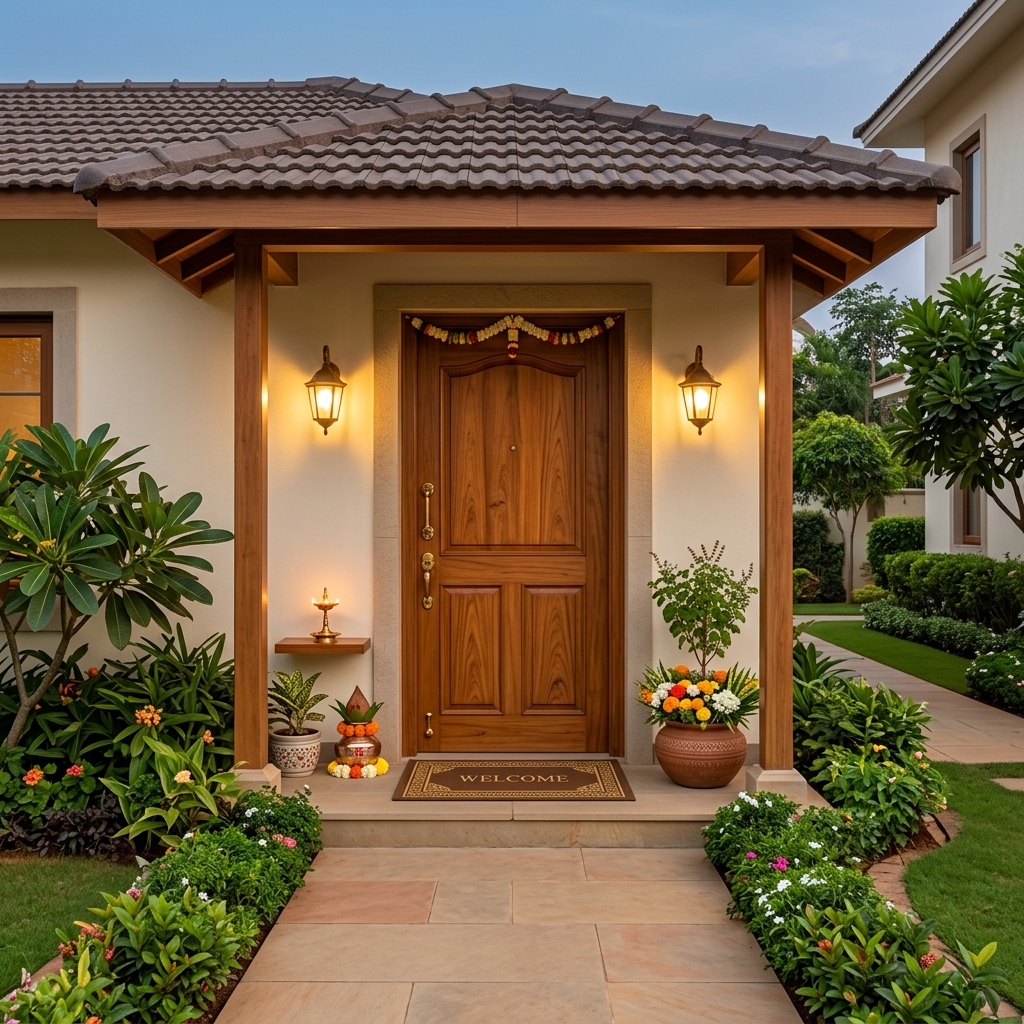
The entrance creates the first impression of your home.
In traditional Vastu, the main entrance is considered an important transition point between the outside environment and the home.
For Vastu home decor, focus on keeping this area clean, bright and free from unnecessary objects.
You can consider:
- A clean and uncluttered doorway
- Good-quality lighting
- Fresh flowers or suitable plants
- A tasteful nameplate
- An attractive but simple entrance arrangement
- A clean doormat
- Minimal decorative clutter
Avoid allowing footwear, damaged objects, broken furniture or miscellaneous storage to dominate the entrance.
A well-maintained entrance can improve the visual appeal of the home regardless of whether you follow Vastu.
2. Use Natural Light Wherever Possible
Natural light is one of the simplest ways to improve a home.
Traditional Vastu gives considerable importance to openness and light, particularly in areas associated with the east and north.
From an interior-design perspective, natural light can also make rooms appear larger and more inviting.
For Vastu home decor, avoid unnecessarily blocking windows with heavy furniture or excessive decoration.
Use:
- Sheer curtains
- Light-coloured window treatments
- Reflective surfaces where appropriate
- Open spaces near windows
- Indoor plants that suit the available light
Instead of filling every corner with decorative objects, allow daylight to become part of the design.
3. Choose Colours Thoughtfully
Colour is one of the easiest elements to change in Vastu home decor.
Traditional Vastu associates different directions with different elemental qualities, and practitioners may recommend different colour families for different zones.
However, colour selection should also consider the size, lighting and purpose of the room.
Soft whites, creams, greens, blues and earthy tones can create a calm visual environment, while warmer tones can introduce energy and character when used selectively.
Rather than painting an entire room in an intense colour because of a single Vastu recommendation, consider:
- Wall colour
- Curtains
- Cushions
- Rugs
- Artwork
- Decorative accessories
This allows you to experiment without making expensive permanent changes.
4. Keep the Centre of the Home Relatively Open
One recurring idea in Vastu is the importance of the central area of the home.
The centre is traditionally associated with openness and balance. In modern interiors, this principle can translate into a simple design rule: avoid unnecessary clutter in the central circulation areas.
For Vastu home decor, consider keeping the centre visually lighter.
Instead of placing multiple large tables, cabinets and decorative pieces in the middle, allow people to move comfortably through the space.
Open circulation can make a home feel larger and more organized.
5. Position Heavy Furniture Carefully
Furniture placement is an important part of Vastu home decor.
Traditional guidance commonly associates heavier objects with the south, west and southwest portions of a home, while lighter and more open arrangements are often preferred in the north and east.
Depending on the room, heavier furniture may include:
- Wardrobes
- Large sofas
- Storage cabinets
- Bookshelves
- Heavy beds
- Large wooden furniture
Do not sacrifice functionality simply to follow a directional rule. The furniture must still fit the room and allow comfortable movement.
6. Create a Balanced Living Room
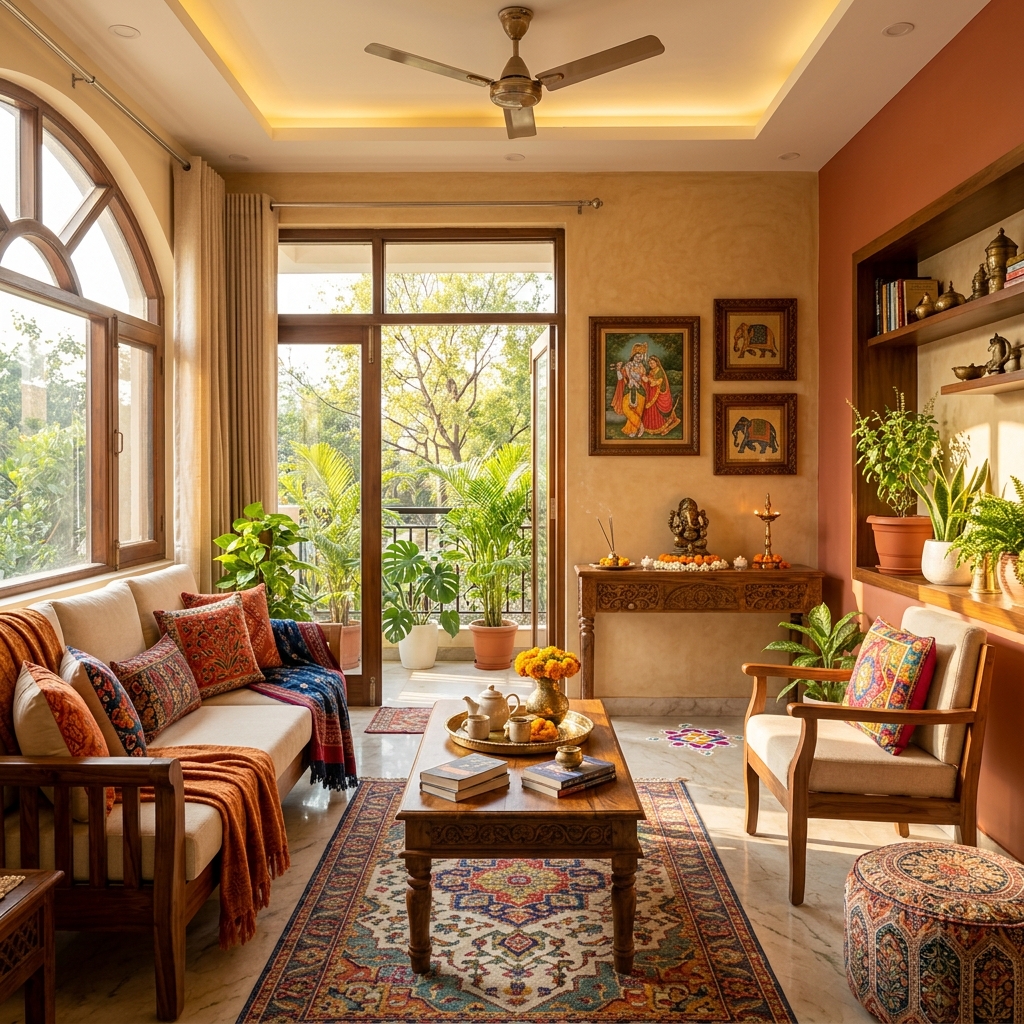
The living room is often the social centre of an Indian home.
It is where family members gather, guests are welcomed and conversations take place.
A practical Vastu home decor approach for the living room can combine traditional directional ideas with modern interior design.
Consider keeping heavier sofas toward the south or west while allowing the north or east side to remain comparatively lighter and open.
You can also use:
- Natural fabrics
- Comfortable seating
- Indoor greenery
- Meaningful artwork
- Warm but balanced lighting
- Minimal decorative clutter
The objective should be a living room that feels both visually attractive and easy to use.
7. Pay Attention to the Bedroom
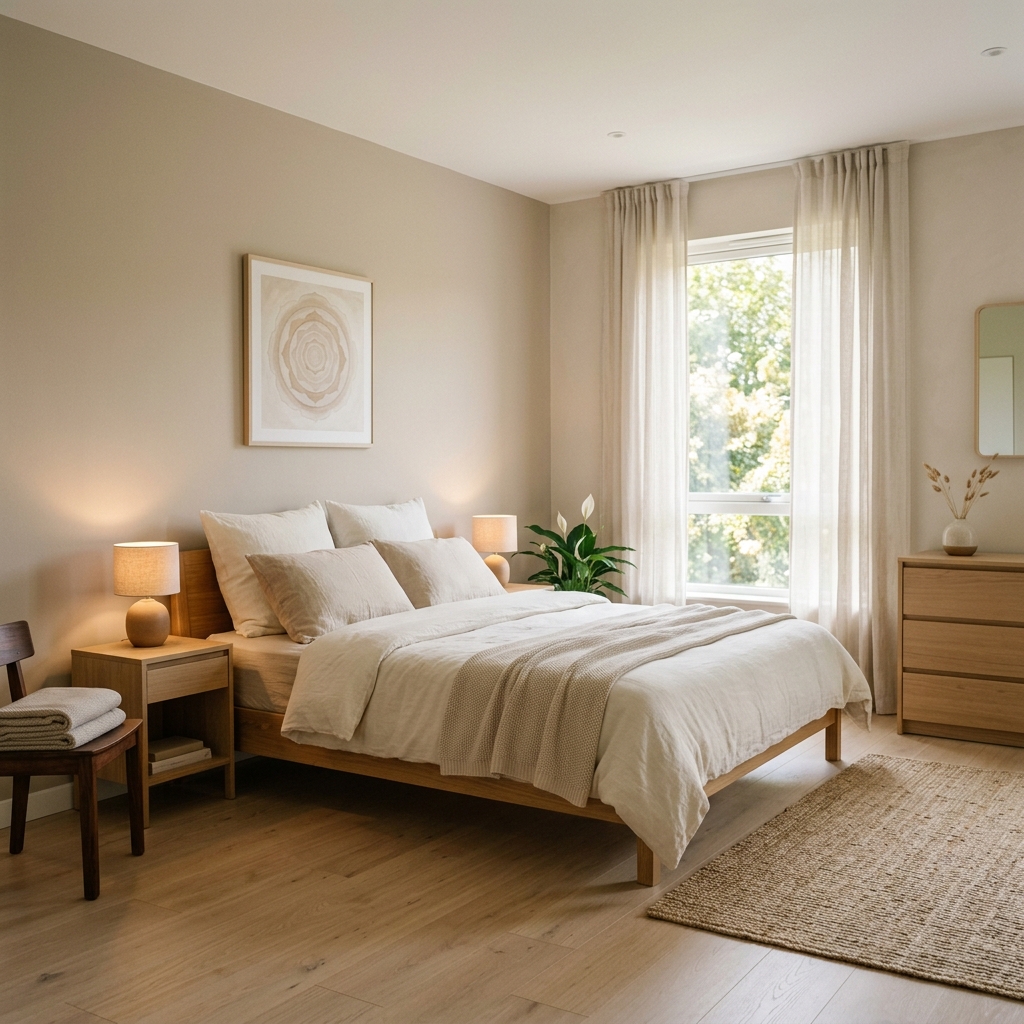
The bedroom should feel calm rather than stimulating.
Traditional Vastu recommendations often emphasize appropriate bed placement and a stable sleeping environment.
For Vastu home decor, avoid turning the bedroom into an overloaded decorative space.
Instead, use:
- Soft colours
- Minimal furniture
- Comfortable fabrics
- Balanced lighting
- Organized storage
- Carefully selected artwork
Keeping the area under the bed relatively clear is also a useful organizational habit. Recent Vastu-oriented guidance commonly recommends avoiding clutter under beds and unnecessary electronic devices near sleeping areas.
8. Choose Bedroom Colours Carefully
Colour has a strong psychological impact on how a room feels.
For a bedroom, many homeowners prefer soft neutrals, muted greens, light blues, beige or other calming tones.
In Vastu home decor, colour choices may also be considered according to the direction of the bedroom.
Rather than relying on a universal colour rule, consider three factors together:
- The direction of the room
- The amount of natural light
- The mood you want to create
A dark bedroom with limited sunlight may require a different colour strategy from a large, naturally bright bedroom.
9. Use Plants as Natural Decor
Plants are one of the easiest additions to Vastu home decor.
They bring texture, colour and a connection to nature into an interior.
Commonly preferred options include healthy green plants that suit the available light and indoor environment.
Possible choices include:
- Money plant
- Areca palm
- Bamboo
- Jade plant
- Basil or Tulsi where culturally appropriate
- Other healthy indoor plants
The most important practical rule is simple: keep plants healthy.
Dead, diseased or neglected plants can make a room look untidy, regardless of Vastu considerations.
10. Avoid Dead or Dried Plants
If you are following Vastu home decor principles, the condition of decorative objects matters as much as their presence.
A dead plant should not remain in a prominent position simply because it was originally considered auspicious.
Replace unhealthy plants and remove dead leaves regularly.
A home should communicate freshness and care.
This principle also applies to broken decorative pieces, damaged furniture and objects that have clearly reached the end of their useful life.
11. Select Artwork With Intention
Wall art can dramatically influence the atmosphere of a room.
For Vastu home decor, many homeowners prefer artwork depicting nature, landscapes, flowers, peaceful environments or culturally meaningful imagery.
The subject should also suit the room.
For example:
- Peaceful artwork can work well in bedrooms.
- Nature-themed pieces can complement living areas.
- Motivational artwork can suit workspaces.
- Family photographs can add warmth to appropriate areas.
Avoid choosing artwork solely because someone claims that it will automatically bring wealth or eliminate problems. Consider its aesthetic and emotional impact as well.
12. Be Careful With Mirrors
Mirrors are useful design elements, but their placement deserves attention.
Traditional Vastu practices often provide specific recommendations about mirror positioning.
For Vastu home decor, consider both the traditional guidance and the practical effect of the mirror.
A mirror can:
- Reflect natural light
- Make a small room appear larger
- Create visual depth
- Improve the functionality of dressing areas
However, too many mirrors can make a room feel visually busy.
Use them strategically rather than covering every available wall.
13. Keep the Dining Area Organized
The dining room represents food, family interaction and daily routines.
A practical Vastu home decor strategy is to keep this space clean, comfortable and well lit.
Consider:
- A stable dining table
- Comfortable seating
- Natural materials
- Fresh table décor
- Adequate lighting
- Easy movement around the table
Avoid using the dining area as permanent storage.
When a room has a clear purpose, it naturally feels more organized.
14. Design a Calm Puja Space
For homes with a dedicated prayer area, Vastu home decor can be used to create a peaceful environment.
The northeast is traditionally given particular importance for spiritual spaces in many Vastu practices.
Keep the area:
- Clean
- Quiet
- Well maintained
- Free from unrelated storage
- Properly illuminated
Use only the religious objects that are meaningful to your family.
The purpose of the space should remain clear rather than turning the puja area into a crowded decorative display.
15. Make Your Study or Work Area Functional
A home office should encourage concentration.
Traditional Vastu recommendations often consider the direction in which a person sits and the placement of the work desk.
For Vastu home decor, combine these ideas with ergonomic requirements.
Your desk should provide:
- Adequate lighting
- Comfortable seating
- Minimal distractions
- Easy access to essential items
- Sufficient ventilation
- Organized cables and equipment
No directional recommendation is useful if the desk leaves you uncomfortable after working for several hours.
16. Declutter Regularly
Decluttering is one of the most practical principles you can incorporate into Vastu home decor.
Homes accumulate unused objects surprisingly quickly.
Old boxes, broken appliances, unused furniture and random decorative items can make rooms feel crowded.
Create a regular decluttering routine.
Ask:
- Do I use this?
- Does it have sentimental value?
- Is it functional?
- Does it contribute to the room?
- Would I buy it again today?
If the answer to all five is no, it may be time to remove the item.
17. Use Natural Materials
Natural materials can give an interior a grounded and timeless appearance.
For Vastu home decor, materials such as wood, cotton, clay, stone, metal and natural fibres can be incorporated depending on the room and design style.
Examples include:
- Wooden furniture
- Cotton cushions
- Jute rugs
- Terracotta accessories
- Stone elements
- Brass decorative pieces
These materials can work particularly well in Indian interiors because they combine traditional aesthetics with contemporary design.
18. Use Brass and Metal Accents Carefully
Brass has a strong cultural connection with Indian interiors.
It can be introduced through:
- Diyas
- Urli-style décor
- Small statues
- Bowls
- Lamps
- Decorative accents
In Vastu home decor, metal objects are sometimes associated with particular directional or elemental considerations.
Rather than filling a room with metallic objects, use a few carefully selected pieces as accents.
19. Keep the Kitchen Organized
The kitchen is strongly associated with the fire element in Vastu traditions.
Traditional recommendations often pay attention to the placement of cooking appliances and the kitchen's direction.
For Vastu home decor, cleanliness and organization should be the starting point.
Keep:
- Counters clean
- Appliances maintained
- Food storage organized
- Broken utensils removed
- Ventilation effective
A clean kitchen contributes to a better everyday environment regardless of whether you follow Vastu.
20. Make the Balcony Part of Your Home's Energy
Balconies are often neglected when homeowners think about Vastu home decor.
Yet they can become beautiful extensions of the living space.
Consider adding:
- Healthy plants
- Comfortable seating
- Natural materials
- Soft lighting
- Small decorative elements
Do not overcrowd the balcony.
The objective is to create a space where air, daylight and movement can be enjoyed.
21. Avoid Broken Decorative Items
Broken objects are frequently mentioned in Vastu-oriented home advice.
Even outside traditional Vastu, damaged objects can make an interior look neglected.
For Vastu home decor, periodically inspect:
- Clocks
- Mirrors
- Statues
- Furniture
- Lamps
- Picture frames
- Electronics
Repair items that are worth keeping and remove those that are no longer useful.
22. Keep Your Home Well Ventilated
Air circulation is an important part of a comfortable home.
Traditional Vastu places importance on the movement of air and openness, while modern interior design also recognizes the importance of ventilation.
For Vastu home decor, avoid blocking windows and ventilation points with excessive furniture.
Fresh air and daylight can make even a modest apartment feel more pleasant.
23. Choose Decorative Objects Based on Meaning
One mistake people make with Vastu home decor is buying every object labelled “Vastu.”
You do not need dozens of symbolic items.
Instead, choose objects that have genuine meaning for you.
A decorative piece can represent:
- Family
- Nature
- Spirituality
- Travel
- Culture
- Personal achievement
- Creativity
Your home should tell your story.
24. Don't Turn Vastu Into Fear
Vastu should not become a source of constant anxiety.
You may encounter claims that one incorrectly positioned object will cause financial loss, relationship problems or illness.
Such claims should be approached carefully.
Vastu home decor is best used as a traditional framework for thoughtful spatial choices, not as a reason to live in fear.
If a particular rule conflicts with safety, accessibility, comfort or practical requirements, prioritize those real-world needs.
25. Consider Personalized Guidance
Generic Vastu home decor articles can provide useful starting points, but every home is different.
The floor plan, entrance direction, room locations, family requirements and individual circumstances vary.
This is where personalized guidance can become useful.
Astrology and Vastu are often explored together by people who want a more individualized perspective on their living environment.
Astro27 provides an online astrology platform where users can explore personalized astrology experiences. Its offerings include horoscope-related guidance and other spiritual tools such as tarot.
Instead of blindly following a generic list, you can use such platforms to explore questions relevant to your own circumstances.
Vastu Home Decor for Different Directions
Direction is one of the most discussed aspects of Vastu home decor.
A simplified traditional framework is:
North
North is commonly associated with prosperity, opportunities and the water element in Vastu traditions.
Many practitioners prefer lighter visual treatment, greenery and uncluttered spaces here.
East
East is associated with the rising Sun and is often connected with health, vitality and new beginnings.
Natural light, plants and nature-inspired décor can work well aesthetically.
South
South is traditionally associated with the fire element.
Warmer colours and heavier decorative elements are sometimes recommended depending on the space and specific Vastu school.
West
West is associated with stability and completion in various Vastu interpretations.
Earthy, neutral and balanced décor can create a grounded appearance.
Northeast
The northeast is often considered especially important in traditional Vastu.
Many Vastu practitioners prefer this area to remain light, clean and relatively open, particularly when considering spiritual or water-related elements.
Southeast
The southeast is traditionally associated with fire.
Warm accents can be incorporated carefully, particularly in spaces where they make sense functionally.
Southwest
The southwest is often treated as a heavier, more stable zone.
Large furniture, grounded colours and substantial décor are commonly recommended in traditional Vastu practices.
Northwest
The northwest is often associated with movement and air.
Light, flexible and well-ventilated spaces can complement the area.
These directional concepts vary across Vastu traditions, so they should not be treated as a universal scientific formula.
Common Vastu Home Decor Mistakes to Avoid
Even people who follow Vastu home decor principles can make mistakes.
Following every rule literally
There are many different Vastu interpretations online. Following conflicting rules simultaneously can make decorating unnecessarily complicated.
Buying too many “Vastu” products
A home does not become balanced simply because it contains dozens of symbolic objects.
Ignoring functionality
A beautiful room that is difficult to use is not successful interior design.
Creating clutter
Adding decorative objects to every surface can have the opposite of the intended effect.
Ignoring natural light
No decorative product can replace good lighting and ventilation.
Becoming dependent on fear-based claims
Be cautious of anyone promising guaranteed wealth, health or relationship outcomes from a specific decorative object.
How Astro27 Can Complement Your Vastu Journey
Searching for Vastu home decor usually begins with a simple question: “How should I arrange my home?”
But eventually, many people ask a more personal question:
“Which approach is suitable for me?”
That is where personalized spiritual and astrological exploration can become relevant.
Astro27 offers an online astrology experience designed for people interested in exploring astrology digitally. The platform can serve as a convenient starting point for individuals who want to explore personalized astrological insights rather than relying only on generic zodiac content.
For someone researching Vastu home decor, this can create a broader approach:
Home → Environment → Vastu → Astrology → Personal Reflection
The important distinction is that generic Vastu advice provides broad principles, while personalized guidance attempts to understand the individual context.
You should still use common sense when making decisions about your home. Astrology or Vastu should complement practical decision-making, not replace professional advice related to structural safety, health, finance or legal matters.
Frequently Asked Questions About Vastu Home Decor
What is the best Vastu home decor for positive energy?
There is no single object that guarantees positive energy. A balanced approach can include good natural light, cleanliness, ventilation, organized furniture, healthy plants, meaningful artwork and appropriate use of colour.
Which colours are best for Vastu home decor?
Colour recommendations depend on the room, direction and Vastu tradition being followed. Soft and balanced colours are often easier to incorporate into modern interiors, while directional recommendations can be considered as an additional layer.
Can I follow Vastu home decor in a rented apartment?
Yes. You do not necessarily need structural changes. Furniture placement, colours, plants, lighting, artwork and decluttering can all be adjusted without changing the building.
Can Vastu home decor improve financial prosperity?
Traditional Vastu associates certain directions and arrangements with prosperity, but there is no scientific basis for claiming that a particular decorative object will guarantee financial success. Treat such practices as cultural or spiritual guidance.
What should I remove from my home according to Vastu?
Common Vastu-oriented recommendations include removing broken objects, unnecessary clutter, dead plants and poorly maintained decorative items. These changes can also improve the overall appearance and organization of a home.
Should I buy Vastu products for every room?
No. More products do not necessarily mean better Vastu home decor. Start with the fundamentals: direction, cleanliness, light, ventilation, furniture placement and organization.
Can astrology and Vastu be used together?
Many people explore astrology and Vastu together as complementary traditional systems. If you want personalized astrological insights, an online platform such as Astro27 can be a convenient place to begin exploring your individual chart and related questions.
Final Thoughts
Good Vastu home decor does not have to mean filling your home with symbolic objects or following complicated rules.
The most practical approach is to begin with the basics: keep your home clean, maintain good ventilation, allow natural light where possible, reduce clutter, choose colours intentionally and position furniture in a way that creates comfortable movement.
From there, you can incorporate traditional directional principles into your interior design.
The key is balance.
Your home should feel beautiful without becoming impractical. It should reflect tradition without looking outdated. And it should feel personal rather than looking like a showroom filled with generic decorative products.
If you are curious about how traditional Vastu concepts may relate to your broader astrological profile, Astro27 can help you explore astrology through a modern online experience. Rather than relying entirely on generic Vastu home decor lists, personalized exploration can help you approach your questions with greater context.
Ultimately, your home is your personal environment. Use Vastu as a source of tradition and reflection, use interior design to create functionality and beauty, and use personalized guidance when you want to explore what may be relevant to you.
A thoughtfully designed home is not simply about what you place inside it.
It is about creating a space where you feel comfortable, grounded and at home.