
The Baglamukhi Mantra is among the most revered and potent sacred chants in Hindu Tantric and Vedic traditions. Dedicated to Maa Baglamukhi—the eighth of the Ten Great Wisdom Goddesses (Dasha Mahavidyas)—this sacred chant is sought after by seekers confronting severe opposition, legal entanglements, toxic workplace politics, malicious speech, and deep-seated inner turmoil.
Unlike standard meditative chants, the Baglamukhi Mantra is traditionally recognized for Stambhana Shakti: the divine cosmic ability to immobilize, silence, and neutralize negative energies, deceptive intentions, and disruptive obstacles. Approached with purity of heart, humility, and disciplined focus, it transforms anxiety into unshakable psychological resilience and spiritual protection.
Spiritual Axiom of Baglamukhi Sadhana:
"Baglamukhi does not destroy; She paralyzes the falsehood, immobilizes hostile intentions, and restores the equilibrium of truth (Satya) within and around you."
Whether you are seeking spiritual clarity, facing challenging Dasha periods in your Janam Kundli, or wishing to understand the correct chanting methodology, this complete guide provides the authentic Sanskrit verses, transliterations, word-by-word meanings, ritual rules, and practical wisdom.
Table of Contents
- Who is Maa Baglamukhi & What is Stambhana?
- The Baglamukhi Mool Mantra: Sanskrit, Transliteration & Audio Cadence
- Word-by-Word Breakdown & Philosophical Meaning
- Types of Baglamukhi Mantras: Beej, Mool & Gayatri
- 7 Key Spiritual & Psychological Benefits of Chanting
- Authentic Chanting Method: Haldi Mala, Timing & Ritual Guidelines
- Interactive Mantra Counter & Focus Guide
- Crucial Mistakes & Precautions to Avoid
- Astrological Significance: Kundli Houses & Planetary Remedies
- Frequently Asked Questions
- Final Thoughts: Cultivating Inner Composure
Who is Maa Baglamukhi & What is Stambhana?
In Vedic symbology, Maa Baglamukhi is also celebrated as Pitambara Devi (the Golden/Yellow Goddess) and Brahmastra Roopini (She whose power is as absolute as the ultimate cosmic weapon). The word Bagalamukhi derives from Valga (meaning bridle, rein, or immobilizer) and Mukhi (face), signifying the divine force that pulls the reins on chaos, falsehood, and enmity.
In the cosmological lore of the Swatantra Tantra, when a catastrophic cosmic storm threatened to annihilate creation, Lord Vishnu performed tapasya on the banks of Haridra Sarovar (the golden turmeric lake). Pleased with His devotion, Maa Baglamukhi manifested from the golden waters, stunning the storm into absolute stillness. Hence, her supreme attribute is Stambhana—the power to freeze hostile forces, quiet the chattering mind, and silence malicious gossip.

The Baglamukhi Mool Mantra: Sanskrit & Transliteration
The 36-letter Baglamukhi Mool Mantra is the most widely practiced formulation. Below is the precise Vedic text in Devanagari script and International Phonetic Transliteration:
ॐ ह्लीं बगलामुखी सर्वदुष्टानां वाचं मुखं पदं स्तम्भय जिह्वां कीलय बुद्धिं विनाशय ह्लीं ॐ स्वाहा॥
Transliteration:
"Om Hleem Bagalamukhi Sarvadushtaanaam Vaacham Mukham Padam Stambhaya Jihvaam Keelaya Buddhim Vinaashaya Hleem Om Swaha."
Word-by-Word Breakdown & Philosophical Meaning
To chant with true spiritual intent (Bhava), one must comprehend what each sacred syllable signifies. Here is the anatomical breakdown of the 36-letter mantra:
| Sanskrit Syllable | Literal Meaning | Esoteric Spiritual Significance |
|---|---|---|
| ॐ (Om) | Pranava sound | The primordial cosmic vibration connecting the individual soul with the Infinite Creator. |
| ह्लीं (Hleem) | Beeja of Baglamukhi | The potent seed-sound containing the divine radiance, courage, and paralyzing power of Shakti. |
| बगलामुखी (Bagalamukhi) | O Mother Baglamukhi | Direct personal invocation of the golden supreme goddess who bridles disorder. |
| सर्वदुष्टानां (Sarvadushtaanaam) | Of all wicked / malicious forces | Refers to all external hostility, envious adversaries, and internal toxins (ego, jealousy, doubt). |
| वाचं मुखं पदं स्तम्भय (Vaacham Mukham Padam Stambhaya) | Still their speech, face, and feet | Immobilize the ability of hostile forces to speak falsely, confront menacingly, or advance aggressively against you. |
| जिह्वां कीलय (Jihvaam Keelaya) | Pin / peg down the tongue | Silence lies, slander, harsh speech, and gossip; also symbolizes reigning in one's own impulsive utterances. |
| बुद्धिं विनाशय (Buddhim Vinaashaya) | Dissolve destructive intellect | Disarm cunning schemes, malicious plots, and manipulative mental strategies directed toward you. |
| स्वाहा (Swaha) | I offer completely | Complete sacred surrender of the ego, prayers, and burdens into the divine fire of the Mother. |
Types of Baglamukhi Mantras: Beej, Mool & Gayatri
Depending on your experience level and devotional setting, scriptures provide three distinct forms of invocation:
1. Baglamukhi Ekakshari Beej Mantra (Best for Daily Short Japa)
This is the singular root syllable that holds the seed energy of the deity:
ॐ ह्लीं बगलामुख्यै स्वाहा॥
Om Hleem Bagalamukhyai Swaha
Ideal for: Beginners, working professionals, and those seeking quick daily grounding without intricate ritual restrictions.
2. Baglamukhi Gayatri Mantra (For Wisdom & Spiritual Enlightenment)
A gentler, highly sattvic version that invokes divine illumination rather than severe stambhana:
ॐ बगलामुख्यै च विद्महे स्तम्भिन्यै च धीमहि। तन्नो देवी प्रचोदयात्॥
Om Bagalamukhyai Cha Vidmahe Stambhinyai Cha Dheemahi, Tanno Devi Prachodayaat.
Ideal for: Harmonizing the mind, dissolving ego, improving concentration, and cultivating mental clarity.
3. Baglamukhi Mool Mantra (For Protection & Overcoming Severe Adversity)
The 36-syllable complete chant described in the previous section, used during intense disputes, legal trials, and chronic hostility.
7 Key Spiritual & Psychological Benefits of Chanting
When practiced consistently with devotion and purity, the Baglamukhi Mantra produces tangible spiritual, psychological, and situational benefits:
- Impenetrable Psychic & Auric Shield: Forms an energetic armor (Kavach) shielding the devotee from evil eye (Drishti Dosha), jealousy, occult negativity, and toxic environmental vibrations.
- Victory in Righteous Disputes & Legal Matters: Helps tilt circumstances toward justice by neutralizing false testimony, silencing unjust opposition, and granting courage in litigation.
- Mastery Over Speech & Communication: Blesses the chanter with authoritative yet composed speech (Vaak Siddhi), preventing reckless outbursts and enabling persuasive discourse during debates and high-stakes negotiations.
- Dissolution of Workplace Rivalries: In competitive corporate or business environments, it immobilizes backstabbing, unfair politics, and deceptive schemes engineered by rivals.
- Inner Stambhana (Mental Stillness): In psychological terms, it acts as a mental brake—halting spiraling panic attacks, obsessive negative rumination, and impulsive anger.
- Planetary Relief in Astrology: Pacifies afflicted 6th house lords, neutralizing malefic Saturn, Rahu, and Ketu transits (like difficult Mahadashas).
- Courage and Fearlessness: Replaces deep-seated phobias and insecurities with unwavering self-confidence and spiritual fortitude.
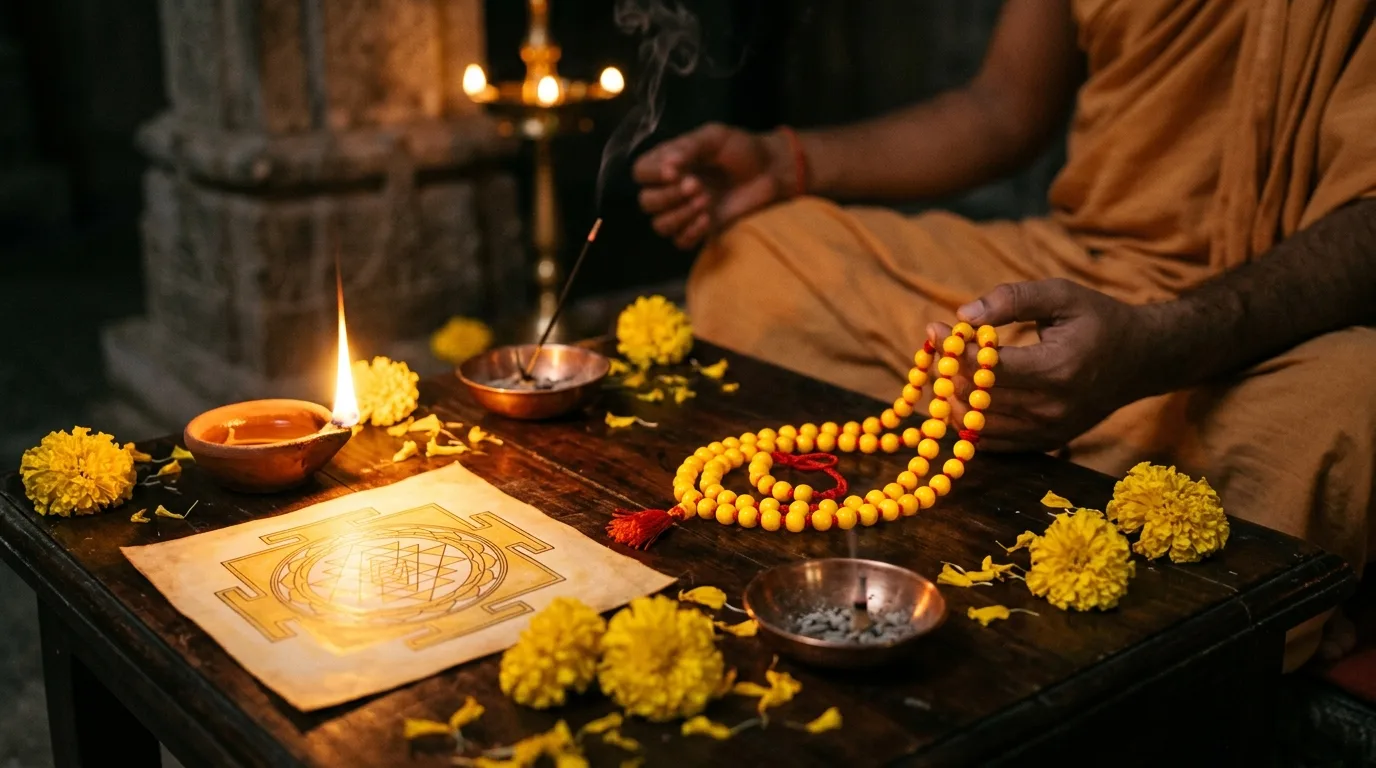
Authentic Chanting Method: Haldi Mala, Timing & Ritual Guidelines
To experience the full resonance of Baglamukhi worship, traditional scriptures prescribe specific sattvic disciplines:
- Sacred Rosary (Japa Mala): The most auspicious rosary is a Haldi Mala (Turmeric Bead Rosary) consisting of 108 knotted beads. Alternatively, a yellow sandalwood or high-grade Rudraksha mala may be used.
- Direction & Asana: Sit facing the East (for spiritual elevation) or North (for success in endeavors). Use a yellow woollen mat (Peeta Asana).
- Clothing: Wear clean, washed yellow clothes during the japa session.
- Ideal Time: The most potent windows are Brahma Muhurta (4:00 AM – 6:00 AM) or twilight at sunset (Sandhya Kaal). For specific remedies, Thursday or Tuesday evenings are traditionally favored.
- Offerings: Light a pure ghee lamp in brass, offer yellow marigold (Genda) flowers, a pinch of turmeric paste, and yellow sweets (like besan laddoos or bananas) as Bhog.
- Count: Standard practice is 1 mala (108 chants) or 3 malas daily. For formal sankalpas, devotees undertake 11,000 to 1,25,000 japa cycles over 21 to 41 days.
Digital Baglamukhi Japa Counter & Focus Guide
Practice your daily chant with rhythm. Tap the sacred counter bead with each repetition to maintain your count toward 108.
Click the button with each recitation of the mantra.
Crucial Mistakes & Precautions to Avoid
Because Maa Baglamukhi commands immense energetic power, maintaining right conduct (Dharma) and purity of motive is essential:
- Never Chant Out of Malice or Revenge: Baglamukhi Sadhana is intended for self-defense, righteous protection, and spiritual tranquility. Using the mantra with the intent to harm an innocent person generates severe karmic backlash.
- Do Not Mispronounce the Beeja: The seed sound is "Hleem" (ह्लीं), not "Hreem" (ह्रीं - which belongs to Bhuvaneshwari) or "Kleem" (क्लीं - which belongs to Krishna/Kali). Precise phonetics are vital.
- Avoid Uninitiated Tantric Rituals: Do not attempt advanced nocturnal crematorium rituals, animal sacrifices, or extreme Tantric Yantra inscriptions found on random forums. Simple devotional chanting is 100% safe and profoundly effective.
- Do Not Substitute for Practical Real-World Action: A mantra will grant mental fortitude and auspicious timing, but you must still prepare your legal briefs, consult doctors for health challenges, and fulfill your worldly duties with integrity.
- Maintain Sattvic Cleanliness: On days of Baglamukhi japa, abstain from alcohol, non-vegetarian food, deceit, and unprovoked arguments.
Astrological Significance: Kundli Houses & Planetary Remedies
In classical Jyotish (Vedic Astrology), Maa Baglamukhi is the presiding supreme deity for the planetary energies of Mars (Mangal) and Ketu, while simultaneously pacifying afflicted Saturn (Shani) and Rahu.
Astrologers commonly recommend Baglamukhi remedies when specific planetary afflictions arise in the Janam Kundli:
- Severely Afflicted 6th House (Shatru Bhava): The 6th house governs enemies, litigation, debt, and chronic diseases. When malefic planets or enemy lords cause continuous conflicts, Baglamukhi japa neutralizes the strife. Read more about the 12 houses in Vedic astrology.
- Intense Manglik Dosha / Angarak Yoga: When Mars is severely afflicted by Rahu (Angarak Yoga) or placed in sensitive marital houses, Baglamukhi worship pacifies impulsive anger and destructive tendencies. Explore our complete guide to Manglik Dosha.
- Rahu or Ketu Mahadasha / Antardasha: During confusing shadow-planet periods when a person suffers from paranoia, sudden deceit, or hidden traps, Maa Baglamukhi provides clarity and protection. Learn how to navigate your Mahadasha and Antardasha cycles.
- Shani Sade Sati or Ashtama Shani: During Saturn's testing transits, her grace prevents false accusations and career derailment.
Personalized Horoscope & Vedic Remedy Consultation
Wondering if the Baglamukhi Mantra aligns with your current planetary Dashas and Janam Kundli? Get an instant, detailed astrological chart synthesis on Astro27.
Generate Your Free Janam Kundli & Remedies →Frequently Asked Questions
Here are answers to the most common queries regarding Maa Baglamukhi and her sacred chants:
Can women chant the Baglamukhi Mantra?
Yes, absolutely. Divine Mother Baglamukhi is the embodiment of supreme Shakti. Any sincere devotee—regardless of gender—can chant her mantra with pure devotion, clean intentions, and respect.
What should I do if I cannot find a Haldi Mala?
If a natural turmeric mala is unavailable, a yellow sandalwood mala, sphatik (quartz) mala, or traditional 5-mukhi Rudraksha mala can be respectfully used for daily japa.
How quickly does the Baglamukhi Mantra show results?
Spiritual effects like inner calmness, reduction in anxiety, and mental clarity are often felt immediately. External resolutions (such as legal matters or workplace disputes) depend on your past karma (Prarabdha), the intensity of your regular practice, and natural timing (Dasha Gochar).
Is initiation (Diksha) mandatory to chant this mantra?
For simple daily prayer, devotion, and reciting the Gayatri or Beej mantra, formal Diksha is not strictly mandatory provided you chant with humility and pure intent. However, for executing severe sankalpas (like 1.25 lakh chants), Tantric yantras, or Homa rituals, receiving Diksha from a qualified Guru is strongly recommended.
Final Thoughts: Cultivating Inner Composure
The Baglamukhi Mantra holds a uniquely revered place in India's spiritual heritage because its core wisdom is not about blind aggression, but about supreme poise under fire. It is the divine brake that prevents chaos from overwhelming order, ensuring that righteousness, truth, and inner peace prevail.
When you sit for Baglamukhi japa, release the desire to control external people and instead focus on becoming anchored in unwavering courage, moral clarity, and divine protection. Back your spiritual sadhana with ethical conduct, diligent effort, and astrological self-awareness.
For personalized guidance on your planetary periods, Dasha timing, and customized spiritual remedies, explore our suite of AI astrology tools at Astro27.in.