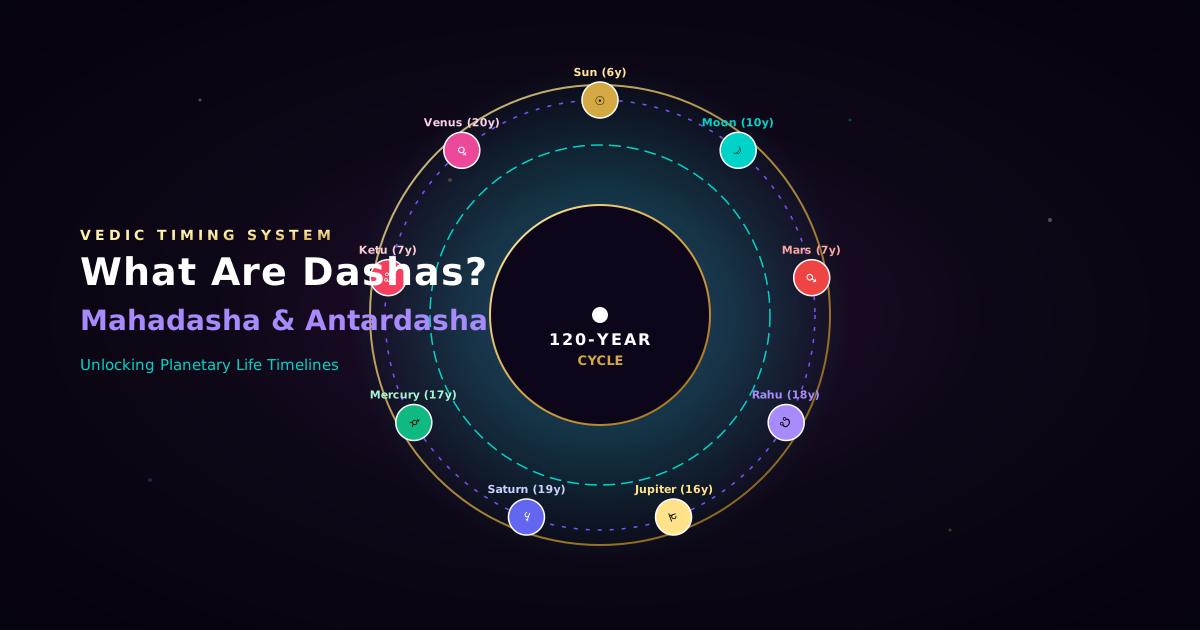
If your Kundli is the map of your life, Dashas are the timing system that helps explain when different parts of that map become active. This is one reason Vedic astrology gives so much importance to Mahadasha and Antardasha.
Dashas are planetary periods in Vedic astrology. A Mahadasha is the major life period ruled by one planet, while an Antardasha is a smaller sub-period inside that Mahadasha. Together, they help astrologers study the timing of major themes related to career, relationships, health, finances, education, family, and inner growth.
Dashas should be read as timing guidance, not as fixed destiny. A responsible reading always studies the full Kundli, planetary strength, houses, aspects, dashas, transits, and real-life context.
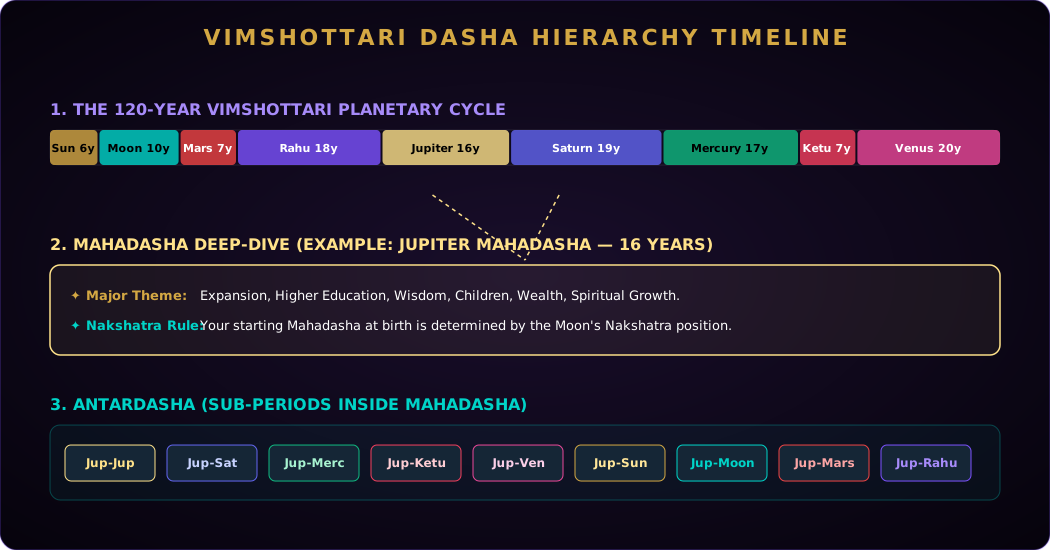
Table of Contents
- What are Dashas in Vedic astrology?
- Why Dashas matter in Kundli reading
- What is Vimshottari Dasha?
- Mahadasha explained
- Antardasha explained
- Mahadasha vs Antardasha
- The 9 Mahadasha periods and durations
- How your first Dasha is calculated
- How to read your current Dasha
- Common mistakes and myths
- Practical tips
- FAQs
What Are Dashas in Vedic Astrology?
The word Dasha generally means a state, condition, or period. In Vedic astrology, Dashas are planetary time periods that unfold in a specific order. Each period is ruled by a planet, and that planet becomes especially important during its time.
A birth chart shows the placement of planets at birth. But a birth chart alone does not tell us timing in a simple way. Dashas add the time dimension. They help answer questions such as:
- When will career themes become stronger?
- When may relationship matters come into focus?
- When is education, travel, or spiritual growth highlighted?
- Why does one phase of life feel different from another?
- Why can two people with similar placements experience events at different times?
In simple terms, the Kundli shows potential. The Dasha shows timing. A Dasha does not create something from nothing. It activates the promise already shown in the chart.
Why Dashas Matter in Kundli Reading
Many people first learn astrology through zodiac signs or planetary placements. They may know that their Moon is in Taurus or that Saturn is in the 10th house. But they still wonder why certain life themes become active only during specific years.
This is where Dashas become useful. In classical Vedic astrology, especially the Parashari tradition, Dasha systems are major tools for timing. An astrologer studies the Dasha lord, its house placement, its lordship, its strength, its conjunctions, its aspects, and the houses it influences.
For example, if someone enters the Mahadasha of the 10th lord, career may become a major life theme. If the same period also connects with the 7th house, professional partnerships or client-facing work may become more important. But the result depends on the entire chart.
What Is Vimshottari Dasha?
There are many Dasha systems in Vedic astrology, but the most widely used is Vimshottari Dasha. The word Vimshottari refers to a cycle of 120 years. This system divides a symbolic 120-year lifespan among nine planetary periods.
The nine planets used in Vimshottari Dasha are:
- Ketu
- Venus
- Sun
- Moon
- Mars
- Rahu
- Jupiter
- Saturn
- Mercury
The order is fixed. However, every person does not begin life from the same Dasha. Your starting point depends on the Nakshatra occupied by the Moon at birth.
Mahadasha Explained
Mahadasha means the great period or major period. It is the main planetary period running for several years. Depending on the planet, a Mahadasha may last from 6 years to 20 years.
The Mahadasha sets the broad theme of a life chapter. It does not mean that only one topic will happen for all those years. Rather, the planet ruling the Mahadasha becomes the main filter through which many events are experienced.
What a Mahadasha Can Highlight
- The houses ruled by the Mahadasha planet
- The house where the planet is placed
- The planet's natural significations
- The planet's strength or weakness in the chart
- Conjunctions and aspects involving the planet
- The Nakshatra and divisional chart context
For example, Jupiter naturally relates to wisdom, guidance, children, teachers, growth, ethics, and expansion. But if Jupiter rules the 6th and 9th houses in a specific chart, its Mahadasha may combine themes of service, health routines, competition, dharma, father, higher education, and mentors.
This is why generic statements like "Jupiter Mahadasha is always good" or "Saturn Mahadasha is always bad" are not reliable. The planet's role in your Kundli matters more than fear-based labels.
Antardasha Explained
Antardasha, also called Bhukti, is the sub-period within a Mahadasha. If Mahadasha is the main chapter, Antardasha is the section inside that chapter.
Every Mahadasha contains Antardashas of all nine planets. For example, during Venus Mahadasha, a person will experience Venus-Venus, Venus-Sun, Venus-Moon, Venus-Mars, Venus-Rahu, Venus-Jupiter, Venus-Saturn, Venus-Mercury, and Venus-Ketu Antardashas in sequence.
The Antardasha refines the timing. It explains why life can feel very different within the same Mahadasha. A Venus Mahadasha during Venus-Jupiter Antardasha may feel different from Venus-Saturn Antardasha because Jupiter and Saturn bring different themes into the Venus period.
How Antardasha Works in Practice
Suppose a person is in Moon Mahadasha. The Moon may bring themes of emotions, mother, home, public connection, comfort, and mental patterns. But if the Antardasha is Mars, the tone may become more active, competitive, restless, or action-focused. If the Antardasha is Jupiter, education, guidance, children, teaching, or faith may become more visible.
The actual result still depends on the chart. A strong Mars will behave differently from a heavily afflicted Mars. A well-placed Jupiter will give different results from a weak Jupiter. This is why serious Dasha reading is always chart-specific.
Mahadasha vs Antardasha
| Feature | Mahadasha | Antardasha |
|---|---|---|
| Meaning | Major planetary period | Sub-period inside Mahadasha |
| Duration | Usually several years | Usually months to a few years |
| Role | Sets the broad life theme | Refines the active theme |
| Example | Saturn Mahadasha | Saturn-Jupiter Antardasha |
| Use | Long-term life chapter reading | Medium-term timing and event focus |
A useful way to remember the difference is this: Mahadasha is the climate, Antardasha is the season. Both matter.
The 9 Mahadasha Periods and Their Durations
In Vimshottari Dasha, each planet has a fixed number of years. The complete cycle totals 120 years.
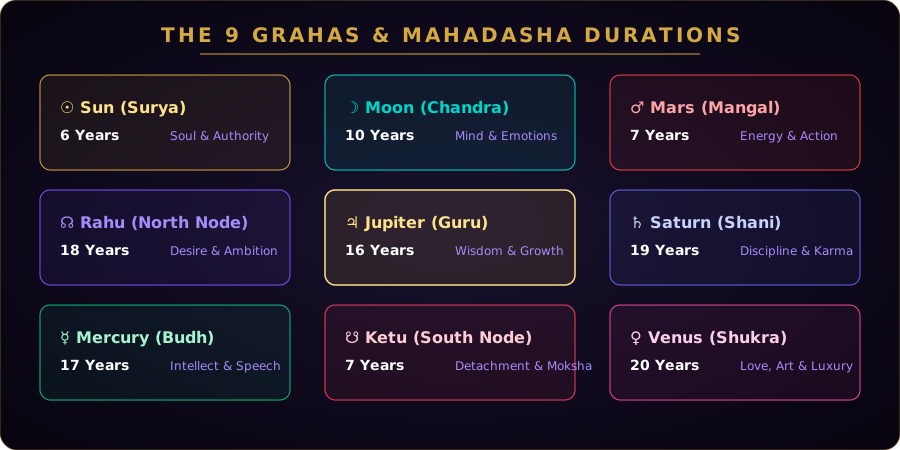
| Planet | Mahadasha Duration | General Themes |
|---|---|---|
| Ketu | 7 years | Detachment, spirituality, separation, insight |
| Venus | 20 years | Relationships, comfort, art, luxury, desires |
| Sun | 6 years | Authority, father, confidence, recognition |
| Moon | 10 years | Mind, emotions, mother, home, public connection |
| Mars | 7 years | Action, courage, conflict, property, energy |
| Rahu | 18 years | Ambition, foreign influence, innovation, obsession |
| Jupiter | 16 years | Wisdom, children, growth, teachers, dharma |
| Saturn | 19 years | Discipline, responsibility, delay, endurance |
| Mercury | 17 years | Learning, business, communication, analysis |
These general themes are only starting points. A planet's results change according to its placement and role in the individual Kundli.
How Your First Dasha Is Calculated
Your starting Mahadasha is calculated from the Moon's Nakshatra at birth. The Moon's exact position decides which planetary period was running when you were born and how much of that period remained. If you're not sure why the Moon sign carries this much weight, see Ascendant (Lagna) vs Moon Sign vs Sun Sign.
For example, if the Moon is in a Nakshatra ruled by Venus, the person begins life in Venus Mahadasha. But they may not receive the full 20 years of Venus Mahadasha. The balance depends on how far the Moon had already traveled through that Nakshatra at birth.
This is why two people born in the same month can have different Dasha timelines if their Moon Nakshatras or birth times differ. It is also why accurate birth data is important for reliable calculations.
How to Read Your Current Dasha
Reading a Dasha is not about memorizing generic planet meanings. A good reading combines several layers.
Step 1: Identify the Mahadasha Lord
Find which planet is ruling the major period. This planet sets the background theme.
Step 2: Study the Planet's House Lordship
Check which houses the Mahadasha planet rules from the Lagna. If it rules the 2nd house, money and family may be highlighted. If it rules the 10th house, career may become important. See our guide to the 12 houses in Kundli for what each house governs.
Step 3: Check the Planet's Placement
See which house the planet occupies. A planet placed in the 9th house may activate education, teachers, faith, and long-distance travel. A planet in the 4th house may activate home, mother, property, and emotional security.
Step 4: Review Strength and Condition
Is the planet exalted, debilitated, combust, retrograde, in a friendly sign, or joined with other planets? These factors shape how easily the planet can express its results.
Step 5: Add the Antardasha Lord
The Antardasha planet shows the more specific timing layer. Read the relationship between the Mahadasha lord and Antardasha lord. Also study both planets' houses and placements.
Step 6: Confirm with Transits

Transits, or Gochara, show the moving sky. They can trigger or support what the Dasha is already promising. Dasha shows the main timeline, while transit often shows activation.
Example: Reading a Dasha Carefully
Imagine someone is running Mercury Mahadasha and Venus Antardasha. Mercury may activate learning, communication, business, analysis, writing, trade, or technology. Venus may add themes of relationships, creativity, comfort, design, vehicles, luxury, or agreements.
If Mercury rules the 10th house and Venus rules the 2nd house in that person's chart, this period may bring career growth connected with income, speech, business, design, consulting, or client work. But if both planets are under stress, the same period may require better communication, financial discipline, or relationship balance.
This example shows why Dasha interpretation should be specific. The same Mercury-Venus period can produce different experiences for different people.
Common Myths About Dashas
Myth 1: A Planet's Mahadasha Is Always Good or Bad
No planet is universally good or bad for everyone. The same planet can support one person and challenge another, depending on lordship, placement, strength, and chart context.
Myth 2: Saturn Mahadasha Always Ruins Life
Saturn can bring pressure, duty, delay, and maturity. But it can also support discipline, career stability, property, leadership, technical skill, and long-term success when well placed.
Myth 3: Venus Mahadasha Is Always Luxurious
Venus can relate to comfort, art, love, beauty, and pleasure. But if Venus is connected with difficult houses or under stress, its period may teach lessons about desire, relationships, money, or values.
Myth 4: Dashas Give Exact Predictions Without Effort
Dashas show active themes and timing windows. They do not remove free will, practical effort, ethics, or external circumstances.
Myth 5: One Dasha Explains Everything
A complete reading also checks houses, planets, aspects, divisional charts, yogas, Nakshatras, transits, and real-life context.
Benefits of Understanding Dashas
- You understand why life has different chapters.
- You can observe career, relationship, and financial timing more clearly.
- You become less fearful of difficult planetary periods.
- You can ask better questions during astrology consultations.
- You learn to combine timing with practical action.
- You can reflect on past patterns without blaming planets.
Dashas are especially helpful when used for planning and self-awareness. They should not be used to avoid responsibility or make fear-based decisions.
Practical Tips for Using Dasha Guidance
- Start by finding your current Mahadasha and Antardasha.
- Learn the houses ruled by both planets.
- Check where both planets sit in your Kundli.
- Notice what themes are repeating in your life.
- Do not assume difficulty means failure.
- Use challenging periods for discipline, healing, and better choices.
- Use supportive periods with humility and effort.
- For major decisions, consult a trained astrologer and relevant professionals.
Conclusion
Dashas are one of the most useful timing tools in Vedic astrology. They help explain why different phases of life carry different themes. Mahadasha shows the major planetary chapter, while Antardasha gives the sub-theme inside that chapter.
The most commonly used system, Vimshottari Dasha, divides a 120-year cycle among nine planets. Your starting point depends on the Moon's Nakshatra at birth. To read a Dasha properly, study the Dasha lord's house lordship, placement, strength, aspects, and relationship with the Antardasha lord.
Most importantly, avoid fear-based interpretation. Dashas are best used for awareness, timing, preparation, and better choices. They are not a substitute for effort, wisdom, or professional advice.
Explore More on Astro27
Use Astro27's Birth Chart Calculator to find your Lagna, Moon Sign, Nakshatra, and current planetary periods. Then explore the Planet Guide, Nakshatra Guide, Daily Horoscope, Weekly Horoscope, Monthly Horoscope, Kundli Matching, Numerology Calculator, Zodiac Signs, and Astrology Blog for deeper learning.