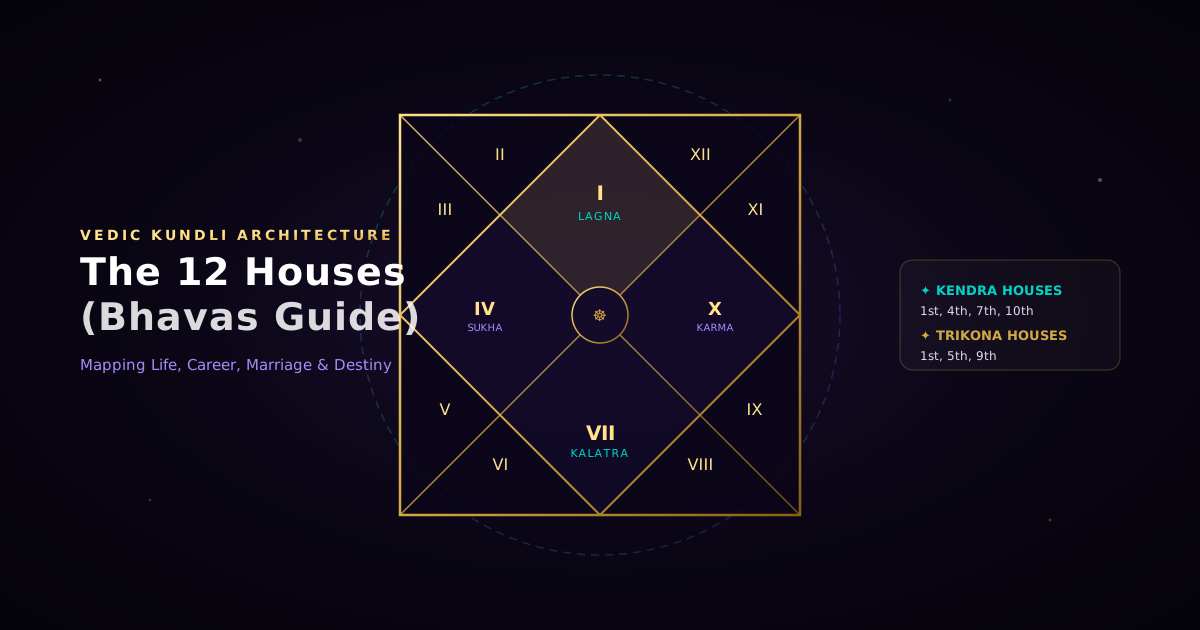
A Kundli, also called a Janam Kundli or birth chart, is one of the most important tools in Vedic astrology. It shows the position of planets at the time, date, and place of birth. But to understand a Kundli properly, you must first understand the 12 houses, known in Sanskrit as Bhavas.
The 12 houses in Kundli represent different areas of life, such as personality, wealth, family, education, marriage, career, health, spirituality, and expenses. Planets show the energy, signs show the style, and houses show where that energy appears in life.
A Kundli is not read from one house alone. A good Vedic astrology reading studies houses, planets, signs, aspects, dashas, and overall chart strength together.
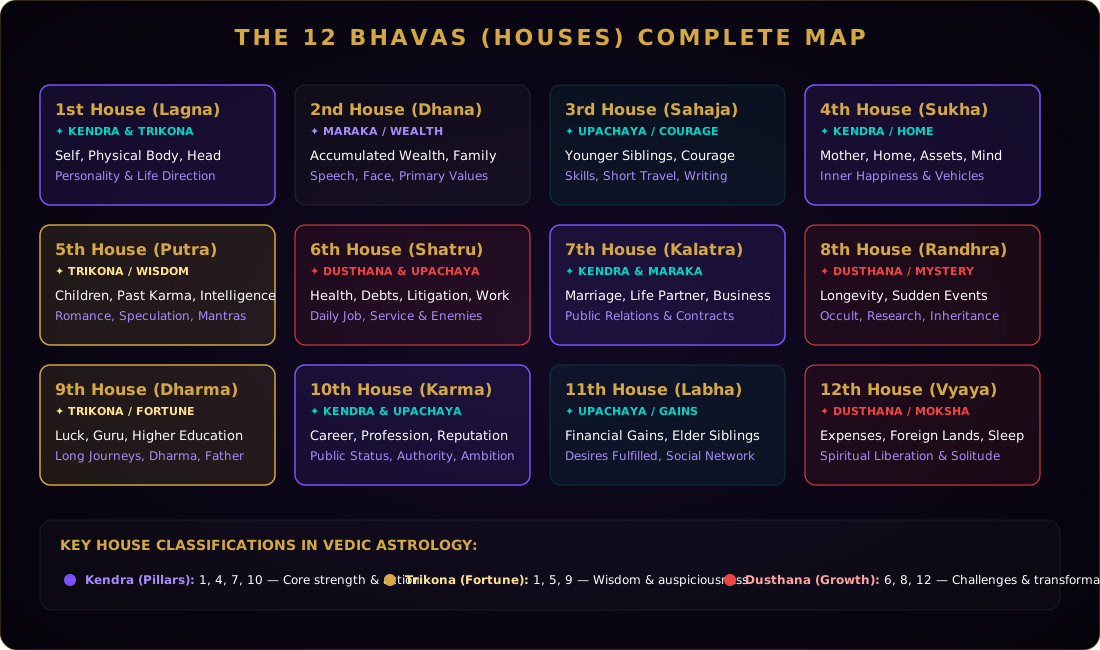
Table of Contents
- What are the 12 houses in Kundli?
- Why houses matter in Vedic astrology
- Houses vs signs vs planets
- The 12 houses at a glance
- Detailed meaning of each house
- Important house categories
- How to read houses in your Kundli
- Common mistakes beginners make
- Benefits and practical tips
- Frequently asked questions
What Are the 12 Houses in Kundli?
In Vedic astrology, the birth chart is divided into 12 parts called houses or Bhavas. Each house represents a major area of human life. The first house begins from the Lagna, also called the Ascendant or rising sign. From there, the remaining houses are counted in order.
| House | Sanskrit Name | Main Meaning |
|---|---|---|
| 1st House | Tanu Bhava | Self, body, personality |
| 2nd House | Dhana Bhava | Wealth, speech, family |
| 3rd House | Sahaja Bhava | Courage, skills, siblings |
| 4th House | Sukha Bhava | Home, mother, comfort |
| 5th House | Putra Bhava | Children, intelligence, creativity |
| 6th House | Ari Bhava | Health, debts, enemies |
| 7th House | Yuvati or Kalatra Bhava | Marriage and partnerships |
| 8th House | Randhra or Ayur Bhava | Longevity, secrets, transformation |
| 9th House | Dharma Bhava | Fortune, wisdom, dharma |
| 10th House | Karma Bhava | Career, status, public life |
| 11th House | Labha Bhava | Gains, income, networks |
| 12th House | Vyaya Bhava | Expenses, sleep, foreign lands, moksha |
Why Houses Matter in Vedic Astrology
The houses are the foundation of chart interpretation. Without them, a Kundli becomes only a list of planets and zodiac signs. In classical Vedic astrology, life is studied through different domains. These include body, family, courage, home, children, disease, marriage, longevity, dharma, karma, gains, and liberation. The 12 houses organize these themes.
A planet may give different results depending on the house it occupies. Mars in the 3rd house may show courage, effort, and bold communication. Mars in the 7th house may affect marriage, partnership dynamics, or conflict resolution. Mars in the 10th house may bring ambition, leadership, and career drive. The planet is the same, but the life area changes.
Scientific and Cultural Background
Astrology and astronomy developed together in many ancient cultures. In India, Jyotisha is one of the six Vedangas, traditionally associated with timekeeping, calendars, rituals, and observation of celestial cycles. From a scientific point of view, astronomy studies celestial objects through observation, measurement, and physics. Astrology is a traditional symbolic system that interprets planetary positions as meaningful patterns. These two should not be confused.
Astro27 presents astrology as cultural knowledge, self-reflection, and guidance, not as guaranteed prediction or scientific proof.
Houses vs Signs vs Planets
Beginners often confuse houses, signs, and planets. They are connected, but they are not the same.
| Element | Meaning | Example |
|---|---|---|
| Planet | Type of energy | Mars shows drive, action, courage |
| Sign | Style of expression | Aries is direct, bold, and fast |
| House | Area of life | The 10th house shows career |
| House Lord | Planet ruling that house | If Aries is in the 10th house, Mars rules career |
A simple formula is: planet means what energy, sign means how it behaves, and house means where it shows results.
The 12 Houses in Kundli Explained
1st House: Lagna or Tanu Bhava
The 1st house is the house of self. It represents your body, appearance, personality, health, vitality, and general life direction. It is the starting point of the Kundli. The sign rising in the east at birth becomes your Lagna, which is why birth time accuracy matters so much in Vedic astrology. For a deeper look at how Lagna compares with your Moon sign and Sun sign, see Ascendant (Lagna) vs Moon Sign vs Sun Sign.
- Physical appearance
- Temperament
- Confidence
- Health and vitality
- First impression
- Overall life path
A strong 1st house may show self-awareness, resilience, and clarity of direction. A challenged 1st house may indicate health sensitivity, self-doubt, or identity struggles, depending on the full chart.
2nd House: Dhana Bhava
The 2nd house is linked with wealth, speech, family, food, savings, and values. This house does not only show money. It also shows how a person speaks, what they value, and the family environment they grow up in.
- Savings and accumulated wealth
- Family background
- Speech and communication style
- Food habits
- Values and traditions
Benefic influence on the 2nd house may support polite speech and stable savings. Difficult influence may show harsh speech, family pressure, or irregular finances. The full chart must always be checked.
3rd House: Sahaja Bhava
The 3rd house represents courage, effort, communication, younger siblings, skills, hobbies, and short journeys. This is a house of self-effort. It shows how much initiative a person takes.
- Courage
- Communication
- Writing and media
- Younger siblings
- Short travel
- Skills and hobbies
A strong 3rd house may help writers, speakers, entrepreneurs, artists, media professionals, and people who succeed through persistence.
4th House: Sukha Bhava
The 4th house is the house of home, mother, property, education, vehicles, comfort, and emotional peace. It shows your inner foundation. While the 10th house shows public life, the 4th house shows private life.
- Mother and maternal care
- Home environment
- Property and land
- Vehicles
- Basic education
- Emotional security
A well-supported 4th house may bring emotional stability, comfort, and support from home. If disturbed, it may show restlessness, frequent relocation, or emotional dissatisfaction.
5th House: Putra Bhava
The 5th house relates to intelligence, creativity, children, romance, mantra, learning, speculation, and past merit in traditional astrology. It is also one of the Trikona houses, considered auspicious in Vedic astrology.
- Children
- Creativity
- Intelligence
- Education and memory
- Romance
- Mantra and spiritual practice
- Speculation and risk-taking
A strong 5th house can support creative talent, teaching, leadership, and good judgment. Risky speculation should never be judged from the 5th house alone.
6th House: Ari Bhava
The 6th house represents health challenges, enemies, debts, competition, service, daily routine, and discipline. This house is often feared, but it has an important role. It shows how a person handles problems.
- Health and disease patterns
- Debt and loans
- Enemies and competitors
- Litigation
- Daily work
- Service and employment
- Discipline and habits
A strong 6th house can help a person defeat obstacles, win competitions, and build strong routines. For health topics, astrology should only be used as reflective guidance. Medical concerns should always be discussed with qualified professionals.
7th House: Yuvati or Kalatra Bhava
The 7th house is the house of marriage, spouse, partnerships, business agreements, and public dealings. It sits opposite the 1st house. The 1st house is me, while the 7th house is the other.
- Marriage
- Spouse
- Romantic commitment
- Business partnerships
- Contracts
- Public relationships
- Cooperation and negotiation
A strong 7th house can support healthy partnerships. A challenged 7th house may show delay, conflict, unrealistic expectations, or lessons through relationships. Kundli matching often studies this house along with Venus, Jupiter, Navamsa, and other factors.
8th House: Randhra or Ayur Bhava
The 8th house is one of the most complex houses. It represents transformation, longevity, secrets, sudden events, inheritance, occult knowledge, research, and deep psychological change. It is not simply a bad house. It can also show depth, healing, and spiritual transformation.
- Longevity
- Sudden changes
- Hidden matters
- Inheritance
- Insurance and joint assets
- Occult studies
- Research
People with a strong 8th house may be drawn to psychology, investigation, tantra, mysticism, research, crisis management, or healing fields.
9th House: Dharma Bhava
The 9th house represents dharma, fortune, higher wisdom, father, teachers, long-distance travel, religion, philosophy, and blessings. It is one of the most auspicious houses in Vedic astrology.
- Dharma and ethics
- Fortune
- Father or father-like figures
- Guru and mentors
- Higher education
- Long journeys
- Spiritual learning
A strong 9th house may show faith, guidance from teachers, good judgment, and support through luck or blessings. In practical life, luck works best when supported by effort.
10th House: Karma Bhava
The 10th house is the house of career, karma, profession, authority, reputation, and public contribution. It is one of the most important houses for career analysis.
- Career
- Profession
- Status
- Authority
- Public image
- Leadership
- Work ethic
Planets in the 10th house can strongly influence career direction. Mercury may support communication, trade, analytics, or business. Saturn may support structured work, administration, engineering, or long-term responsibility. The complete chart gives the final picture.
11th House: Labha Bhava
The 11th house represents gains, income, networks, friends, elder siblings, ambitions, and fulfillment of desires. It is a house of results and expansion.
- Income
- Profits
- Social networks
- Friends
- Elder siblings
- Large organizations
- Goals and achievements
A strong 11th house may support financial growth, helpful networks, and social influence. It is especially important for business, entrepreneurship, and long-term income.
12th House: Vyaya Bhava
The 12th house is the house of expenses, sleep, isolation, foreign lands, hospitals, ashrams, spiritual retreat, charity, and moksha. It can show both loss and liberation. Spending money on waste and spending money on charity are both 12th house themes, but they have different meanings.
- Expenses
- Foreign travel or settlement
- Sleep
- Dreams
- Isolation
- Hospitals or retreats
- Charity
- Meditation
A strong 12th house may support spiritual practice, foreign connections, research, healing, or work in isolated environments.
Important House Categories in Vedic Astrology
Kendra Houses: 1st, 4th, 7th, 10th & Trikona Houses: 1st, 5th, 9th
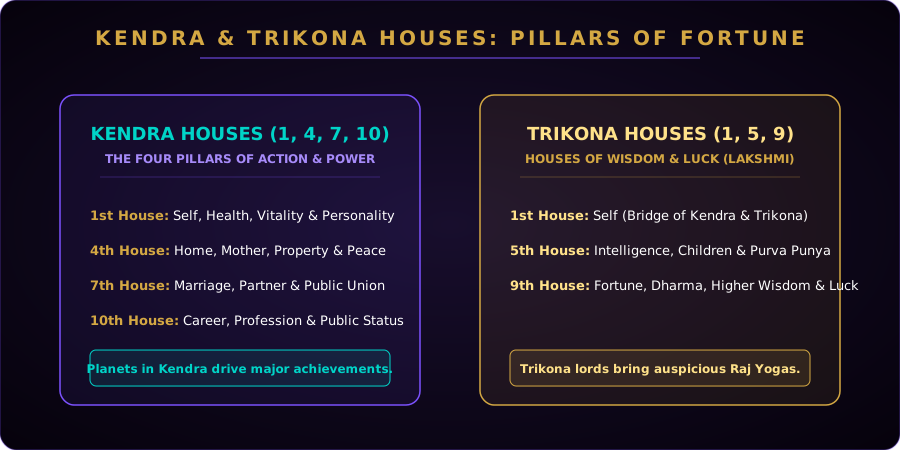
Kendra houses are the pillars of the chart. They represent major life foundations: self, home, relationships, and career. Trikona houses are associated with dharma, blessings, intelligence, and good fortune. The 1st, 5th, and 9th houses are often studied for life direction, past merit, learning, and grace.
Dusthana Houses: 6th, 8th, 12th
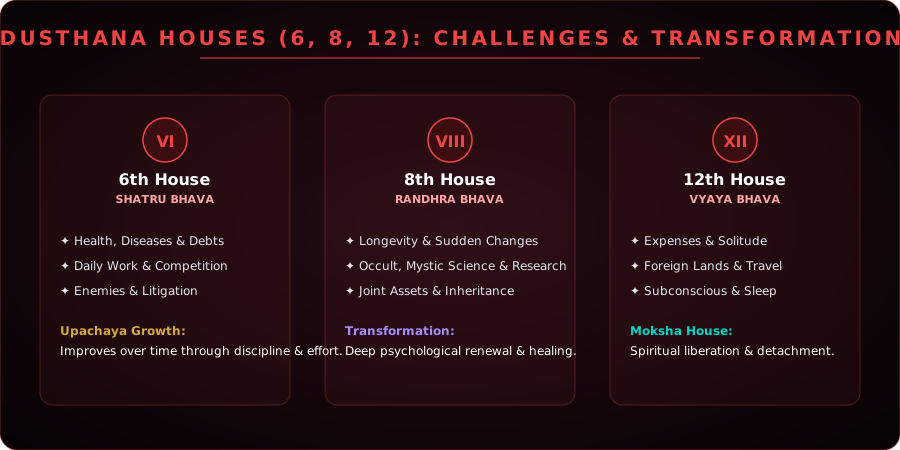
Dusthana houses show challenges, transformation, and areas requiring maturity. They are not automatically negative. They often show where growth happens through effort, surrender, or transformation.
Upachaya Houses: 3rd, 6th, 10th, 11th
Upachaya houses improve with time, discipline, and effort. They are important for courage, competition, career, income, and long-term growth.
How to Read Houses in Your Kundli
To read a house properly, do not look at one factor alone. Use a step-by-step method.
- Identify the house and its life area.
- Check the sign placed in that house.
- Find the house lord.
- See where the house lord is placed.
- Check planets sitting in the house.
- Study aspects on the house.
- Review the relevant karaka, or significator planet.
- Confirm timing through dasha and transit.
- Compare with divisional charts when needed.
For marriage, do not judge only the 7th house. Also study Venus, Jupiter, the 7th lord, Navamsa chart, dasha, and relationship-related transits. To understand how dasha timing itself works, read our guide on Mahadasha and Antardasha.
Common Mistakes Beginners Make
Reading One House in Isolation
No house works alone. The 2nd house of family connects with the 4th house of home, the 7th house of marriage, and the 11th house of gains.
Thinking Empty Houses Mean Nothing
An empty house still matters. Its lord, aspects, and significator planet must be studied.
Assuming One Planet Gives the Same Result for Everyone
Saturn in the 10th house may show career discipline for one person and pressure for another. The result depends on sign, strength, aspects, lordship, and dasha.
Using Fear-Based Interpretation
Vedic astrology should not be used to create fear. Houses like the 6th, 8th, and 12th can show challenges, but also growth, healing, service, and spiritual depth.
Ignoring Birth Time Accuracy
The Lagna and house positions depend heavily on birth time. Even a small time difference can affect the chart, especially divisional charts.
Benefits of Understanding the 12 Houses
- Better self-awareness
- Clearer understanding of career patterns
- Insight into relationship tendencies
- Awareness of financial habits
- Better timing awareness through dashas
- Deeper understanding of strengths and challenges
- More meaningful use of astrology calculators
Astrology should support reflection and better choices. It should not replace personal responsibility, professional advice, or practical effort.
Who Should Learn About the 12 Houses?
This guide is useful for beginners learning Vedic astrology, anyone using a birth chart calculator, people curious about career, marriage, or money indicators, students of Jyotish, and readers interested in nakshatras, dashas, and transits.
Practical Tips for Beginners
- Learn your Lagna first.
- Study one house at a time.
- Do not jump to predictions too quickly.
- Compare house meanings with real life patterns.
- Learn the natural significator planets.
- Study dashas after learning houses.
- Use astrology as guidance, not fear.
- Consult trained astrologers for serious life decisions.
The best way to learn Kundli houses is to observe patterns patiently. Vedic astrology rewards careful study, not quick conclusions.
Conclusion
The 12 houses in Kundli are the foundation of Vedic astrology. They show where different life themes appear, from self and family to marriage, career, gains, losses, and spiritual growth.
The 1st house begins with your identity. The 10th house shows your karma and career. The 7th house reveals partnership patterns. The 12th house points toward release, rest, and deeper spiritual meaning.
But no house should be judged alone. A complete Kundli reading studies houses, signs, planets, house lords, aspects, dashas, nakshatras, and divisional charts together.
Explore More on Astro27
Explore your own chart with Astro27's Birth Chart Calculator, then read your Moon Sign, Nakshatra, Planet Guide, Daily Horoscope, Weekly Horoscope, Monthly Horoscope, Kundli Matching, Numerology Calculator, Astrology Blog, and Zodiac Signs guides to understand how the 12 houses come alive in your Kundli.