☀️ Table of Contents — Complete Abhijit Muhurat Guide
Have you ever wanted to begin something important but wondered whether the time was right? Perhaps you are planning to open a new business, purchase something valuable, start an important project or perform a religious ceremony. In Hindu tradition, many people consult the Panchang to identify an auspicious time for such occasions. One of the most widely discussed periods is Abhijit Muhurat.
Abhijit Muhurat is traditionally associated with the middle of the day and is considered favourable for certain beginnings and activities. People often search for its daily timings when planning an important task, especially if they want to follow Hindu astrological customs.
But what exactly is Abhijit Muhurat? How is it calculated? Is it available every day? And can you use it for every important activity?
In this guide, we will explore the meaning of Abhijit Muhurat, its traditional significance in Vedic astrology, how to calculate its timing, how it differs from Brahma Muhurat and Rahu Kaal, and what to consider before choosing an auspicious time.
What Is Abhijit Muhurat?
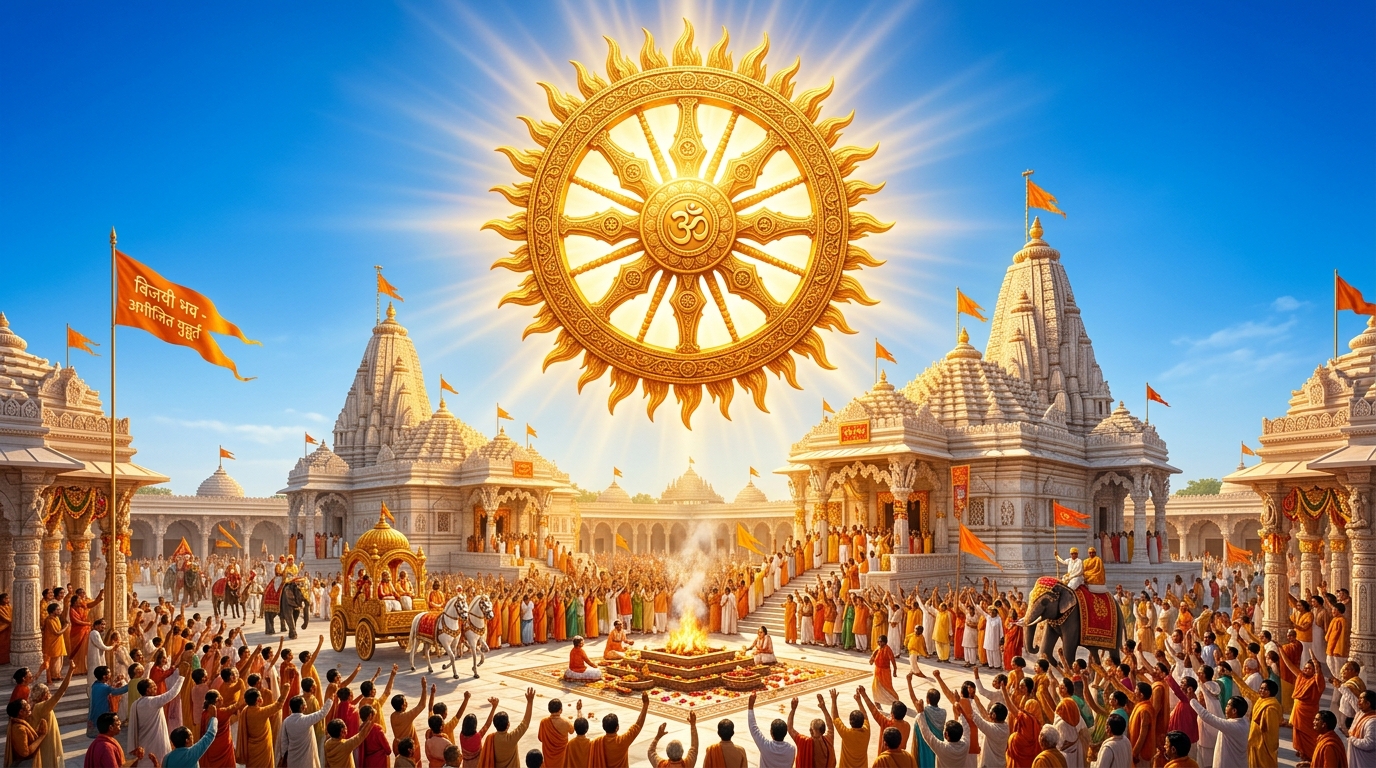
Abhijit Muhurat is a traditional auspicious time period generally associated with midday. In Hindu calendrical and astrological practices, it is often considered suitable for selected activities, including certain new beginnings, worship and important tasks.
The word Abhijit is commonly associated with victory, conquest or success, while muhurat refers to a selected period of time. Together, the term is traditionally understood as a period associated with favourable beginnings and overcoming obstacles.
Abhijit Muhurat is generally calculated around local solar noon, the midpoint between sunrise and sunset when expressed as a simple clock-time interval. Under a commonly used convention, it extends approximately 24 minutes before and 24 minutes after local midday, creating a window of about 48 minutes.
For example, if local solar noon occurs at 12:15 PM, the corresponding Abhijit Muhurat would be approximately 11:51 AM to 12:39 PM under this convention. This is an illustrative calculation, not a verified timing for a specific date or city.
The exact timing depends on the local sunrise and sunset and the calculation method used by the Panchang (see our complete guide to Aaj Ka Shubh Muhurt). Some traditions apply additional rules or exclusions, so the period should not be treated as universally suitable for every ceremony.
Why Is Abhijit Muhurat Considered Auspicious?
In traditional Hindu astrology, Abhijit Muhurat is regarded as a favourable period for selected undertakings. It is often discussed as a useful option when someone needs a general auspicious time for a task.
People may consult it before starting work, performing certain forms of worship, undertaking an important responsibility or marking a new beginning.
Its traditional reputation is connected with the symbolism of victory and favourable action. However, this does not mean that every activity performed during the period is guaranteed to succeed.
The suitability of a particular time depends on the purpose, the tradition being followed and any additional timing rules that apply.
Is Abhijit Muhurat the Same as Midday?
Not exactly.
Midday is a general description of the middle portion of the day. Abhijit Muhurat is a specific traditional time interval calculated around local midday.
The distinction matters because the period is not necessarily fixed at 12:00 PM. Depending on the location and date, the calculated timing may fall earlier or later.
If you are looking for Abhijit Muhurat today, use the timing for your city rather than assuming that noon on the clock is always the correct answer.
Abhijit Muhurat Today: How to Find the Correct Timing
One of the most common searches is "Abhijit Muhurat today." People want to know the exact time for their location so that they can plan an activity accordingly.
The correct timing should be calculated for the relevant date and location. A Panchang for Delhi may show a different time from one for Bengaluru, Mumbai, Kolkata or another city.
Step 1: Select Your Location
Start by identifying the city where you intend to perform the activity.
Local sunrise and sunset influence the calculation of the day's timing periods. If you are arranging a ceremony in another city, use the location where the ceremony will take place.
Step 2: Check Local Sunrise and Sunset
Consult a reliable Panchang or astronomical source to obtain the local sunrise and sunset times for the selected date.
These values provide the information needed to estimate local midday using the traditional calculation method.
Step 3: Calculate Local Midday
A simple approximation of local midday is the midpoint between sunrise and sunset.
For example, suppose sunrise occurs at 6:00 AM and sunset occurs at 6:00 PM. The midpoint is approximately 12:00 PM.
If sunrise occurs at 6:10 AM and sunset at 5:50 PM, the midpoint is approximately 12:00 PM as well. Different sunrise and sunset combinations can produce a different result.
For precise Panchang calculations, use the relevant solar-time convention and the calculation method adopted by the calendar.
Step 4: Determine the Abhijit Muhurat Window
Under the commonly used 48-minute convention, the period extends approximately 24 minutes on either side of local midday.
Using a local midday of 12:10 PM as an example, the interval would be approximately 11:46 AM to 12:34 PM.
This calculation is intended to explain the method. For a real ceremony, confirm the applicable period in a reliable local Panchang.
Step 5: Check for Traditional Restrictions
Before finalising an important ceremony, check whether your Panchang or religious tradition applies any exclusions.

Some traditions do not recommend Abhijit Muhurat on particular weekdays or under certain circumstances. Other activities may require a specialised muhurat that takes additional factors into account.
For this reason, it is better to verify the timing than to assume the interval is suitable every day.
How Is Abhijit Muhurat Calculated?
The calculation of Abhijit Muhurat is commonly linked to the middle of the daylight period.
Traditional Hindu calendars contain several time intervals used for religious and astrological purposes. Some are calculated relative to sunrise, others relative to sunset or midday, and others according to the movement of the Sun and Moon.
Abhijit Muhurat belongs to the group of periods commonly associated with the middle of the day.
The Basic Calculation
A widely used calculation follows these steps:
- Determine local sunrise.
- Determine local sunset.
- Calculate the midpoint between sunrise and sunset.
- Subtract approximately 24 minutes to find the start of the period.
- Add approximately 24 minutes to find its end.
In simplified form:
Local midday = midpoint between sunrise and sunset
Abhijit Muhurat start = local midday − 24 minutes
Abhijit Muhurat end = local midday + 24 minutes
This produces an interval of approximately 48 minutes.
The calculation is a simplified representation of a common convention. Traditional Panchang methods can differ, and some calendars use more detailed calculations or apply specific rules for individual days.
Example of Abhijit Muhurat Calculation
Suppose the local sunrise is at 6:05 AM and sunset is at 6:15 PM.
The daylight interval is 12 hours and 10 minutes. Half of this interval is 6 hours and 5 minutes.
Adding that duration to sunrise gives an approximate midday of 12:10 PM.
Under the 48-minute convention, Abhijit Muhurat would then be approximately:
- Start: 11:46 AM
- End: 12:34 PM
This example shows why a fixed noon-to-12:48 PM schedule would not necessarily match the traditional calculation.
Why Does the Timing Change?
Sunrise and sunset change throughout the year because of the Earth's axial tilt and its movement around the Sun.
The timing also differs between geographical locations. As a result, the midpoint of the daylight interval can shift.
Even when the difference is only a few minutes, it can matter to people who want to follow a specific muhurat.
This is why a daily timing page should calculate Abhijit Muhurat for the selected date and city rather than displaying a permanently fixed interval.
Abhijit Muhurat in Vedic Astrology
Vedic astrology uses traditional astronomical and calendrical calculations to interpret the characteristics of time. Abhijit Muhurat is one of the periods commonly discussed in the context of selecting a favourable time for an activity.
It is useful to distinguish between the calculation of a time interval and the astrological interpretation associated with it.
What Is the Astrological Significance of Abhijit Muhurat?
Abhijit Muhurat is traditionally associated with victory, favourable beginnings and the successful completion of selected undertakings.
Some practitioners regard it as a useful general-purpose period when a more specialised muhurat is not available. However, this interpretation varies by school and tradition.
It should not be treated as a universal solution for every activity. Wedding ceremonies, housewarmings, major religious observances and other important events may have separate requirements.
Is Abhijit Muhurat Related to the Sun?
The period is calculated around midday, which gives it a direct relationship to the Sun's daily position as used in traditional timekeeping.
The Sun also has an important symbolic role in Vedic astrology. It is associated with authority, vitality, leadership, confidence and the expression of individuality.
These symbolic associations can help explain why midday and the Abhijit period are discussed positively in some astrological interpretations.
However, Abhijit Muhurat is not calculated simply by checking whether the Sun occupies a particular zodiac sign. Its ordinary daily calculation is based on the local time interval.
Does Abhijit Muhurat Depend on Your Kundli?
A general Abhijit Muhurat calculation does not necessarily require your personal birth chart.
However, some astrologers consider the Janma Kundli when selecting a time for an important event. Depending on the activity and tradition, they may examine birth details alongside the Panchang and other muhurat factors.
For example, selecting a wedding date or a major ceremonial time can involve more detailed considerations than finding a general period for a routine task.
A personalised consultation is optional and depends on the person's beliefs and requirements.
Is Abhijit Muhurat Guaranteed to Bring Success?
No. Traditional astrology regards the period as favourable for selected activities, but this is not a scientifically established guarantee of success.
A business still requires planning, a purchase requires careful financial judgement, and a major decision requires reliable information.
For many people, choosing an auspicious time is a meaningful cultural or spiritual practice that provides a sense of preparation. It should complement, rather than replace, practical decision-making.
What Can You Do During Abhijit Muhurat?
People may use Abhijit Muhurat for different activities depending on their religious practices, family customs and the recommendations of their chosen Panchang.
The following examples describe common traditional uses. They should not be interpreted as a rule that every activity must take place during this period.
Beginning a New Task
Some people prefer to start an important task during a period they consider auspicious.
This might include beginning a project, opening a shop, making a formal announcement or undertaking a new responsibility.
For routine work, it is usually more practical to choose a time that fits your schedule and allows you to concentrate.
Performing Religious Worship
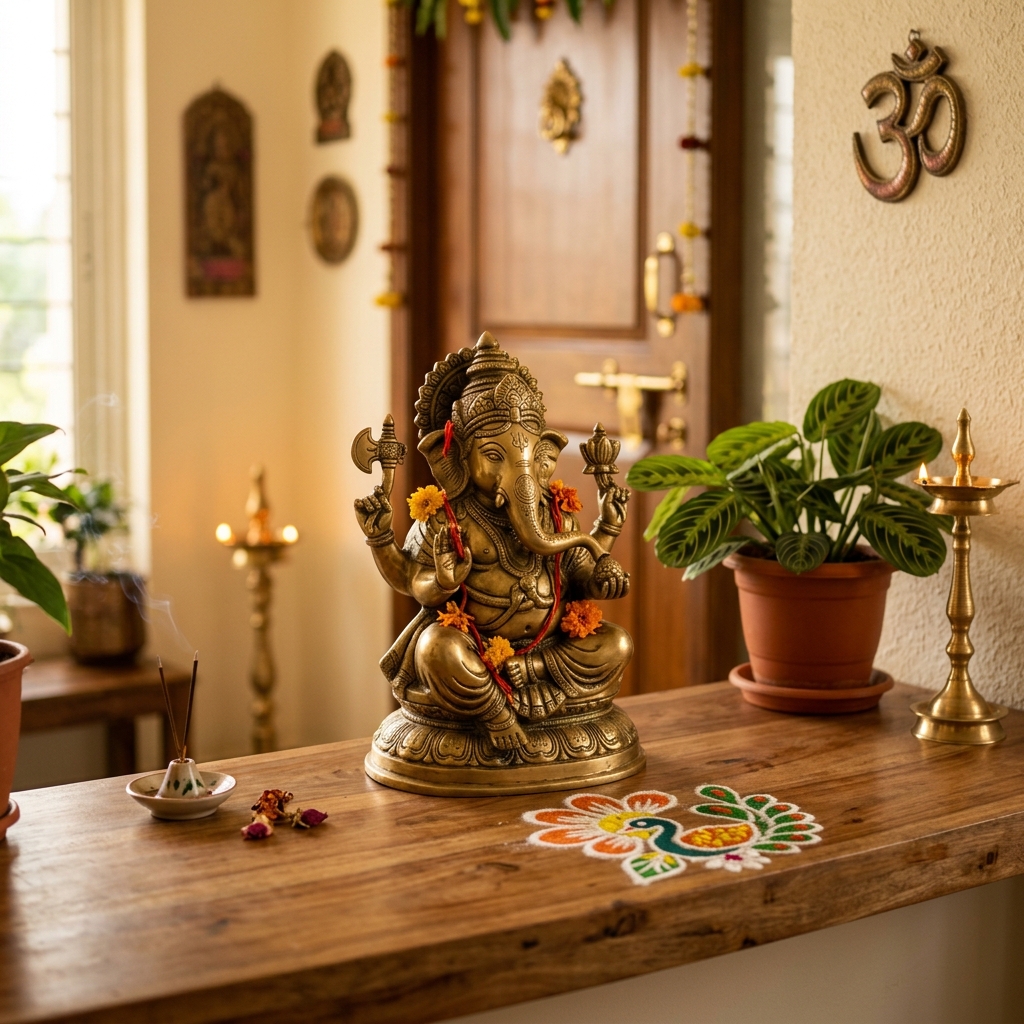
Abhijit Muhurat may be considered for certain forms of worship or devotional activities.
The appropriate timing depends on the specific ritual. If a festival or ceremony has a prescribed puja window, consult the relevant Panchang instead of automatically substituting Abhijit Muhurat.
Starting a New Project
Someone beginning a creative, educational or professional project may choose to mark the beginning with a prayer or a personal intention.
This can be a meaningful way to acknowledge the occasion, especially for people who follow Hindu customs.
The practical success of the project will still depend on planning, consistent work and the decisions made along the way.
Signing Important Documents
Some people prefer to select an auspicious time for signing an agreement or completing an important transaction.
If you choose to follow this custom, ensure that the timing does not interfere with legal deadlines, contractual requirements or the availability of the relevant parties.
The content of the agreement, due diligence and legal review remain more important than the clock time alone.
Abhijit Muhurat for Starting a Business
Opening a business is a major milestone. It often involves financial investment, planning and personal commitment. For this reason, some people consult the Panchang before beginning a venture or performing an inauguration ceremony.
How Is Muhurat Selected for a Business?
The method depends on the activity.
A business launch, shop opening, company registration, first commercial transaction and inauguration ceremony are different events. Traditional practitioners may apply different rules depending on what is being planned.
Some people use Abhijit Muhurat as a general timing option. Others prefer a specialised muhurat that considers additional Panchang factors.
Should You Use a Personalised Muhurat?
A personalised consultation may be useful if you want to follow a specific astrological tradition for a major business event.
However, it is not compulsory. The decision depends on your preferences and the type of event.
Practical factors such as the availability of customers, employees, suppliers and business partners should also be considered.
An auspicious time cannot guarantee business growth, and it should never replace sound financial planning.
Abhijit Muhurat for Buying a Vehicle
Buying a vehicle can be an important personal or family occasion. Some Hindu families consult the Panchang before completing the purchase or performing a vehicle puja.
Is Abhijit Muhurat Suitable for Vehicle Purchase?
Some people consider Abhijit Muhurat for selected purchases or new beginnings. However, vehicle-related customs vary across regions and families.
If you are following a specific tradition, check whether the recommended timing applies to the purchase itself, the vehicle puja or the first journey.
These may be treated as separate activities.
What Else Should You Consider?
Make sure that the vehicle's documents, registration, insurance and delivery arrangements are in order.
The timing of a purchase should not override safety requirements or contractual obligations. A traditional ritual can be meaningful while practical precautions remain essential.
Abhijit Muhurat for Property Purchase and Griha Pravesh
Property transactions often involve several stages, and each can have different timing requirements.
For example, signing an agreement, registering a property, beginning construction, performing Bhumi Puja and entering a newly completed home are not the same event.
Property Registration
Some people prefer to complete property-related formalities at an auspicious time.
If you follow this tradition, coordinate the timing with the legal and administrative requirements of the transaction.
Never delay a critical legal obligation simply to wait for a preferred astrological interval without understanding the consequences.
Griha Pravesh Ceremony
Griha Pravesh is the traditional ceremony performed when entering a new home. Many families select a specific date and time using the Panchang.
The selection may involve factors beyond Abhijit Muhurat, depending on the tradition being followed.
For this reason, a general daily timing should not automatically be treated as the correct Griha Pravesh muhurat.
Abhijit Muhurat for Education and Career
Education and career milestones are also associated with auspicious beginnings in some Hindu traditions.
Students may seek a suitable time for beginning a course or performing Vidyarambh, while professionals may choose a date for starting a new venture or opening an office.
Starting a Course or Educational Project
Some people choose Abhijit Muhurat to begin a course, study project or personal learning goal.
If the practice is meaningful to you, you can use the moment to set a clear intention and establish a regular study schedule.
However, learning outcomes depend on several practical factors, including teaching quality, study habits, sleep and revision.
Joining a New Job
Starting a new job can involve fixed joining dates and administrative requirements.
If your start date is flexible, you may choose a time that aligns with your tradition. If the date is fixed, focus on preparing for the role and meeting the employer's requirements.
An auspicious time can be a personal cultural preference, but it cannot guarantee professional success.
Abhijit Muhurat for Marriage and Engagement
Marriage muhurat selection is often more specialised than selecting a general daily auspicious period.
Traditional Hindu wedding timing may involve the Tithi, Nakshatra, weekday and other astrological considerations. Some families also consult the birth charts of the couple.
Can Abhijit Muhurat Be Used for Marriage?
Some traditions may consider Abhijit Muhurat in particular circumstances, but it should not automatically be treated as suitable for every wedding.
Marriage ceremonies can have specific requirements based on the customs of the community and the practitioner advising the family.

If you are arranging a wedding, seek guidance that relates specifically to the ceremony, location and dates under consideration.
Engagement and Other Wedding Rituals
Engagements, weddings and associated ceremonies may have separate timing recommendations.
The appropriate period can depend on the nature of the ritual and the tradition being followed.
It is useful to identify the exact ceremony before asking for a muhurat so that the advice matches the intended activity.
Abhijit Muhurat and Daily Puja
Many people use the middle of the day for prayer or devotional practices when their schedule allows.
Abhijit Muhurat may be considered for selected forms of worship, but daily puja does not necessarily require this specific period.
Can You Perform Daily Puja During Abhijit Muhurat?
Yes, if it suits your routine and religious practice.
Many families perform daily worship in the morning or evening, while others pray at a time that fits their responsibilities.
For festival-specific worship, follow the recommended timing for that particular ritual.
Is Abhijit Muhurat Better Than Morning Puja?
There is no universal rule that midday worship is better than morning or evening worship.
Different rituals have different traditional contexts, and personal devotion is not limited to one clock-time interval.
If you have a specific religious observance in mind, check the appropriate guidance rather than comparing unrelated time periods.
Abhijit Muhurat vs Brahma Muhurat
Abhijit Muhurat and Brahma Muhurat are both widely discussed in Hindu spiritual traditions, but they refer to different periods.
Brahma Muhurat occurs before sunrise and is commonly associated with meditation, prayer and spiritual learning.
Abhijit Muhurat is generally associated with the middle of the day and is traditionally considered favourable for selected undertakings.
Main Differences
Exploring Pre-Dawn and Daily Auspicious Timings?
Read our comprehensive guides on Brahma Muhurat: Meaning, Timings & Benefits and Aaj Ka Shubh Muhurt to master the full daily Vedic Panchang framework.
Neither period is universally superior. Their traditional uses differ, and the appropriate choice depends on the activity and the convention being followed.
Abhijit Muhurat vs Rahu Kaal
Rahu Kaal is another daily period commonly shown in Hindu Panchang calendars.
In many traditions, Rahu Kaal is avoided when initiating certain important activities. Abhijit Muhurat, by contrast, is generally presented as a favourable period for selected undertakings.
How Is Rahu Kaal Calculated?
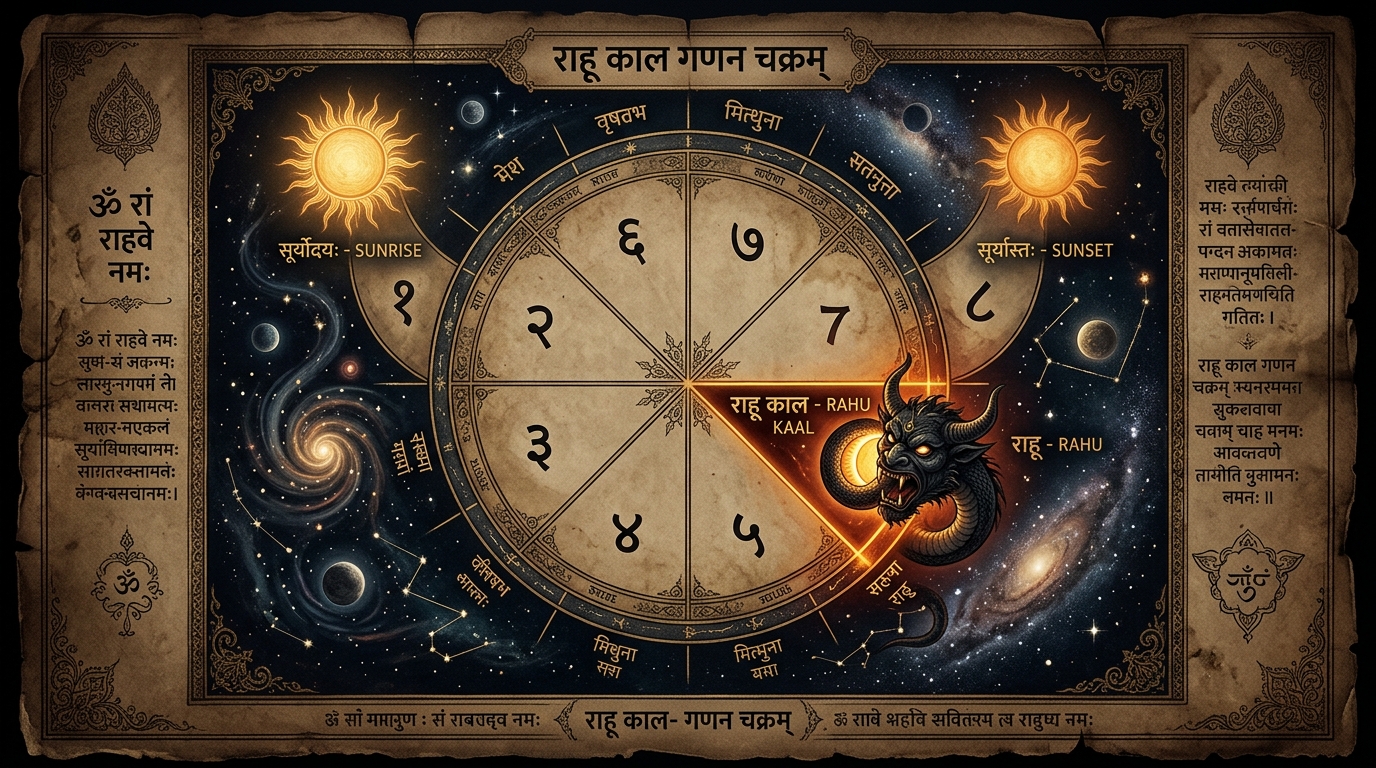
Rahu Kaal is commonly calculated by dividing the interval between local sunrise and sunset into eight equal parts. A particular segment is assigned to Rahu Kaal according to the weekday.
Its clock time therefore changes with the location, season and date.
Can Abhijit Muhurat Overlap with Rahu Kaal?
Depending on the date, location and calculation convention, time windows may overlap or require careful interpretation.
Some traditions apply specific exclusions to Abhijit Muhurat, including on particular weekdays. Therefore, it is important to consult the Panchang method you follow rather than applying a simplistic rule that one interval always overrides another.
For a major ceremony, verify the specific guidance rather than assuming that the general Abhijit Muhurat window is sufficient.
Is Abhijit Muhurat Available Every Day?
Abhijit Muhurat is commonly listed as a daily period, but its applicability can depend on traditional rules and the Panchang being followed.
Some calendars apply weekday-related exclusions or other conditions. Consequently, the presence of a calculated midday window does not automatically mean it is recommended for every activity.
What About Wednesdays?
Some traditional systems treat Abhijit Muhurat as unsuitable on Wednesday, while other published practices or calculators may present the period differently.
If the weekday matters to your ceremony, consult the particular Panchang tradition you follow and confirm whether any exclusion applies.
What If Abhijit Muhurat Is Not Suitable?
If the period is not recommended for your intended activity, you can consult the Panchang for another suitable window.
The appropriate alternative depends on the activity, date, location and religious tradition.
Do not assume that every activity must be delayed because one particular time window is unavailable.
Festivals and Abhijit Muhurat
Festivals often involve specific Tithis, puja timings and regional customs. While Abhijit Muhurat is an important general concept, festival-specific timing should be checked separately.
Dussehra and Vijayadashami
Dussehra, also known as Vijayadashami, celebrates the victory of good over evil in traditions associated with Lord Rama and Goddess Durga.
Vijay Muhurat is particularly relevant in some Vijayadashami traditions. It is a distinct timing concept and should not be confused automatically with the ordinary daily Abhijit Muhurat window.
If you are planning Dussehra worship or a related ceremony, check the festival's specific Panchang timings for the correct date and location.
Diwali and Lakshmi Puja
Diwali is associated with the worship of Goddess Lakshmi in many Hindu communities.
Lakshmi Puja has its own festival-specific timing recommendations. The appropriate window may depend on the location and Panchang convention.
Do not assume that the ordinary midday Abhijit Muhurat is the correct time for Lakshmi Puja.
Akshaya Tritiya
Akshaya Tritiya is traditionally associated with auspicious beginnings, charitable giving and purchases in many communities.
People may consult the Panchang for the festival's date and observance details. Follow the guidance relevant to the specific activity and local tradition.
Common Mistakes to Avoid When Checking Abhijit Muhurat
Using a Fixed Time for Every City
Abhijit Muhurat depends on local solar timing under the common calculation convention.
A fixed interval such as 11:45 AM to 12:30 PM should not be treated as universally accurate. Always check the relevant date and location.
Confusing Abhijit Muhurat with Vijay Muhurat
These are distinct traditional timing concepts, even though both are associated with favourable undertakings in certain contexts.
If you are planning a festival ritual, verify which muhurat the tradition actually recommends.
Assuming It Is Suitable for Every Ceremony
A general auspicious period may not satisfy the requirements of a specialised ritual.
Marriage, Griha Pravesh and festival puja can involve additional considerations. Check the timing for the precise activity you plan to perform.
Ignoring Practical Responsibilities
An auspicious time should not cause you to miss a legal deadline, disregard safety requirements or make an uninformed financial decision.
Traditional timing can be part of a personal or family practice while practical judgement remains essential.
Treating Astrology as a Guarantee
Abhijit Muhurat is traditionally considered favourable for selected activities. It is not scientific evidence that a decision will succeed.
Use the information in the context of your beliefs, and continue to rely on sound preparation and informed choices.
Frequently Asked Questions About Abhijit Muhurat
What is Abhijit Muhurat?
Abhijit Muhurat is a traditional auspicious period generally calculated around local midday. It is associated with selected beginnings and activities in Hindu calendrical and astrological traditions.
What is the Abhijit Muhurat time today?
The exact timing depends on the local sunrise, sunset, date and calculation method. Check a reliable Panchang for the city where the activity will take place.
How long does Abhijit Muhurat last?
A commonly used convention gives it a duration of approximately 48 minutes, extending about 24 minutes before and after local midday. Some Panchang methods may calculate or interpret the period differently.
Is Abhijit Muhurat good for starting new work?
Traditional practice often regards it as favourable for selected new beginnings. Whether it is suitable for a particular activity depends on the tradition and any applicable restrictions.
Is Abhijit Muhurat the same every day?
No. Its clock time changes with local solar timing and may vary by location and date.
Can I start a business during Abhijit Muhurat?
Some people choose this period for a business launch or other new beginning. If you follow a specific astrological tradition, verify whether the period is appropriate for your particular activity. Business success still depends on planning and execution.
Can I buy a vehicle during Abhijit Muhurat?
Some people consider it for selected purchases. Traditions differ, so check whether the timing applies to the purchase, vehicle puja or first journey.
Is Abhijit Muhurat suitable for Griha Pravesh?
Griha Pravesh often requires a specialised muhurat. Consult the relevant Panchang or a knowledgeable practitioner rather than assuming a general midday period is suitable.
Is Abhijit Muhurat good for marriage?
Marriage muhurat selection may involve additional astrological considerations. Abhijit Muhurat should not automatically be treated as suitable for every wedding.
What is the difference between Abhijit Muhurat and Brahma Muhurat?
Abhijit Muhurat is generally associated with local midday, while Brahma Muhurat occurs before sunrise. They have different calculations and traditional uses.
Is Abhijit Muhurat available on Wednesday?
Some traditional systems exclude Wednesday, while published practices can differ. Follow the specific Panchang tradition relevant to your activity and verify whether an exclusion applies.
Can I perform puja during Abhijit Muhurat?
It may be suitable for selected forms of worship, depending on your tradition. Festival-specific puja timings should be checked separately.
Does Abhijit Muhurat guarantee success?
No. It is a traditional astrological timing recommendation, not a scientifically established guarantee of success or protection from difficulties.
Do I need my Kundli to find Abhijit Muhurat?
Not for the general daily calculation. A personalised muhurat consultation may consider birth-chart details for certain important ceremonies, depending on the practitioner's method.
Conclusion: Find the Right Abhijit Muhurat for Your Activity
Abhijit Muhurat is an important concept in Hindu timekeeping and traditional Vedic astrology. Generally associated with the middle of the day, it is considered favourable for selected activities and new beginnings.
Its exact clock time depends on the local timing calculation, and the period should not be treated as universally suitable for every ceremony. Some traditions also apply specific exclusions or additional conditions.
If you are searching for Abhijit Muhurat today, begin by checking the correct date and city. Then identify the purpose of your activity and verify whether the period is appropriate according to the Panchang tradition you follow.
For a routine task, a general timing reference may be enough. For a wedding, housewarming or important festival ceremony, more specialised guidance may be necessary.
At Astro27, you can continue exploring Vedic astrology, Panchang concepts and the traditional significance of auspicious timings to understand how these practices inform daily life and important occasions.
May your new beginnings be thoughtful, your plans be well prepared and your actions be guided by clarity and purpose.