📜 Table of Contents — Complete Shubh Muhurat Guide
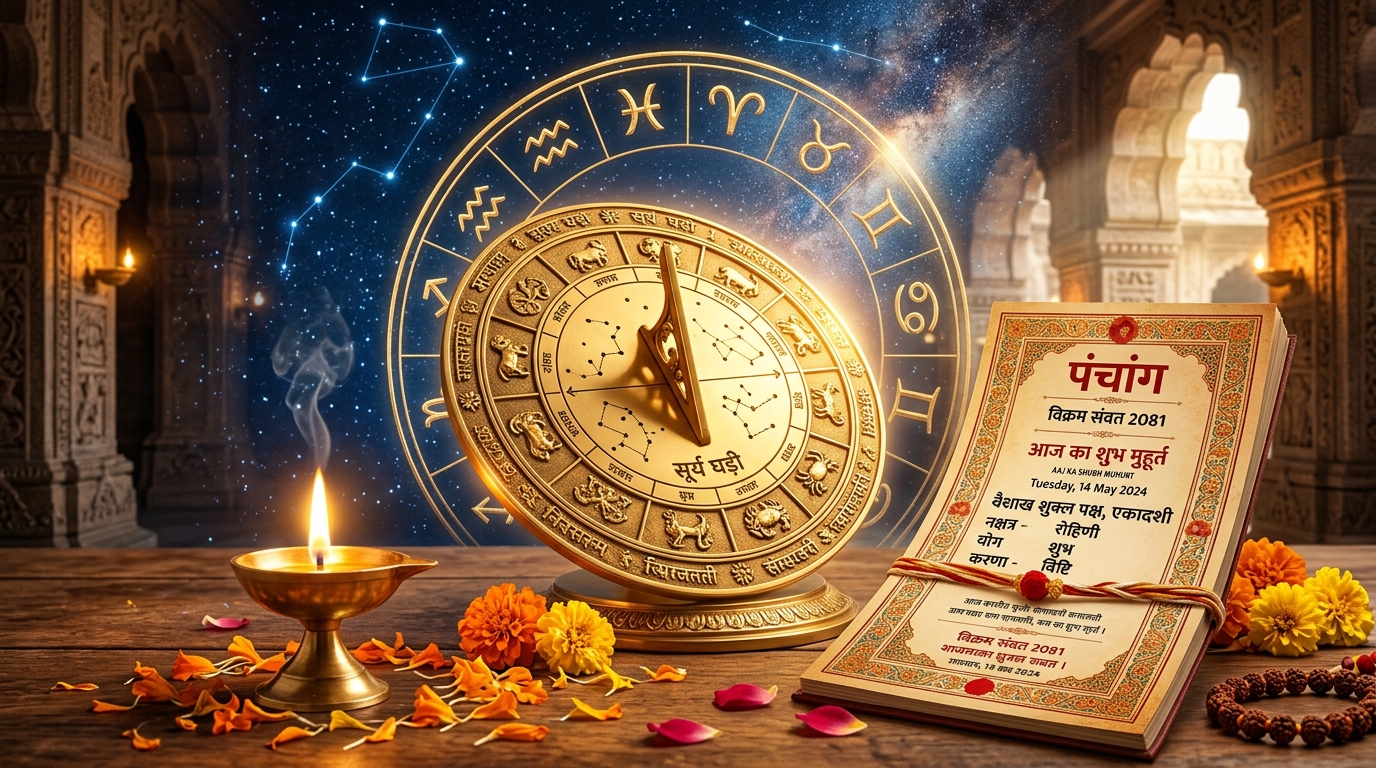
Have you ever planned to start something important and wondered whether the day is auspicious for it? Perhaps you want to perform a puja, buy a new vehicle, begin a business, purchase gold, sign an important document, or start a new journey. In Hindu tradition, many people consult the Panchang to find an appropriate time for such activities. This is where aaj ka shubh muhurt becomes important.
In Vedic astrology, a muhurat is an auspicious or astrologically selected period for performing a particular activity. People traditionally consider the Tithi, Nakshatra, Yoga, Karana, weekday and planetary positions before selecting a suitable time. The purpose is to begin an activity at a time considered favourable according to Hindu astrological traditions.
However, finding today's auspicious time is not simply about checking a clock or looking for one universal time that works for everyone. The appropriate muhurat can depend on the date, geographical location, purpose of the activity and the Panchang tradition being followed.
In this guide, we will explore how to find aaj ka shubh muhurt, understand the daily Panchang, check Rahu Kaal, identify auspicious periods for different activities and learn how Vedic astrology traditionally guides the selection of a suitable time.
What Is Aaj Ka Shubh Muhurt?
Aaj ka shubh muhurt means today's auspicious time. The Hindi word aaj means today, shubh means auspicious or favourable, and muhurt refers to a selected period considered suitable for undertaking a particular activity.
According to traditional Hindu astrology, time is understood through the movement of celestial bodies and the lunar calendar. Rather than considering every hour of the day equally suitable, practitioners consult the Panchang to identify periods associated with particular qualities.
For example, someone planning a housewarming ceremony may look for a suitable Griha Pravesh muhurat. A person planning a wedding may consult a marriage muhurat, while someone beginning a new business might seek an appropriate time for a new venture.
The idea is to select a time that aligns with traditional astrological guidelines and the nature of the activity.
Why Do People Check Today's Shubh Muhurt?
People look for today's auspicious time for several reasons.
Some want to perform daily religious rituals at an appropriate time. Others are preparing for an important milestone, such as buying property, starting a job, launching a business or performing a family ceremony.
In many Hindu households, checking the Panchang is a regular practice. Family members may consult it before festivals, religious observances, journeys and other significant occasions.
The reasons vary, but the underlying idea remains similar: people want to begin an important activity thoughtfully, with a sense of confidence, tradition and spiritual preparation.
Is There One Shubh Muhurt for Everything?
No. Traditional muhurat selection considers the purpose of the activity.
A time recommended for daily worship may not necessarily be the appropriate time for a wedding, property registration or a housewarming ceremony. Different activities can have different astrological requirements.
For this reason, an accurate guide to aaj ka shubh muhurt should distinguish between general auspicious periods and activity-specific muhurats.
A daily Panchang can help you understand the available timings, but an important ceremony may require a more detailed calculation.
Aaj Ka Shubh Muhurt Today: How to Find the Correct Timing
The first step in finding today's shubh muhurat is to identify the correct date and location. The Panchang for one city may show slightly different timings from the Panchang for another city because sunrise, sunset and other astronomical calculations depend on geographical coordinates.
For example, a Panchang calculated for Bengaluru may not show precisely the same time windows as one calculated for Delhi, Kolkata or Mumbai.
Step 1: Select Your City
Begin by choosing the city where you plan to perform the activity.
Location matters because traditional daily time periods, including Rahu Kaal and certain auspicious intervals, are calculated using local sunrise and sunset.
If you are performing a ceremony in another city, use the location where the ceremony will take place rather than simply using your current location.
Step 2: Check the Date and Panchang
Confirm the calendar date and review the day's Panchang details.
The main elements include Tithi, Nakshatra, Yoga, Karana and weekday. These factors help explain the traditional astrological characteristics assigned to different periods.
You should also check whether the day coincides with a festival, fast, eclipse or other observance that may affect customary practices.
Step 3: Identify the Purpose
Decide what you want to do.
Are you planning a puja, starting a business, buying a vehicle, travelling, beginning a new job or organising a family ceremony?
Once the purpose is clear, you can look for a suitable time according to the relevant traditional guidelines.
Step 4: Check the Auspicious Time Window
Review the available muhurat intervals and any applicable restrictions. A daily Panchang may list periods such as Abhijit Muhurat, Brahma Muhurat and other traditionally recognised time windows.
Do not assume that every named muhurat is suitable for every activity. Its interpretation depends on the tradition and the purpose for which the time is being selected.
Step 5: Confirm Before Making Plans
For a significant ceremony, verify the timing using a reliable Panchang calculated for the correct location.
If the activity requires a personalised muhurat, consult a knowledgeable practitioner who can explain the relevant considerations.
Remember that a muhurat is a traditional timing recommendation, not a guarantee of success.
What Is a Panchang and Why Is It Important?
The Panchang is a traditional Hindu calendar used to understand the astrological and calendrical characteristics of a day.
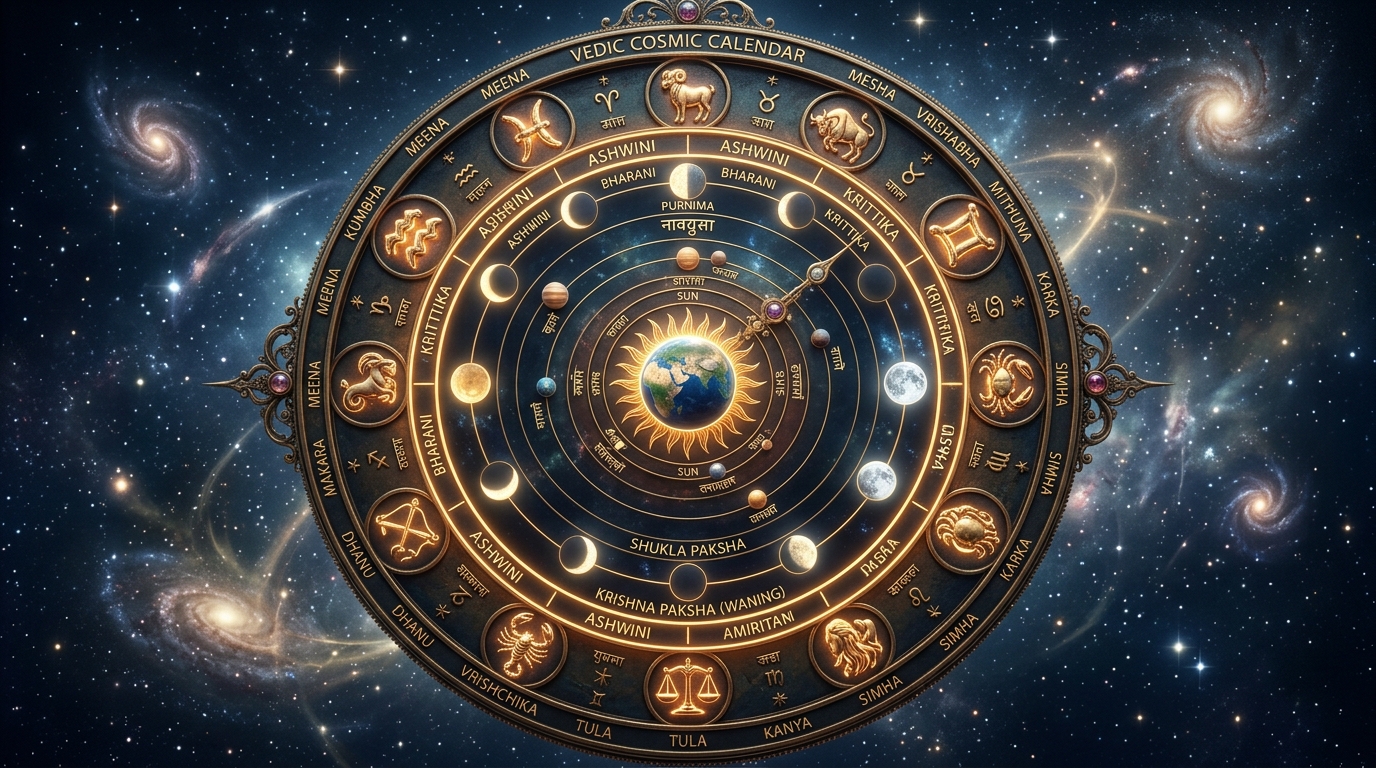
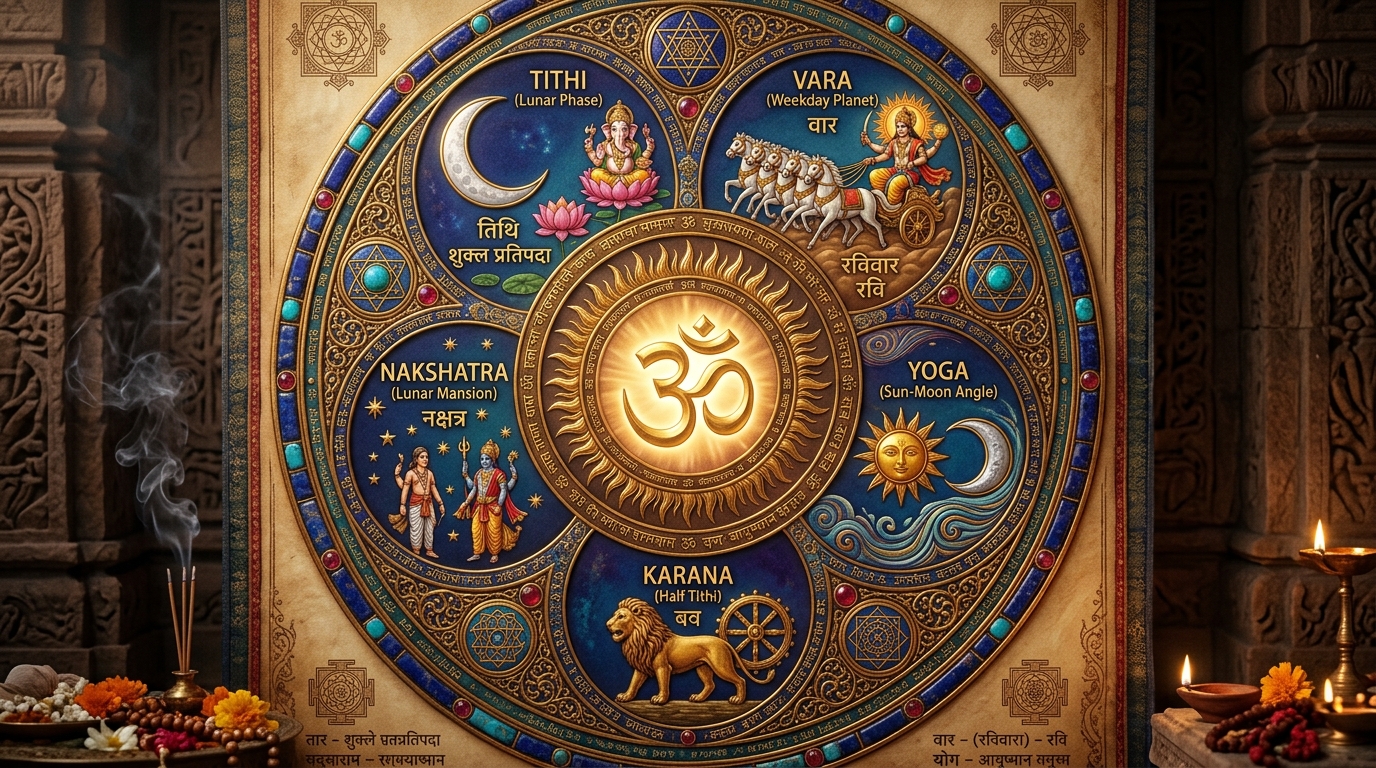
The Sanskrit word Panchang refers to five limbs. These are Tithi, Vara, Nakshatra, Yoga and Karana.
Together, these five elements form the foundation of the daily Hindu Panchang. They are commonly consulted when selecting auspicious timings, planning religious ceremonies and observing festivals.
1. Tithi: The Lunar Day
Tithi refers to a lunar day determined by the angular relationship between the Sun and the Moon.
The traditional Hindu lunar calendar divides each lunar month into two main phases: Shukla Paksha, the waxing phase of the Moon, and Krishna Paksha, the waning phase.
Each phase contains fifteen Tithis, including Pratipada, Dwitiya, Tritiya, Chaturthi, Panchami, Shashthi, Saptami, Ashtami, Navami, Dashami, Ekadashi, Dwadashi, Trayodashi, Chaturdashi and Purnima or Amavasya at the end of the respective phase.
Different Tithis have different traditional associations. For instance, Ekadashi is widely associated with fasting and devotion to Lord Vishnu, while Purnima is important for several religious observances.
The suitability of a Tithi depends on the activity being considered. A Tithi should not be labelled universally good or bad without considering the relevant context.
2. Vara: The Weekday
Vara refers to the weekday.
In traditional astrology, the seven weekdays are associated with the seven classical planetary rulers:
- Sunday: Sun
- Monday: Moon
- Tuesday: Mars
- Wednesday: Mercury
- Thursday: Jupiter
- Friday: Venus
- Saturday: Saturn
Each planet carries particular symbolic associations in Vedic astrology.
The Sun is associated with authority and vitality, the Moon with emotions and the mind, Mars with courage and action, Mercury with communication and learning, Jupiter with wisdom, Venus with relationships and comfort, and Saturn with discipline and responsibility.
These associations are traditionally considered when interpreting a weekday's suitability for different activities.
However, a weekday alone does not determine whether an entire day is auspicious. The remaining Panchang factors and the specific activity also matter.
3. Nakshatra: The Lunar Mansion
Nakshatra refers to one of the 27 principal lunar mansions used in Vedic astrology.
The Moon's position relative to these divisions is used to determine the Nakshatra for a particular time.
Examples include Ashwini, Rohini, Mrigashira, Pushya, Hasta, Anuradha, Revati and others.
In traditional muhurat selection, Nakshatras are interpreted according to their characteristics and the activity being planned.
Some Nakshatras are traditionally associated with beginnings, some with learning, some with travel and others with activities requiring stability or careful preparation.
The Moon changes its position continuously, so the applicable Nakshatra may change during the day. Always check the beginning and ending times shown in the local Panchang.
4. Yoga: A Panchang Calculation
Yoga is one of the five Panchang elements. It is calculated using the combined longitudes of the Sun and Moon.
The traditional system recognises 27 Yogas, including Vishkumbha, Priti, Ayushman, Saubhagya, Shobhana, Sukarma, Dhriti and others.
Each Yoga has a traditional interpretation. Practitioners may consider the prevailing Yoga when evaluating the suitability of a particular time.
It is important to distinguish this Panchang Yoga from the physical postures and breathing practices commonly associated with modern yoga.
5. Karana: Half of a Tithi
Karana represents half of a Tithi.
There are eleven principal Karana names in the traditional system, including Bava, Balava, Kaulava, Taitila, Gara, Vanija, Vishti, Shakuni, Chatushpada, Naga and Kimstughna.
Karana is another factor considered when assessing a muhurat.
Vishti Karana, commonly associated with Bhadra, is traditionally avoided for certain auspicious activities. However, its relevance depends on the activity and the specific Panchang rules being followed.
Taken together, these five elements provide the traditional foundation for understanding a day's astrological calendar.
Aaj Ka Shubh Muhurt and the Role of Sunrise
Sunrise is particularly important in the calculation of many daily Panchang periods.
Traditional daily intervals, including several Choghadiya periods and Rahu Kaal, are generally calculated relative to local sunrise and sunset. This is why a fixed clock time cannot be applied uniformly across all cities and dates.
Why Does the Timing Change Every Day?
Sunrise and sunset vary throughout the year because of the Earth's movement around the Sun and the tilt of its rotational axis.
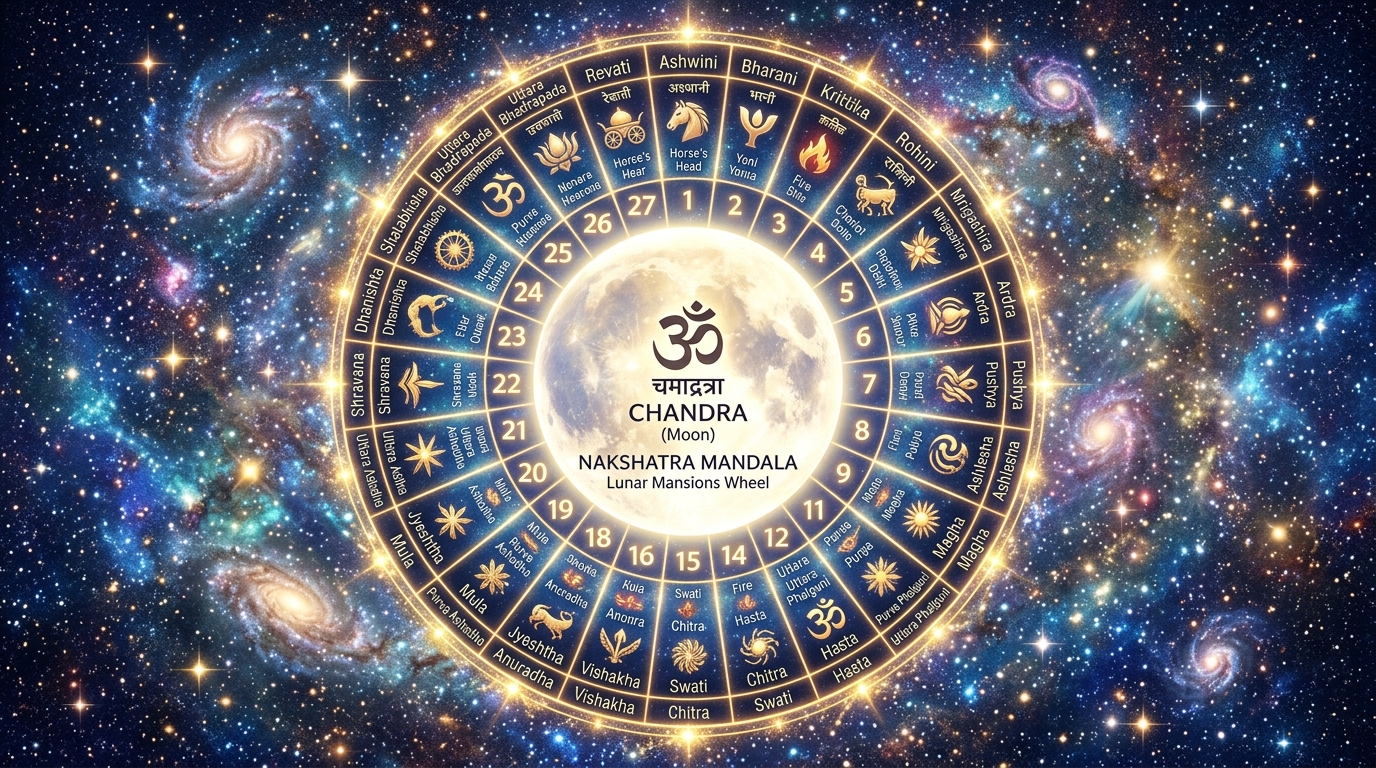
In addition, the Moon's changing position affects the timing of Tithi, Nakshatra and other lunar calculations.
Consequently, a time that is considered auspicious on one date may not have the same classification on the next date.
This is one reason daily Panchang information should be updated regularly instead of relying on a permanently published table.
Why Does Location Matter?
Imagine two people checking the same Panchang entry from different cities.
Even if both follow the same astrological tradition, the local sunrise and sunset may differ. This can change the clock-time boundaries of sunrise-based periods.
For this reason, anyone searching for aaj ka shubh muhurt should check the local timing rather than relying on an unqualified time copied from another city.
Brahma Muhurat: The Traditional Early-Morning Period
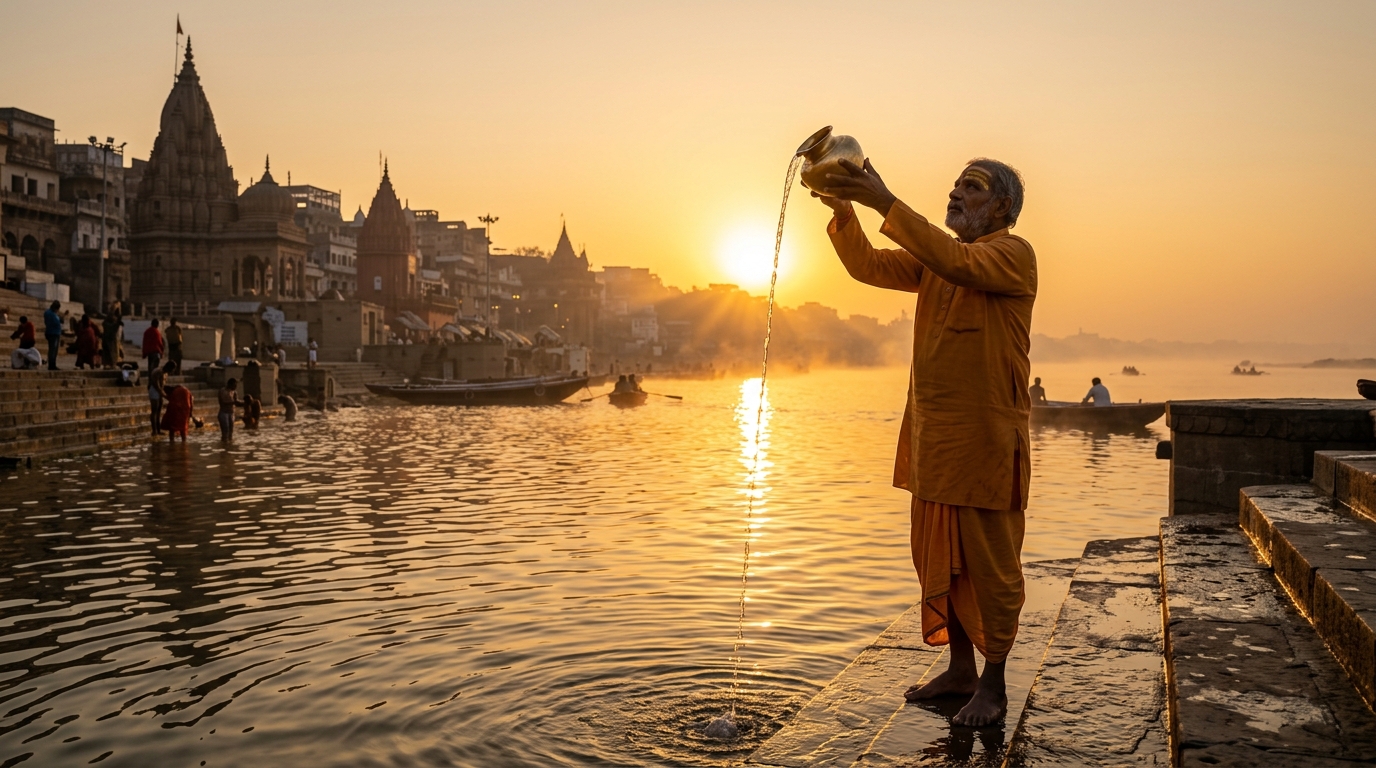
Brahma Muhurat is one of the best-known auspicious periods in Hindu tradition (see our complete guide to Brahma Muhurat: Timings, Benefits, Rules & Spiritual Significance). It is commonly associated with early-morning spiritual practices, meditation, prayer, study and self-reflection.
The period is traditionally described as occurring before sunrise. A commonly used calculation places it approximately 1 hour and 36 minutes before sunrise, with the interval ending about 48 minutes before sunrise.
For example, if sunrise occurs at 6:00 AM, a calculation using this convention places Brahma Muhurat approximately between 4:24 AM and 5:12 AM.
This is an illustrative calculation, not today's verified local timing.
Why Is Brahma Muhurat Considered Important?
Traditional teachings associate the early morning with quiet surroundings, fewer distractions and an opportunity for focused spiritual practice.
Many people use this time for meditation, mantra recitation, prayer, reading spiritual texts or setting intentions for the day.
From a practical perspective, a quiet morning routine can also help create consistency and reduce distractions.
The traditional significance of Brahma Muhurat should not be interpreted as a guarantee that every activity performed during this interval will produce a particular outcome.
What Can You Do During Brahma Muhurat?
Depending on your personal beliefs and routine, you may use this period for:
- Meditation and breathing exercises.
- Prayer or mantra recitation.
- Reading religious or philosophical texts.
- Planning your priorities for the day.
- Practising gratitude and quiet reflection.
Choose a routine that suits your health, sleep schedule and responsibilities. There is no need to sacrifice adequate sleep merely to follow a particular clock time.
Abhijit Muhurat: An Important Daily Auspicious Period
Abhijit Muhurat is a traditionally recognised midday period that many Panchang users consult when looking for an auspicious time (for an in-depth breakdown, read our complete guide to Abhijit Muhurat: Meaning, Timings & Calculation).
It is commonly calculated around local solar noon. The exact duration and method can vary between Panchang conventions.
Why Do People Check Abhijit Muhurat?
Abhijit Muhurat is traditionally associated with favourable beginnings and is often consulted when planning selected activities.
People may consider it for starting a task, conducting certain forms of worship or undertaking an activity for which a suitable general time is needed.
However, it should not be treated as a universal solution for every ceremony. Some activities require a specialised muhurat, and certain traditions apply additional conditions or exclusions.
Is Abhijit Muhurat Available Every Day?
Its calculation depends on the day and the Panchang convention used. In some traditional systems, the period is not considered suitable on particular weekdays or under certain circumstances.
Therefore, if you are searching for aaj ka shubh muhurt, check whether Abhijit Muhurat is listed as applicable for your date and location rather than assuming the same clock time applies daily.
Rahu Kaal: What You Should Know
Rahu Kaal is a daily time interval considered inauspicious for initiating certain important activities in many Hindu astrological traditions.
It is associated with Rahu, a shadow planet in Vedic astrology. Rahu and Ketu are mathematical points related to the Moon's orbit, rather than physical planets like Mars or Jupiter.
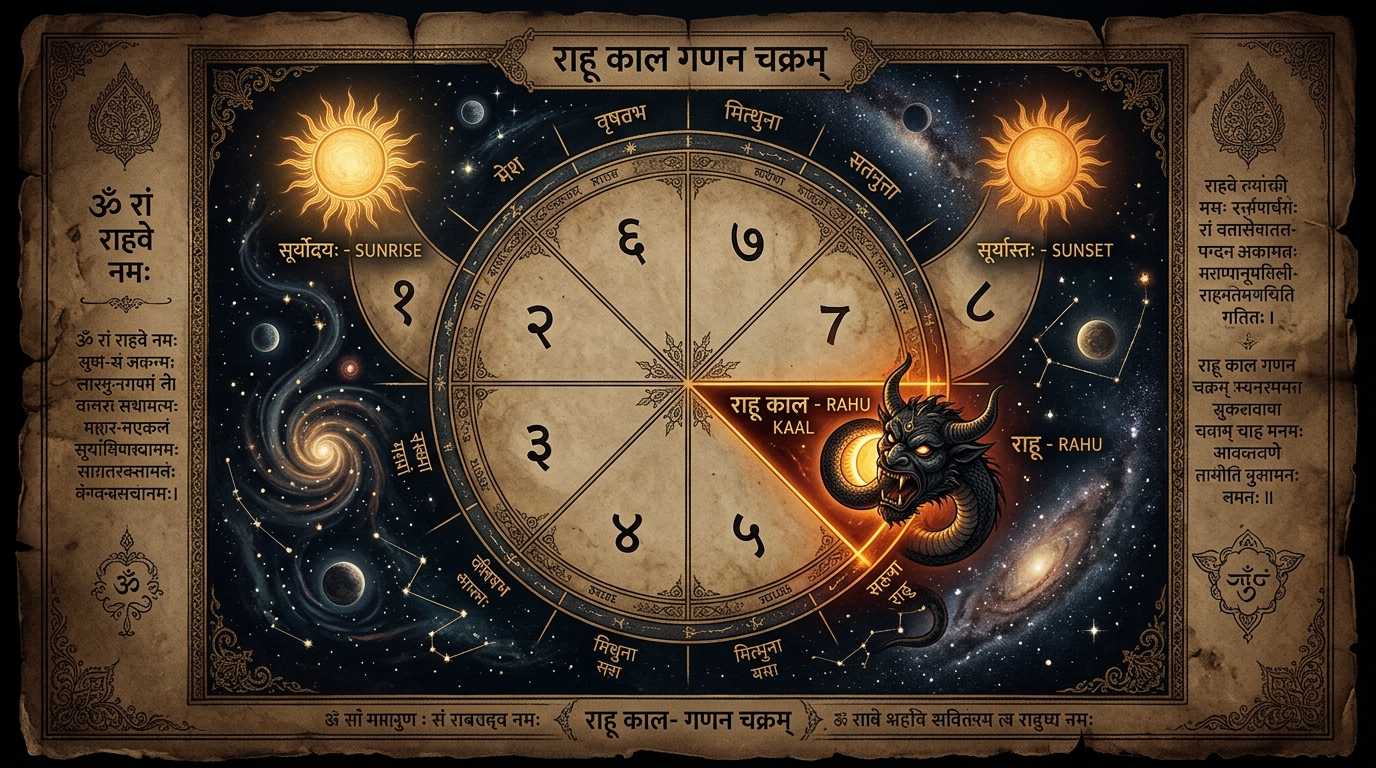
Rahu Kaal is usually calculated by dividing the interval between local sunrise and sunset into eight equal parts. One of these parts is assigned to Rahu Kaal according to the weekday.
How Is Rahu Kaal Calculated?
The calculation generally follows these steps:
- Determine local sunrise and sunset.
- Calculate the total length of daylight.
- Divide the daylight interval into eight equal segments.
- Identify the segment assigned to Rahu Kaal for that weekday.
The exact clock times therefore change according to location, season and date.
Rahu Kaal by Weekday
The following sequence shows which of the eight daylight segments is traditionally assigned to Rahu Kaal.
This table identifies the segment, not the exact clock time. Calculate the interval using the local sunrise and sunset before applying it.
Should You Avoid Every Activity During Rahu Kaal?
In common Hindu practice, Rahu Kaal is generally avoided for initiating certain new or important undertakings.

However, daily responsibilities cannot always be rearranged around an astrological interval. Many traditions distinguish between starting a new activity and continuing routine work or established religious practices.
Rahu Kaal is a traditional astrological consideration, not scientific evidence that an activity undertaken during the interval will fail.
If you follow this custom, use it as one consideration when planning rather than allowing it to create unnecessary anxiety.
Other Auspicious Time Periods in the Daily Panchang
Apart from Brahma Muhurat and Abhijit Muhurat, several other periods appear in traditional Panchang calendars.
Choghadiya Muhurat
Choghadiya divides the day and night into multiple time intervals, each associated with a traditional classification.
The principal classifications include Amrit, Shubh, Labh, Char, Udveg, Kaal and Rog. Their traditional interpretations differ, and the sequence changes according to the weekday and whether the interval belongs to daytime or nighttime.
People often consult Choghadiya when planning travel, starting a small task or identifying a convenient traditional auspicious period.
The calculation depends on the local sunrise and sunset, so Choghadiya timings should be checked for the relevant city.
Abhijit Muhurat and Vijay Muhurat
These are two distinct concepts.
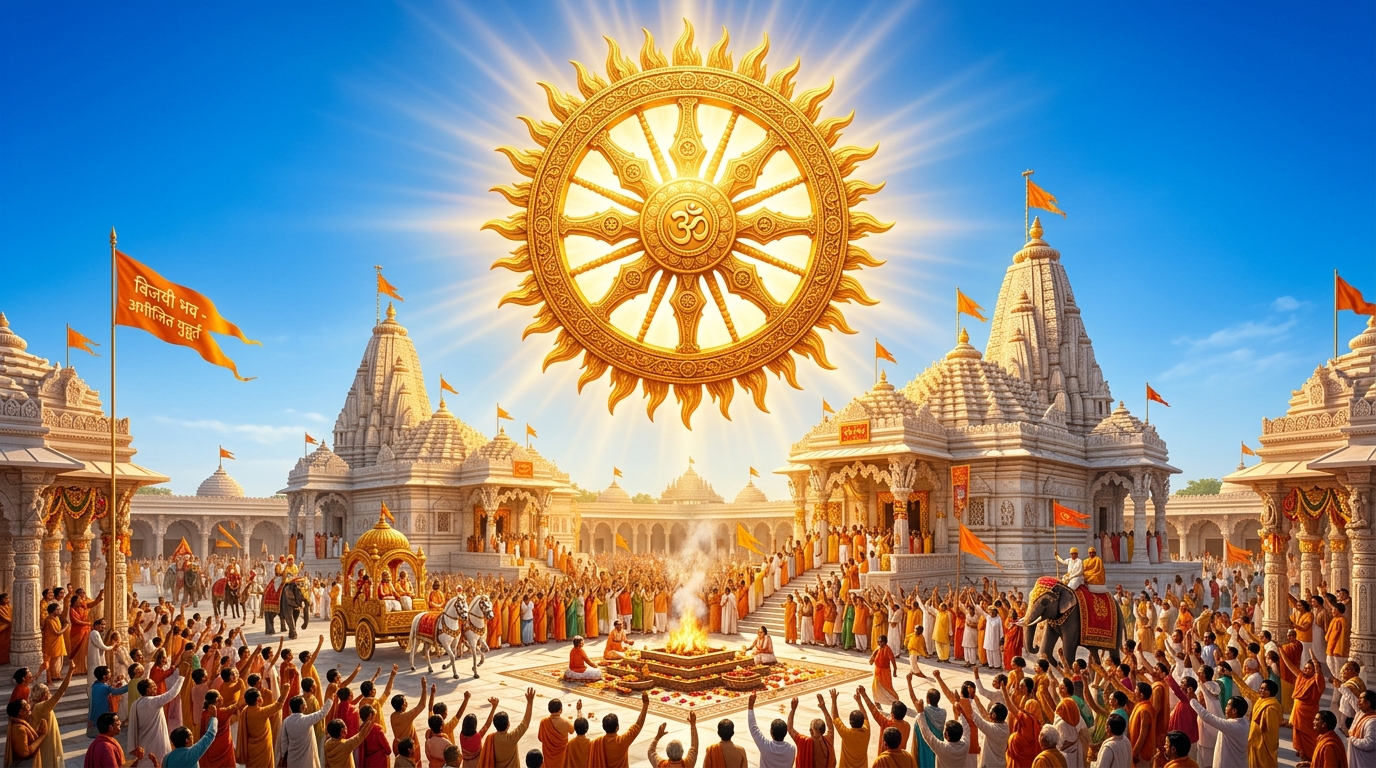
Abhijit Muhurat is associated with the period around midday, while Vijay Muhurat is another traditionally recognised period associated with victory and favourable undertakings.
Vijay Muhurat is particularly relevant in some festival and ritual traditions, including Vijayadashami observances.
Do not assume that the two periods are interchangeable or that their clock times are fixed.
Godhuli Muhurat
Godhuli Muhurat is traditionally associated with the period around sunset.
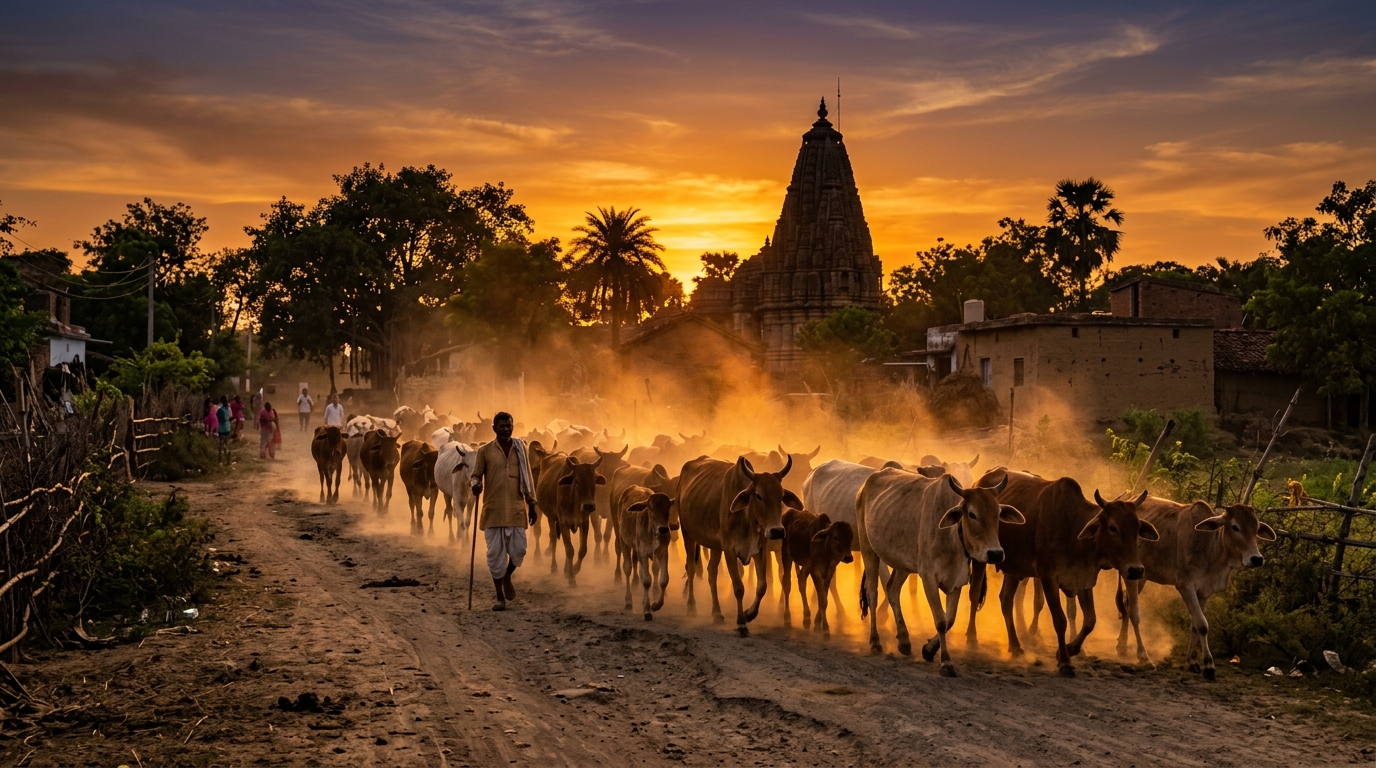
The term evokes the time when cattle return home and dust rises from the ground, reflecting an older rural setting.
It is connected with evening worship and certain traditional ceremonies. The exact interpretation and duration can differ across customs.
Because it is associated with sunset, local timing is important.
Aaj Ka Shubh Muhurt for Puja and Daily Worship
Many people search for today's auspicious time because they want to perform puja at home or observe a religious practice.
For ordinary daily worship, personal devotion, cleanliness and consistency are important parts of the practice. When a specific festival or ceremony is involved, the Panchang can provide the relevant Tithi and recommended timing.
Morning Puja
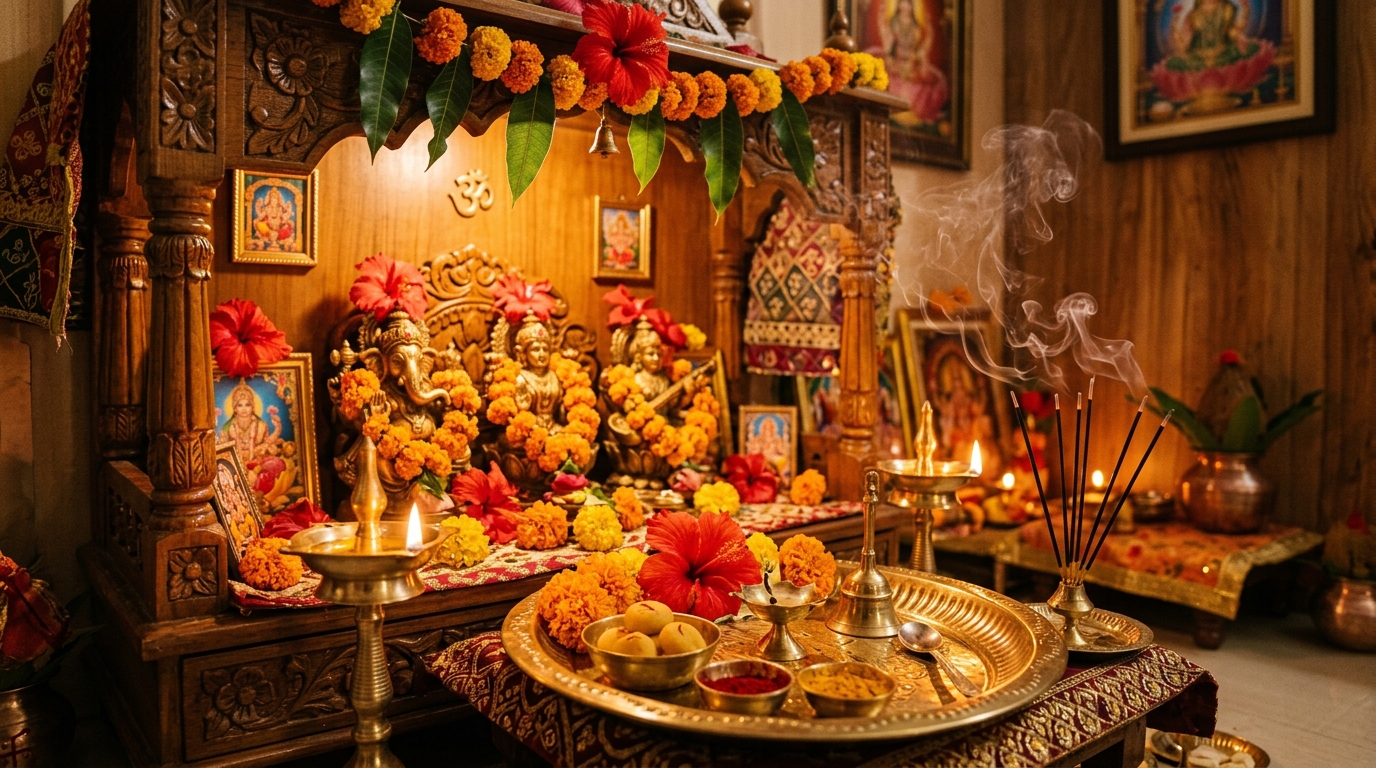
Morning worship is common in many Hindu households. Depending on family tradition, it may involve lighting a diya, offering flowers, reciting a prayer or mantra, and spending a few minutes in meditation.
Some families prefer to perform puja after bathing and before beginning their daily activities.
If a specific festival has a prescribed puja window, check that timing separately rather than assuming the general morning period is sufficient.
Evening Puja
Evening worship is another common practice. Families may light a diya, offer prayers or perform aarti at home.
The appropriate time can depend on the deity, festival and local tradition. Sandhya worship and festival-specific puja timings should not be confused with a single universal daily muhurat.
Puja During Festivals
Major festivals such as Diwali, Navratri, Dussehra, Janmashtami and Maha Shivratri may have specific rituals and recommended time windows.
For example, Lakshmi Puja on Diwali is associated with a festival-specific muhurat. A general daily auspicious period should not be substituted automatically for the recommended timing of that puja.
Always consult the Panchang for the relevant festival, city and year.
Shubh Muhurt for Starting a New Business
Starting a business is a significant milestone for many families. In Hindu tradition, some people consult an astrologer or Panchang before opening a shop, launching a company, beginning a commercial venture or performing an inauguration ceremony.
What Do Astrologers Traditionally Consider?
The selected muhurat may be evaluated using the weekday, Tithi, Nakshatra, Yoga, Karana and other traditional rules relevant to the proposed activity.
Some practitioners also consider the individual's birth chart, depending on the complexity of the consultation and the tradition followed.
The purpose is to select a time that is considered suitable within that astrological framework.
Does a Business Need a Personalised Muhurat?
Not every business activity requires a personalised astrological consultation.
Someone registering a business online may have very different practical constraints from someone organising a shop inauguration or a formal opening ceremony.
If you want to follow a traditional muhurat, identify the precise activity and select the appropriate timing guidance.
At the same time, business planning, market research, cash-flow management, customer service and operational preparation remain essential practical factors. An auspicious time cannot replace these requirements or guarantee commercial success.
Shubh Muhurt for Buying a Vehicle
Buying a car, motorcycle or another vehicle is an important purchase for many people. Some families consult the Panchang to select a suitable time for completing the purchase, performing a vehicle puja or taking the vehicle home for the first time.
What Is Considered Before Vehicle Puja?
Traditional recommendations may consider the weekday, Tithi, Nakshatra and other Panchang elements. Certain Nakshatras and weekdays are associated with favourable beginnings in particular muhurat traditions.
However, recommendations can differ between regions and practitioners.
If you are following a specific tradition, check the recommended timing for the purchase or puja rather than relying only on a generic shubh muhurat table.
Is Vehicle Puja Necessary?
Vehicle puja is a religious or cultural practice, not a legal requirement for owning or driving a vehicle.
People may perform it to express gratitude, seek blessings and mark a new beginning. Others may choose not to perform it.
Regardless of religious practice, safe driving, insurance, valid registration, regular maintenance and compliance with traffic laws are important.
Shubh Muhurt for Buying Gold and Property
Gold purchases and property transactions often carry emotional and financial significance. Some people prefer to complete these purchases during a traditionally auspicious period.
Buying Gold During an Auspicious Muhurat
Families may consult the Panchang before buying gold for weddings, festivals or personal milestones.
Dhanteras and Akshaya Tritiya are especially associated with gold purchases in many Indian communities.
However, the most appropriate date and timing depend on the specific festival calendar and local Panchang. Not every general shubh muhurat is automatically the recommended festival shopping period.
Property Purchase and Griha Pravesh
Property-related activities can involve several distinct events: signing a purchase agreement, registering the property, beginning construction, performing Bhumi Puja and entering a newly completed home.
Traditional muhurat recommendations may differ for each event.
Griha Pravesh, in particular, is commonly treated as a specialised ceremony. People who follow Vedic astrology may consult the Panchang and, where appropriate, individual birth details before selecting a date.
A suitable muhurat should complement, not replace, legal verification, title checks, financial planning and property inspections.
Shubh Muhurt for Marriage and Engagement
Marriage is one of the most important occasions for which many Hindu families seek a specialised muhurat.
The selection process may be more detailed than checking today's general auspicious period.
Marriage Muhurat According to Tradition
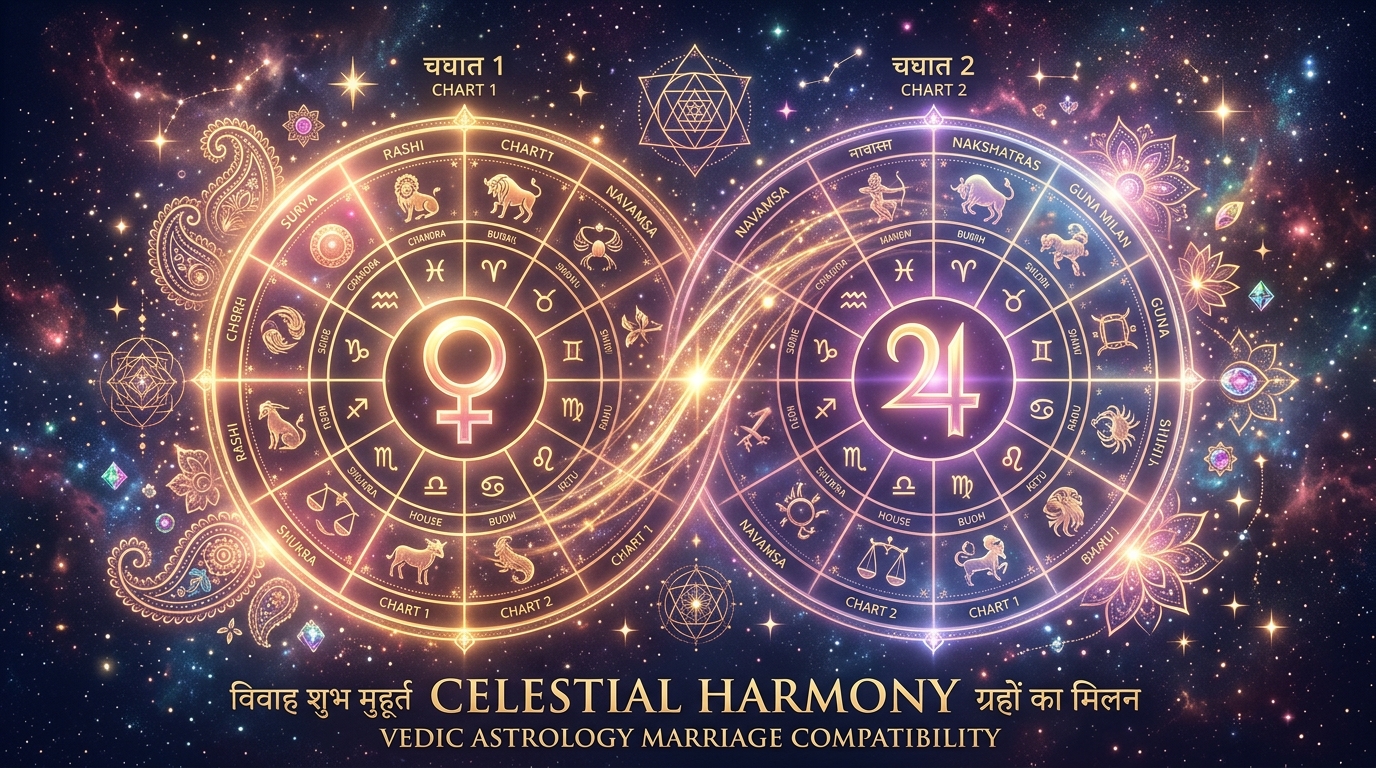
Depending on the family and regional tradition, marriage timing can involve the Tithi, Nakshatra, weekday, planetary considerations and compatibility-related customs.
Some families also consider the birth charts of the couple and consult a practitioner to identify a suitable date.
There is no single marriage muhurat that applies to all couples, locations and ceremonies.
Engagement and Other Wedding Ceremonies
Engagements, weddings and associated ceremonies may follow different timing guidelines.
If you are organising an event, specify the ceremony and location when consulting a Panchang or astrologer. This helps avoid confusing the auspicious period for one ritual with that of another.
Astrological timing is a matter of cultural and religious practice; a healthy relationship depends on communication, respect, consent and mutual understanding.
Shubh Muhurt for Education and Career
Education and career milestones are also associated with auspicious beginnings in many Hindu traditions.
Some families select a suitable period for Vidyarambh, the traditional initiation into learning. Others consult the Panchang before starting a new course, joining a job or opening a professional practice.
Vidyarambh and Learning
Vidyarambh is a traditional ceremony marking the beginning of formal learning for a child.
The date and timing may be selected according to local custom and the relevant Panchang. Saraswati Puja is also an important occasion associated with education, music, arts and knowledge in many communities.
For everyday study, maintaining a regular schedule and choosing a quiet environment may be more practically important than finding a new muhurat every day.
Starting a New Job
Some people prefer to begin a new role on a date considered auspicious.
If the joining date is flexible and following this tradition matters to you, you may consult a Panchang. In many situations, however, joining dates are determined by the employer or contractual requirements.
Professional preparation, skill development, reliability and good communication remain important to career progress.
Shubh Muhurt for Travel
Travel muhurat is another topic associated with the daily Panchang.
Some people consult traditional guidance before beginning a long journey, relocating to another city or travelling for an important family occasion.
What Is Considered for Travel Muhurat?
Depending on the tradition, practitioners may consider the weekday, Tithi, Nakshatra and specific travel-related customs.
Some traditions also include directional considerations or practices associated with particular weekdays.
These rules are not identical across every Hindu community, so it is useful to follow the convention relevant to your family rather than combining unrelated recommendations.
Should You Delay Essential Travel?
An astrological recommendation should not override safety, medical needs, work requirements or other urgent responsibilities.
For practical travel planning, check road conditions, weather, transport schedules, documentation and rest requirements. Traditional muhurat selection can be a personal cultural consideration alongside these factors.
How Vedic Astrology Uses the Birth Chart in Muhurat Selection
Daily Panchang information describes the prevailing calendar and astrological conditions. A personalised muhurat may involve additional considerations.
In Vedic astrology, a birth chart, or Janma Kundli, represents the positions of the planets at the time and place of birth according to the chosen calculation system.
Some practitioners consider the birth chart when recommending a time for an important event.
Janma Nakshatra
Janma Nakshatra is the Nakshatra associated with the Moon's position at birth.
Certain muhurat traditions compare the person's birth Nakshatra with the Nakshatra prevailing at the proposed time of the activity.
The interpretation depends on the rules used by the practitioner.
Planetary Positions
Practitioners may also examine planetary positions, aspects and other chart factors according to their school of astrology.
For example, a personalised consultation for a major ceremony may involve more considerations than a general daily Panchang entry.
These interpretations belong to the traditional astrological system and should not be treated as scientifically established predictors of the outcome of an event.
Does Everyone Need a Personalised Muhurat?
No. A personalised consultation is optional and depends on your preferences, the importance of the event and your religious or cultural tradition.
For routine daily worship, many people simply follow their household practices. For a major ceremony, others prefer a more detailed consultation.
The most useful approach is to understand what type of timing you need before choosing a method.
Festivals and the Importance of Shubh Muhurat
Festivals often combine lunar-calendar calculations, religious stories, regional customs and specific rituals.
This is why festival dates and puja timings should be checked separately from ordinary daily muhurat information.
Dussehra and Vijayadashami
Dussehra, also known as Vijayadashami, celebrates the victory of good over evil in traditions associated with Lord Rama and Goddess Durga.
The festival's observance varies by region. Some communities emphasise the story of Rama and Ravana, while others focus on the victory of Goddess Durga over Mahishasura.
Vijayadashami is also associated in some traditions with beginning new learning, performing Shastra Puja and marking new ventures.
For the correct date and Vijay Muhurat, consult the Panchang for the relevant city and year.
Diwali and Lakshmi Puja
Diwali is widely associated with the worship of Goddess Lakshmi, the festival of lights and the beginning of new financial or personal chapters in some communities.
Lakshmi Puja has its own recommended timing in many traditional calendars.
The appropriate period can differ by location and the calendar convention followed. A generic daily shubh muhurat should not replace a verified Lakshmi Puja muhurat.
Navratri and Durga Puja
Navratri is dedicated to the worship of the Divine Feminine in many Hindu traditions.
Its observances include fasting, prayer, devotional singing and regional rituals. Durga Puja is especially significant in eastern India, while Navratri celebrations take different forms in other parts of the country.
The Panchang is used to determine the festival's dates, Tithis and the timings of specific rituals.
Akshaya Tritiya
Akshaya Tritiya is traditionally associated with prosperity and auspicious beginnings.
Many people consider it a favourable day for purchases, charitable giving and certain religious activities. The customs followed can vary by region and family tradition.
When writing about Akshaya Tritiya or another festival, verify the relevant date and observance details for the year being discussed.
Common Mistakes When Checking Aaj Ka Shubh Muhurt
Finding an auspicious time should not become confusing. A few simple precautions can make the process clearer.
Using Timings from the Wrong City
A Panchang calculated for a different city may show different clock times.
Always confirm the location before relying on a daily muhurat, particularly when the timing is calculated from sunrise, sunset or local solar noon.
Confusing Different Muhurat Periods
Brahma Muhurat, Abhijit Muhurat, Vijay Muhurat, Choghadiya and Rahu Kaal refer to different concepts.
They should not be treated as interchangeable labels for a single favourable period.
Understand what each period represents and whether it applies to your intended activity.
Assuming Every Auspicious Period Suits Every Activity
A time used for daily prayer may not be the prescribed time for a wedding, housewarming or festival puja.
If a specific ceremony has established timing guidelines, consult those rather than selecting a general period without further consideration.
Relying on Outdated Information
Daily Panchang timings change with the date and location. Festival dates and ritual periods also need to be checked for the relevant year.
A webpage that displays a date without identifying its location or update schedule may not provide enough information for an important decision.
Treating Astrology as a Guarantee
An auspicious muhurat is a traditional recommendation, not a promise that an event will succeed or that difficulties will be avoided.

It can be meaningful as part of a religious or cultural practice. Practical preparation, informed decisions and responsible action remain essential.
Frequently Asked Questions About Aaj Ka Shubh Muhurt
What does aaj ka shubh muhurt mean?
Aaj ka shubh muhurt means today's auspicious time. In Hindu tradition, it refers to a period considered suitable for an activity based on Panchang calculations and, where relevant, additional astrological considerations.
How can I check today's shubh muhurat?
Select your city and date, review the local Panchang, and identify the timing appropriate for your activity. Check Tithi, Nakshatra, Yoga, Karana and any relevant auspicious or restricted periods.
Why does shubh muhurat change every day?
The timing changes because sunrise and sunset vary, while the positions of the Sun and Moon affect the Panchang elements. Different activities may also require different timing guidelines.
What is the difference between shubh muhurat and Rahu Kaal?
Shubh muhurat refers to a period traditionally considered favourable for an activity. Rahu Kaal is a daily interval commonly avoided for initiating certain important activities in Hindu astrological practice. They serve different purposes.
Is Brahma Muhurat good for meditation?
Brahma Muhurat is traditionally associated with meditation, prayer, study and spiritual reflection. The early morning can also offer a quiet environment for these practices, provided the routine allows adequate sleep.
Can I start a new business during Abhijit Muhurat?
Some traditions consider Abhijit Muhurat suitable for selected new beginnings. However, the appropriate timing depends on the activity and the Panchang rules being followed. It does not guarantee business success.
Is today's shubh muhurat the same throughout India?
No. Local sunrise, sunset and other geographical factors affect the clock times shown in a Panchang. Check the timing for the city where the activity will take place.
Can I perform daily puja without checking a muhurat?
Many Hindu households perform daily worship according to their established routines. A specialised muhurat is generally more relevant when a particular ritual, festival or significant ceremony has prescribed timing requirements.
How is a marriage muhurat different from a daily shubh muhurat?
A daily shubh muhurat provides general timing information. Marriage muhurat selection may involve additional rules concerning the Tithi, Nakshatra, weekday and other factors, depending on the tradition.
Should I avoid all work during Rahu Kaal?
Traditional practice commonly advises against initiating certain important activities during Rahu Kaal. It does not mean that ordinary responsibilities must stop or that every action taken during that period will have a negative outcome.

Can a personalised Kundli help with muhurat selection?
Some Vedic astrology practitioners consider an individual's birth chart when selecting a muhurat for a major event. This is an optional traditional practice, and the approach varies among practitioners.
Where can I find the correct muhurat for a festival?
Consult a reliable Panchang that identifies the relevant festival, year, location and ritual. Festival-specific timings should be checked separately from generic daily muhurat periods.
Conclusion: Find Today's Shubh Muhurt with the Right Panchang
Aaj ka shubh muhurt is an important search for people who want to plan religious rituals, family ceremonies and new beginnings according to Hindu astrological traditions.
Understanding the Panchang makes it easier to interpret today's Tithi, Nakshatra, Yoga, Karana and weekday. Familiarity with periods such as Brahma Muhurat, Abhijit Muhurat, Vijay Muhurat and Rahu Kaal can also help you understand the timing information presented in traditional calendars.
The most important point is to check the correct date, location and purpose before relying on a muhurat. A timing recommendation for one city or ceremony should not automatically be applied to another.
At Astro27, you can explore Vedic astrology topics, learn about traditional Panchang concepts and discover how the daily astrological calendar is interpreted. Use this knowledge as a guide to your cultural and spiritual practices while making practical decisions with care and confidence.
May your day be filled with clarity, thoughtful beginnings and meaningful actions.