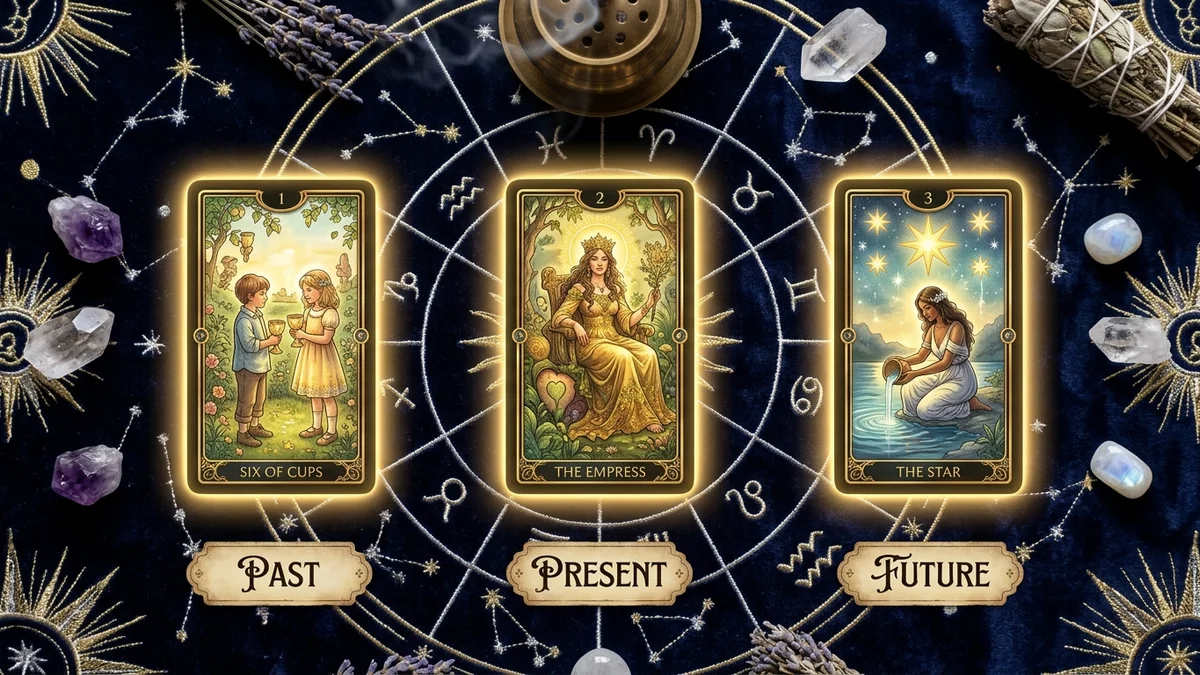
When starting with tarot, beginners often feel intimidated by massive layouts with ten or twelve cards. The 3-card tarot spread is the gold standard of cartomancy: simple enough to learn in minutes, yet deep enough to uncover profound psychological and spiritual insights.
Whether you want a quick morning check-in, clarity on a difficult decision, or insight into a romantic connection, mastering the three-card layout will elevate your practice immediately.
✨ Draw Your 3-Card Tarot Spread
Try an interactive 3-card reading online for instant guidance on your question.
Draw 3 Free Tarot Cards →Master Pillar Article: For a complete breakdown of the 78-card deck and history, check our central guide: Free Tarot Card Reading Online: Complete Guide.
Why the 3-Card Tarot Spread Works So Well
The human brain understands stories through a three-part structure: Beginning, Middle, and Resolution. The 3-card tarot spread mirrors this natural storytelling mechanism.
A single card gives a theme, but cannot show movement. A ten-card spread shows intricate detail, but can easily confuse the core message. Three cards provide the ideal balance of context, direction, and actionable guidance.
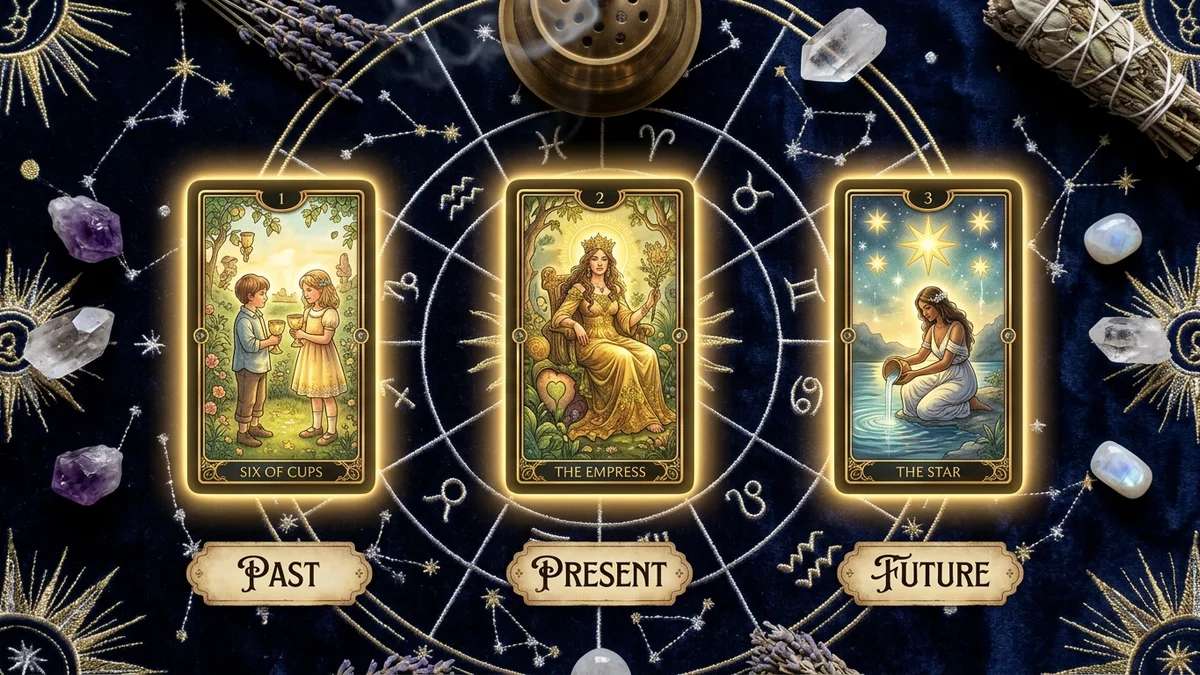
Top 5 Variations of the 3-Card Tarot Spread
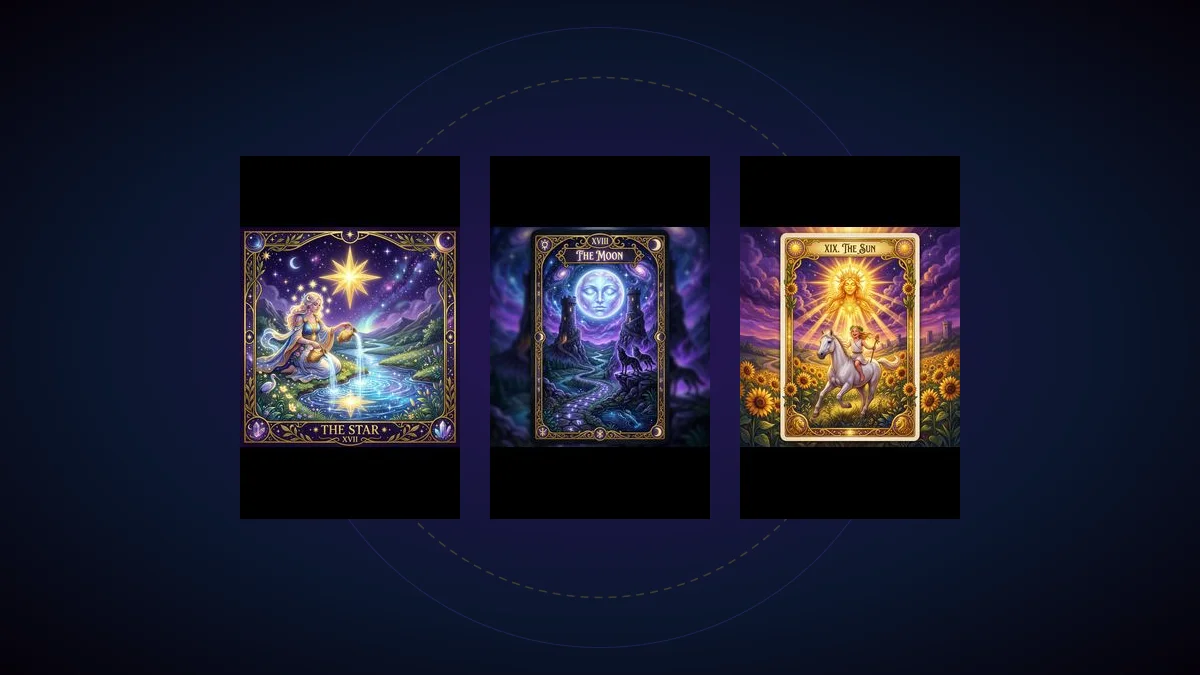
1. Past → Present → Future (The Classic)
- Card 1 (Past): The karmic roots, past choices, or foundational events influencing your present situation.
- Card 2 (Present): The dominant energy, emotional state, or immediate reality occurring right now.
- Card 3 (Future): The anticipated outcome if current behavioral patterns and mindsets remain unchanged.
2. Situation → Challenge → Advice (Problem-Solving)
- Card 1 (Situation): An objective look at what is actually happening.
- Card 2 (Challenge): The obstacle, blind spot, or hidden fear holding you back.
- Card 3 (Advice): The constructive mindset or practical action needed to overcome the challenge.
3. You → Other Person → The Relationship Dynamic
- Card 1 (You): Your genuine feelings, expectations, and contributions.
- Card 2 (Them): Their perspective, emotional availability, or current attitude.
- Card 3 (Connection): The energy created between both of you and where the partnership is heading.
4. Mind → Body → Spirit (Holistic Wellness)
- Card 1 (Mind): Mental focus, thought habits, and beliefs.
- Card 2 (Body): Physical energy, health habits, and environmental influences.
- Card 3 (Spirit): Intuitive alignment, spiritual growth, and higher purpose.
5. Option A → Option B → How to Choose (Decision-Making)
- Card 1 (Option A): The energetic outcome of choosing path A.
- Card 2 (Option B): The energetic outcome of choosing path B.
- Card 3 (Wisdom): Core criteria to help you decide with confidence.
How to Read the Story Between the Cards
To move from a beginner to an insightful reader, do not read each card in isolation. Instead, ask these connecting questions:
- Look for Suit Patterns: If two or three cards belong to the suit of Cups, the situation is intensely emotional. If dominated by Swords, logic and communication issues are central.
- Count Major Arcana Cards: Multiple Major Arcana cards signify major life turning points where free will interacts with fate.
- Watch Card Orientations: Look at where figures on the cards are facing. Are they looking toward each other (harmony) or turned away (conflict/detachment)?
🌟 Discover More Cosmic Wisdom
Deepen your self-understanding with tarot spreads, daily horoscopes, and astrological charts.